

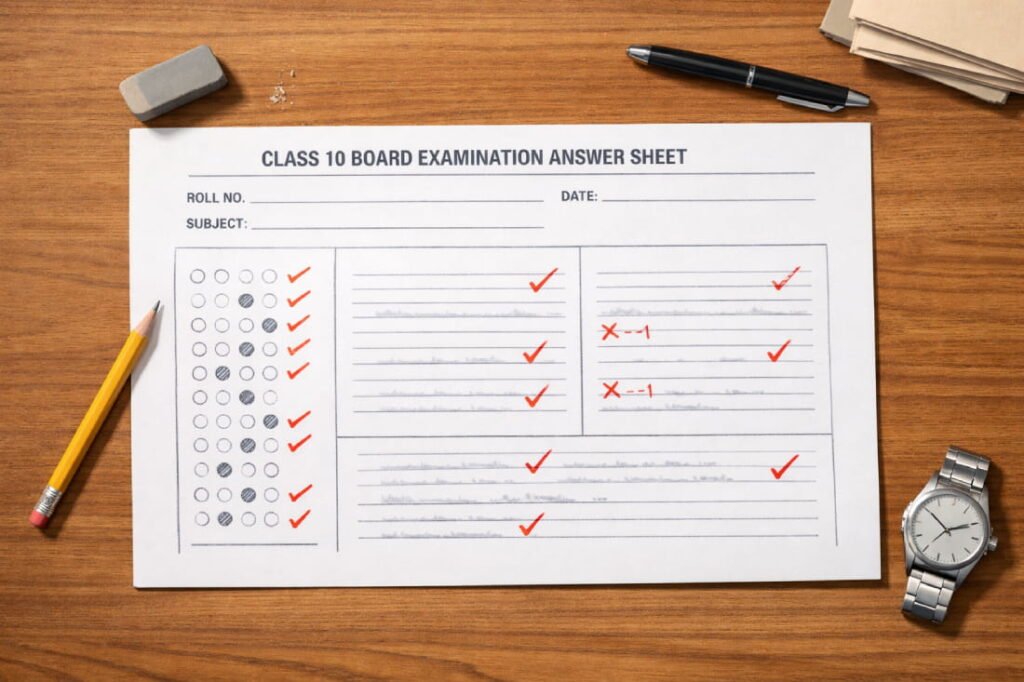
- Your paper is checked by an external examiner
- Examiners follow a fixed marking scheme, not personal judgment
- Partial marks matter
- Presentation and clarity directly affect scores
Core Sub-Problem 1: Poor Answer Structure and Presentation
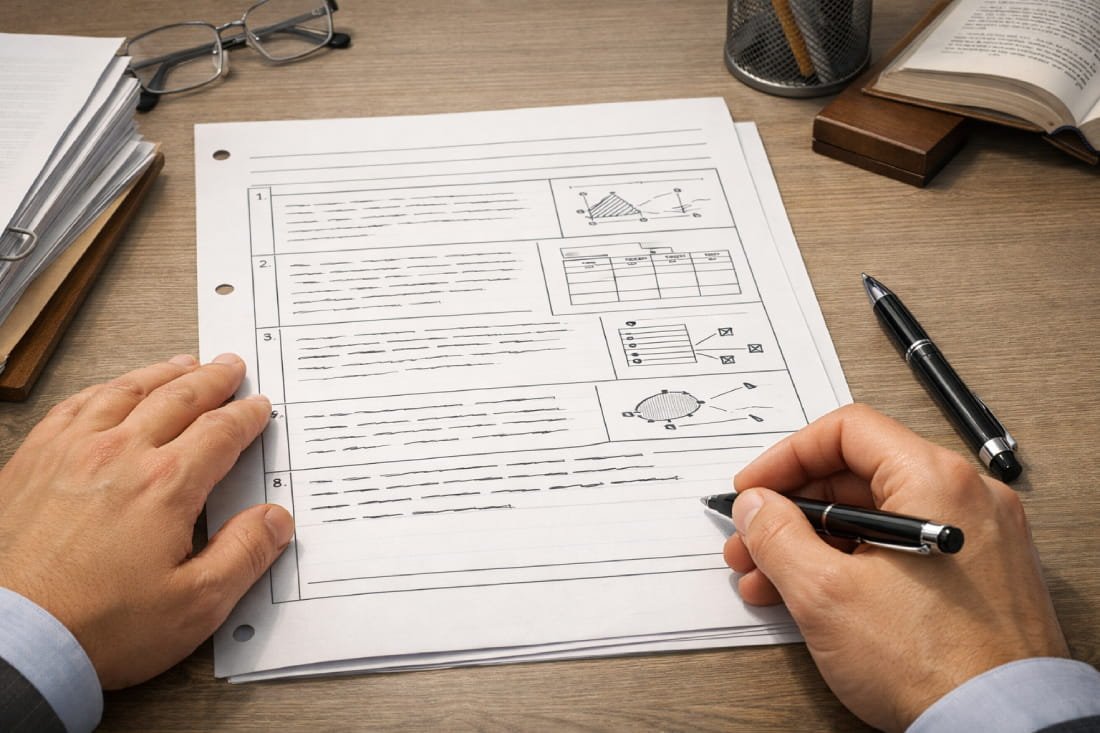
How Marks Are Actually Awarded
- Concept accuracy
- Steps or logical points
- Correct final answer
- Clarity and presentation
- A 5-mark question usually has 5 separate marking points
- Missing one point often means losing 1 full mark
Common Presentation Errors
- Writing long paragraphs instead of points
- Not underlining keywords
- Mixing multiple answers in one block
- Skipping headings or sub-parts
Science
- Steps not written → marks deducted
- Diagrams without proper labels → marks lost
- Formula written but not applied clearly → partial marks
Maths
- Correct final answer, missing steps → only partial marks
- Units not written → marks cut
- Rough work mixed with final solution → examiner confusion
Social Science
- Writing descriptive stories instead of point-wise answers
- Missing textbook keywords
- Poor map work presentation
Languages
- Poor paragraphing
- Ignoring word limits
- Repeating the same idea in different words
Accuracy Benchmark
- Write clean, structured answers
- Make it easy for examiners to award marks
Core Sub-Problem 2: Careless Reading and Question Misinterpretation

Common Reading Mistakes
- Not reading internal choices carefully
- Missing instruction words such as:
- Explain
- Compare
- List
- Draw
- Solving the wrong question number
- Attempting extra questions and skipping compulsory ones
What Students Should NOT Do
- Start writing without fully reading the question
- Assume the question is “same as last year”
- Ignore case-study or passage-based instructions
A Common Example
- One difference in detail
- One similarity
Daily Time Split (2.5–3 Hours)
1.5 Hours – Focused Practice
- Solve board-level questions
- Write full answers, not just think about them
- Use a time limit
45 Minutes – Mistake Analysis
- Check answers using the marking scheme
- Identify:
- Missing steps
- Weak keywords
- Presentation gaps
15–30 Minutes – Error Correction
- Rewrite 2–3 weak answers properly
- Improve structure, not length
Weekly Rule
- Attempt one full-length subject test every week
- Analyse it over two days
- Maintain a simple “error notebook”
7-Day vs 30-Day Preparation: A Realistic Comparison

Unstructured Student (7 Days)
- Revises chapters randomly
- Reads notes repeatedly
- Solves very few full answers
- Does not check marking schemes
Result
- Confidence feels high
- Actual score remains average
- Same mistakes repeat in the exam
Structured Student (7 Days)
- Practices 3–4 chapters deeply
- Writes answers in board format
- Fixes presentation and reading errors
Result
- Slight syllabus gap
- Higher accuracy
- Better marks per answer
Unstructured Student (30 Days)
- Completes the full syllabus
- Low-quality practice
- Weak time management
Result
- Scores around 70–80 despite effort
Structured Student (30 Days)
- Balanced revision and practice
- Clear answer structure
- Mistakes reduced week by week
Result
- Scores closer to true potential
- No unexpected mark loss
Profile 1: “I Know Everything but Still Lose Marks”
Problem
- Skips steps
- Overconfident writing
- Weak presentation
Fix
- Write full answers for two weeks
- Check strictly using marking schemes
- Focus on steps and keywords
Profile 2: “I Study a Lot but Forget in Exams”
Problem
- Passive reading
- No active recall
- Panic during the paper
Fix
- Replace reading with answer writing
- Practice timed questions
- Attempt weekly mock tests
Profile 3: “I Run Out of Time”
Problem
- Writes long answers
- Poor time allocation
- Gets stuck on difficult questions
Fix
- Practice section-wise timing
- Learn to skip and return
- Use short, structured answers
- Writing extra content hoping for marks
- Ignoring internal choices
- Changing answers repeatedly
- Spending too much time on one question
- Not revising diagrams, maps, and formulas
- Leaving answers without a proper conclusion
- Incorrect answer numbering
- Forgetting units, labels, or headings
- Take one previous year question paper
- Attempt one section only, seriously
- Check it using the marking scheme
- List all mistakes, even small ones
- Rewrite two answers properly
- Daily question practice
- Accuracy tracking
- Reviewing mistakes, not just scores
Frequently Asked Questions – Class 10 Board Exam Mistakes
What are the most common mistakes students make in the Class 10 board exam?
Do examiners cut marks for poor presentation in board exams?
How important is the marking scheme in Class 10 board exams?
Can careless mistakes really affect Class 10 board exam scores?
How can students avoid losing marks in the board exam?
Is writing extra content useful in board exams?
How much practice is enough for Class 10 board exams?
Are these mistakes common across all Class 10 subjects?

Conclusion
- Answers are unstructured
- Questions are misread
- Practice is passive instead of active