The Enemy
Assam Board · Class 12 · English
NCERT Solutions for The Enemy — Assam Board Class 12 English.
Interactive on Super Tutor
Studying The Enemy? Get the full interactive chapter.
Quizzes, flashcards, AI doubt-solver and a step-by-step study plan — built for ncert solutions and more.
1,000+ Class 12 students started this chapter today
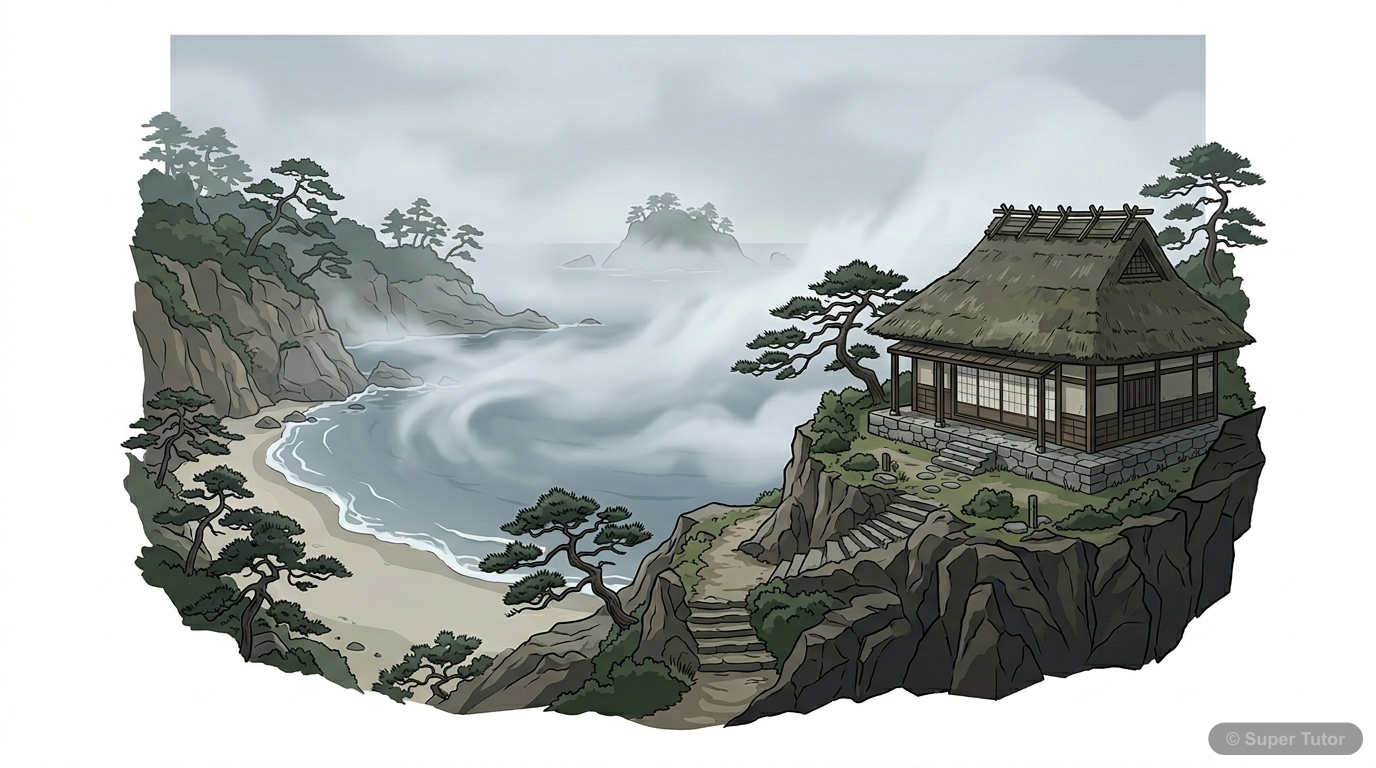
This is just one of 8+ visuals inside Super Tutor's The Enemy chapter
Explore the full setReading with Insight
1There are moments in life when we have to make hard choices between our roles as private individuals and as citizens with a sense of national loyalty. Discuss with reference to the story you have just read.Show solution
Discussion:
The story powerfully illustrates the conflict between personal conscience and national duty. Dr Sadao faces a profound moral dilemma:
1. As a Japanese citizen and patriot: Sadao is fully aware that sheltering an enemy soldier is an act of treason. He knows he could be arrested, tried, and punished. His country is at war with America, and the soldier is technically the enemy.
2. As a private individual and doctor: His medical training and human conscience compel him to save the dying man. He tells himself, "A doctor cannot let a man die if he can help it." His professional oath transcends national boundaries.
3. The hard choice: Sadao chooses to operate on the soldier and nurse him back to health, even as his servants desert him, his wife is frightened, and the General's assassins fail to act. He ultimately arranges a safe escape for the soldier.
4. The inner conflict: Even after saving the man, Sadao wonders, "Why could I not kill him?" This reflects the genuine tension he felt between his roles.
Conclusion: The story suggests that at the deepest level of human consciousness, the instinct to preserve life and act with compassion can override political and national loyalties. True humanity lies in rising above hatred and prejudice, even in the most difficult circumstances. Sadao's choice was not easy, but it was the most humane one possible.
2Dr Sadao was compelled by his duty as a doctor to help the enemy soldier. What made Hana, his wife, sympathetic to him in the face of open defiance from the domestic staff?Show solution
Reasons for Hana's sympathy:
1. Basic human compassion: Hana's first instinct, like her husband's, was humanitarian. When she saw a helpless, wounded, and unconscious young man, she saw not an enemy but a suffering human being. She told Yumi, "Is this anything but a man? And a wounded helpless man!"
2. Anger at Yumi's stubbornness: Yumi's refusal to help actually strengthened Hana's resolve. Her sense of superiority over Yumi's narrow-mindedness motivated her to step in and do what needed to be done. "In the conviction of her own superiority she bent impulsively" and began washing the soldier.
3. Support for her husband: Hana deeply respected and supported Sadao. She understood that he, as a doctor, could not let a man die. Her loyalty to her husband's professional and moral decision made her a willing partner.
4. Education and exposure: Like Sadao, Hana had spent time in America and had a broader worldview. This helped her see beyond racial and national prejudice.
5. Maternal instinct: Looking at the young man's face — rough, tortured, and young — she was moved by a natural compassion, almost maternal in nature.
Conclusion: Hana's sympathy was born of a combination of innate human kindness, her educated and open-minded outlook, loyalty to her husband, and a sense of moral courage that rose above the fear and prejudice shown by the servants.
3How would you explain the reluctance of the soldier to leave the shelter of the doctor's home even when he knew he couldn't stay there without risk to the doctor and himself?Show solution
Explanation of the soldier's reluctance:
1. Physical weakness: The soldier had suffered a serious gunshot wound, undergone surgery, and was still recovering. Leaving the safety of the house meant venturing into the open sea in a small boat — a physically demanding and risky task for someone not yet fully recovered.
2. Fear of the unknown: Outside the doctor's house, the soldier faced enormous uncertainty — the open sea, a deserted island, and the hope of being picked up by a Korean fishing boat. There was no guarantee of survival.
3. Psychological dependence: Having been nursed back to life by Sadao and Hana, the soldier had developed a sense of security and trust in the household. The house represented safety, warmth, and care — a stark contrast to the dangers outside.
4. Awareness of his situation: He knew he was in enemy territory. Every step outside the house could mean capture, imprisonment, or death. The doctor's home was the only place where he was safe.
5. Gratitude and emotional conflict: He was deeply grateful to Sadao — "I realise you are saving my life again" — and perhaps felt a reluctance to leave someone who had shown him such extraordinary kindness.
Conclusion: The soldier's reluctance was entirely understandable — it was a combination of physical vulnerability, psychological fear, and the natural human instinct to cling to safety and kindness in the face of overwhelming danger.
4What explains the attitude of the General in the matter of the enemy soldier? Was it human consideration, lack of national loyalty, dereliction of duty or simply self-absorption?Show solution
Analysis of the General's attitude:
1. Primarily self-absorption: The most accurate explanation is that the General was overwhelmingly self-absorbed. His only real concern was his own health and survival. He valued Sadao solely because Sadao was his personal surgeon — "I can allow nothing to happen to you." His promise to send assassins was made casually, and he forgot about it because it did not directly affect him.
2. Not genuine human consideration: The General did not spare the soldier out of compassion or humanitarian feeling. He simply forgot, as he admitted: "I forgot about it. My servants are so stupid." There was no moral deliberation involved.
3. Not lack of national loyalty: The General was a loyal Japanese military man. He was not ideologically opposed to eliminating an enemy soldier. His inaction was not a principled stand.
4. Dereliction of duty — indirectly: By forgetting to act on the matter, the General did technically neglect his duty, but this was not a conscious choice. It was the result of his preoccupation with his own illness and comfort.
5. Irony: The General's self-absorption inadvertently saved the soldier's life, which is one of the story's great ironies.
Conclusion: The General's attitude is best explained as self-absorption. He was a man consumed by his own needs and fears, and the fate of an enemy soldier simply did not register as important enough to remember. His inaction was not noble — it was merely negligent.
5While hatred against a member of the enemy race is justifiable, especially during wartime, what makes a human being rise above narrow prejudices?Show solution
What makes a human being rise above narrow prejudices:
1. Education and rational thinking: Sadao's years of medical training in America gave him a broader perspective. He had lived among Americans, understood them as human beings, and could not reduce them to mere enemies. Education cultivates empathy and the ability to see beyond stereotypes.
2. Professional ethics: A doctor's oath to preserve life is universal and does not distinguish between friend and foe. Sadao's medical training instilled in him a duty that transcended national boundaries: "A doctor cannot let a man die if he can help it."
3. Innate human compassion: At the core of every human being is the capacity for empathy. When Sadao and Hana saw a young, wounded, helpless man — not a soldier, not an enemy, but a suffering human — their natural compassion was awakened.
4. Moral courage: Rising above prejudice requires courage — the courage to do what is right even when it is dangerous. Sadao risked his freedom and life to save the soldier.
5. Recognition of shared humanity: The story suggests that beneath all differences of race, nationality, and ideology, human beings share a common humanity. It is this recognition that allows individuals like Sadao to act with decency.
Conclusion: Hatred may be a natural wartime emotion, but what elevates human beings above it is a combination of education, professional ethics, innate compassion, moral courage, and the recognition that all human life has inherent value. The story celebrates this capacity for humanity even in the darkest of times.
6Do you think the doctor's final solution to the problem was the best possible one in the circumstances?Show solution
Analysis — Was it the best possible solution?
Arguments in favour (Yes, it was the best solution):
1. It preserved the soldier's life: The primary goal — saving the man — was achieved. The soldier was given a real chance of survival and eventual rescue.
2. It protected Sadao and his family: By removing the soldier from his house, Sadao eliminated the immediate danger of arrest and punishment for himself, Hana, and their children.
3. It avoided direct betrayal: Handing the soldier over to the military would have meant certain death for him. Sadao could not bring himself to do that after saving his life.
4. It was practical and carefully planned: Sadao chose a moonless night, bought supplies secretly, and gave the soldier clear instructions — showing thoughtful execution.
5. It was morally consistent: The solution allowed Sadao to honour both his duty as a doctor (saving life) and his responsibility to his family (removing the danger).
Possible limitations:
- The soldier's escape was not guaranteed; the sea journey and wait on the island were risky.
- Sadao still technically harboured an enemy soldier, which could have had consequences.
Conclusion: Yes, given the extraordinary circumstances — wartime Japan, the risk of arrest, the soldier's need for safety — Sadao's solution was the most humane, practical, and morally sound option available. It was a solution that balanced compassion with pragmatism.
7Does the story remind you of 'Birth' by A. J. Cronin that you read in Snapshots last year? What are the similarities?Show solution
Similarities between the two stories:
1. Central theme — a doctor's duty: Both stories revolve around a doctor who is compelled by professional duty and human compassion to save a life, regardless of the circumstances. In both cases, the doctor goes beyond what is expected or convenient.
2. Life-saving surgery/medical intervention: In 'Birth', Dr Manson performs an emergency resuscitation on the newborn. In 'The Enemy', Dr Sadao performs a surgical operation to remove a bullet and save the soldier. Both involve skilled, urgent medical action.
3. Conflict between personal feelings and professional duty: Dr Manson is exhausted and emotionally drained when called to attend the birth, yet he does his duty. Dr Sadao does not want the enemy soldier to live — "certainly I do not want this man to live" — yet his hands work to save him. Both doctors overcome personal feelings in the service of their profession.
4. The triumph of humanity: Both stories celebrate the idea that the instinct to preserve human life is stronger than personal inconvenience, exhaustion, or even national enmity.
5. Moral and ethical dimensions: Both stories raise questions about what it means to be a good doctor and a good human being.
Conclusion: Yes, the two stories share a deep thematic connection — both are tributes to the medical profession and to the universal human value of compassion. They show that a true doctor sees only a patient in need, not a social, political, or personal obstacle.
8Is there any film you have seen or novel you have read with a similar theme?Show solution
Sample Answer:
Yes, the theme of 'The Enemy' — where compassion and humanity triumph over hatred and war — is found in several well-known works.
Novel: 'The Diary of a Young Girl' by Anne Frank
This autobiographical account of a Jewish girl hiding from the Nazis during World War II explores similar themes of humanity in the face of hatred. The people who sheltered Anne Frank risked their lives to protect an 'enemy' in the eyes of the Nazi regime, just as Dr Sadao risked his life to protect an American soldier.
Film: 'Schindler's List' (1993, directed by Steven Spielberg)
This film tells the story of Oskar Schindler, a German businessman who saved the lives of over a thousand Jewish refugees during the Holocaust. Like Dr Sadao, Schindler began with self-interest but was ultimately moved by compassion to risk everything to save lives. The film powerfully depicts how one individual's humanity can rise above the brutality of war and prejudice.
Film: 'Life is Beautiful' (1997, directed by Roberto Benigni)
This Italian film set in a Nazi concentration camp shows how love and the human spirit can survive even in the most dehumanising circumstances.
Conclusion: These works, like 'The Enemy', affirm that war brings out both the worst and the best in human beings, and that compassion, courage, and the recognition of shared humanity are the highest values a person can embody.
Stuck on a step?
Ask Super Tutor AI to explain any solution on this page in a simpler way — free, 24x7.
Ask a Doubt FreeFrequently Asked Questions
What are the important topics in The Enemy for Assam Board Class 12 English?
How to score full marks in The Enemy — Assam Board Class 12 English?
Where can I get free NCERT Solutions for The Enemy Class 12 English?
Sources & Official References
Content is aligned to the official syllabus. Refer to the board website for the latest curriculum.
More resources for The Enemy
Important Questions
Practice with board exam-style questions
Syllabus
What topics to cover
Revision Notes
Key points for last-minute revision
Study Plan
Step-by-step plan to ace this chapter
Flashcards
Quick-fire cards for active recall
Formula Sheet
All formulas in one place
Chapter Summary
Understand the chapter at a glance
Practice Quiz
Test yourself with a quick quiz
Concept Maps
See how topics connect visually
For serious students
Get the full The Enemy chapter — for free.
Quizzes, flashcards, AI doubt-solver and a step-by-step study plan for Assam Board Class 12 English.