Social Movements
Nagaland Board · Class 12 · Sociology
Quick revision notes for Social Movements — Nagaland Board Class 12 Sociology. Key concepts, formulas, and definitions for last-minute revision.
Interactive on Super Tutor
Studying Social Movements? Get the full interactive chapter.
Quizzes, flashcards, AI doubt-solver and a step-by-step study plan — built for revision notes and more.
1,000+ Class 12 students started this chapter today
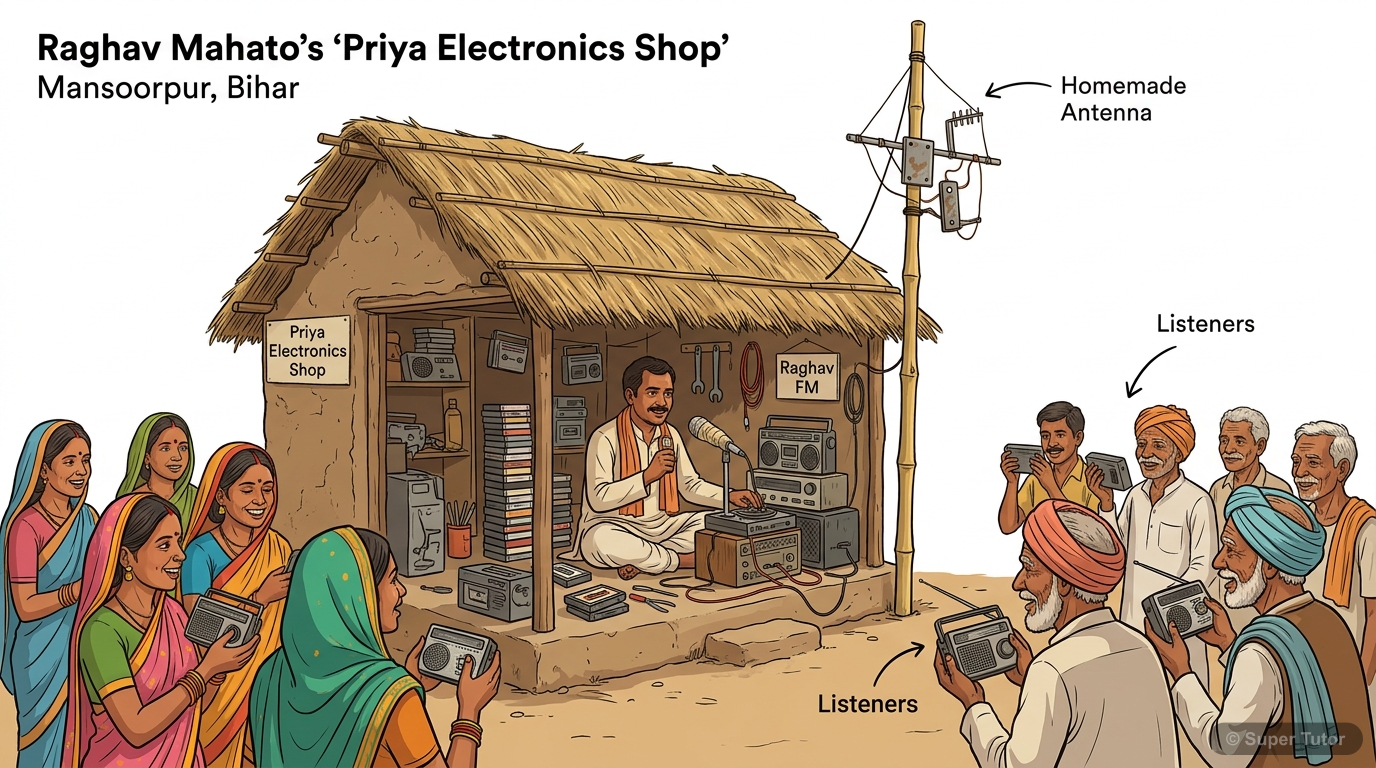
Learn better with visuals Super Tutor has hundreds of illustrations like this across every chapter — all free to try.
Get startedKey Topics to Revise
Understanding Social Movements
- Social movements require sustained collective action over time, not just spontaneous protests
- They are often directed against the state, demanding changes in policy or practice
- Must have some degree of organization with leadership and structure
Types of Social Movements
- Redemptive/Transformatory: Aim to change personal consciousness and individual actions (e.g., Narayana Guru's work with Ezhava community)
- Reformist: Seek gradual change within existing system (e.g., language-based state reorganization, RTI campaign)
- Revolutionary: Attempt radical transformation, often by capturing state power (e.g., Bolshevik revolution, Naxalite movement)
Old vs New Social Movements
- Old movements: Class-based, led by political parties and trade unions, focused on economic inequality and power redistribution
- New movements: Quality-of-life issues, environmental concerns, identity politics, cross-class participation
- Rajni Kothari attributes rise of new movements to dissatisfaction with parliamentary democracy and elite capture of state institutions
Ecological Movements - The Chipko Movement
- Chipko Movement in Himalayan foothills - villagers hugged trees to prevent cutting
- Interlinked issues: villagers' subsistence needs vs government's commercial interests
- Economy of subsistence vs economy of profit
Get complete notes with diagrams and examples
Full NotesKey Concepts
Frequently Asked Questions
What are the important topics in Social Movements for Nagaland Board Class 12 Sociology?
How to score full marks in Social Movements — Nagaland Board Class 12 Sociology?
Sources & Official References
Content is aligned to the official syllabus. Refer to the board website for the latest curriculum.
More resources for Social Movements
Important Questions
Practice with board exam-style questions
Syllabus
What topics to cover
Study Plan
Step-by-step plan to ace this chapter
Flashcards
Quick-fire cards for active recall
Formula Sheet
All formulas in one place
Chapter Summary
Understand the chapter at a glance
Practice Quiz
Test yourself with a quick quiz
Concept Maps
See how topics connect visually
NCERT Solutions
Every textbook question solved step by step
For serious students
Get the full Social Movements chapter — for free.
Quizzes, flashcards, AI doubt-solver and a step-by-step study plan for Nagaland Board Class 12 Sociology.