Change and Development in Rural Society — Flashcards
Bihar Board · Class 12 · Sociology
80 flashcards for Change and Development in Rural Society (Bihar Board Class 12 Sociology) to test yourself on key terms and facts.
Interactive on Super Tutor
Studying Change and Development in Rural Society? Get the full interactive chapter.
Quizzes, flashcards, AI doubt-solver and a step-by-step study plan — built for flashcards and more.
Free trial, no card needed.
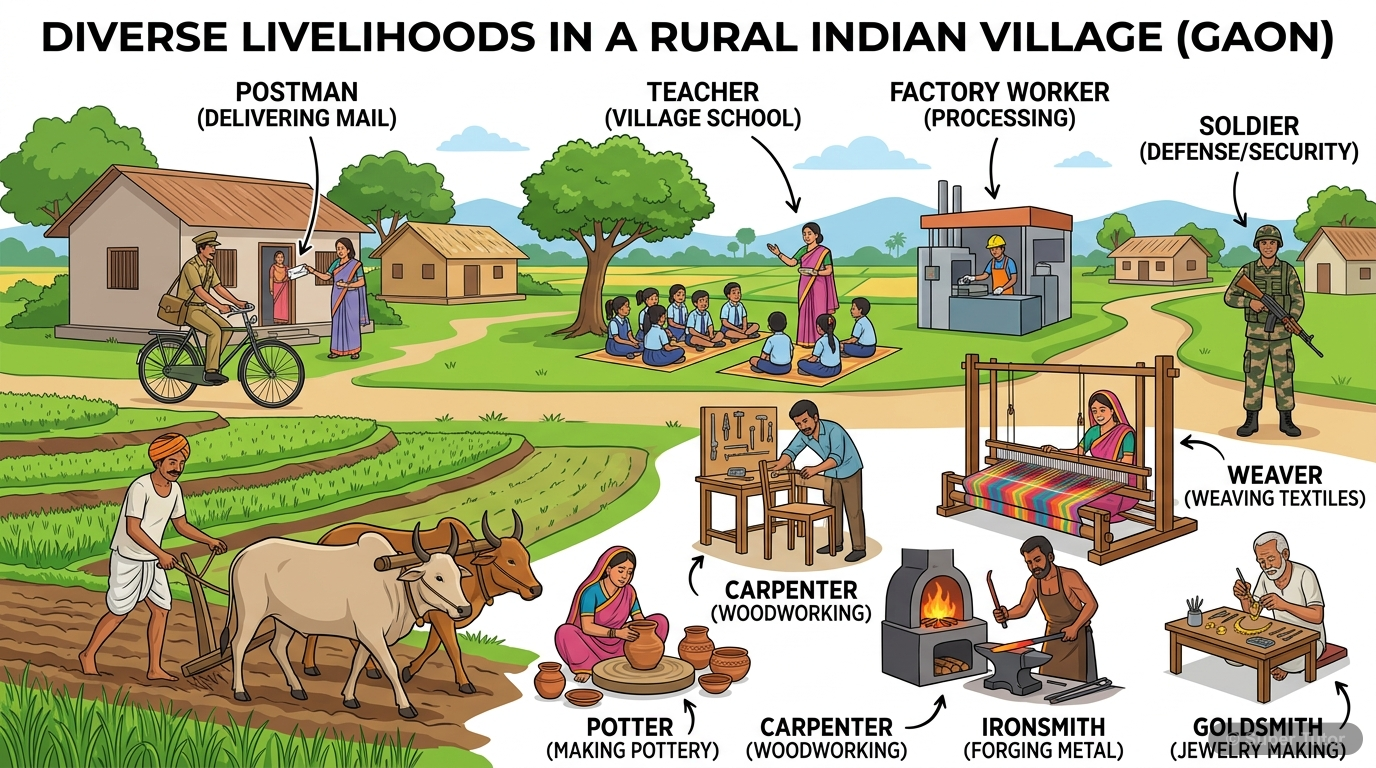
Learn better with visuals Super Tutor pairs illustrations like this with notes and quizzes for Change and Development in Rural Society.
What makes rural society in India primarily agrarian, and why is land so important?
Answer
Rural society in India is primarily agrarian because most people depend on agriculture or related work for their livelihood. Land is the most important productive resource and also a major form of pro…
भारत में ग्रामीण समाज मुख्य रूप से कृषि प्रधान क्यों है और भूमि इतनी महत्वपूर्ण क्यों है?
Answer
भारत में ग्रामीण समाज मुख्य रूप से कृषि प्रधान है क्योंकि अधिकांश लोग अपनी आजीविका के लिए कृषि या उससे संबंधित कार्यों पर निर्भर करते हैं। भूमि सबसे महत्वपूर्ण उत्पादक संसाधन है और संपत्ति का एक प्रमु…
ग्रामीण भारत में आय के अलावा कृषि का क्या महत्व है?
Answer
कृषि केवल आजीविका का साधन नहीं है, यह जीवन का एक तरीका भी है। यह रीति-रिवाजों, त्योहारों, काम करने के तरीकों और क्षेत्रीय संस्कृति को आकार देता है। पोंगल, बिहू, बैसाखी और उगादी जैसे फसल उत्सव कृषि मौस…
What is the importance of agriculture beyond income in rural India?
Answer
Agriculture is not only a source of livelihood; it is also a way of life. It shapes customs, festivals, work patterns, and regional culture. Harvest festivals such as Pongal, Bihu, Baisakhi, and Ugadi…
Why are rural livelihoods in India not limited to farming alone?
Answer
Rural livelihoods also include many non-farm activities such as pottery, carpentry, weaving, ironwork, goldsmith work, storytelling, astrology, priestly work, water distribution, oil pressing, postal …
भारत में ग्रामीण आजीविका केवल खेती तक ही क्यों सीमित नहीं है?
Answer
ग्रामीण आजीविका में कई गैर-कृषि गतिविधियाँ भी शामिल हैं जैसे कि मिट्टी के बर्तन बनाना, बढ़ईगीरी, बुनाई, लोहे का काम, सुनार का काम, कहानी सुनाना, ज्योतिष, पुजारी का काम, पानी का वितरण, तेल निकालना, डाक…
कृषि संरचना का क्या अर्थ है?
Answer
कृषि संरचना का अर्थ है ग्रामीण समाज में भूमि धारिता का वितरण। क्योंकि भूमि मुख्य उत्पादक संसाधन है, भूमि तक पहुंच बड़े पैमाने पर वर्ग की स्थिति, आय और कृषि उत्पादन में भूमिका निर्धारित करती है।…
What does agrarian structure mean?
Answer
Agrarian structure means the distribution of landholding in rural society. Because land is the main productive resource, access to land largely determines class position, income, and role in agricultu…
+72 more flashcards
Practise AllFrequently Asked Questions
What are the important topics in Change and Development in Rural Society for Bihar Board Class 12 Sociology?
How many flashcards are available for Change and Development in Rural Society?
How should I revise Change and Development in Rural Society for the Bihar Board Class 12 board exam?
Sources & Official References
Content is aligned to the official syllabus. Refer to the board website for the latest curriculum.
More resources for Change and Development in Rural Society
Practice Quiz
Test yourself with a quick quiz
Important Questions
Exam-style questions with answers
Revision Notes
Key points for last-minute revision
Chapter Summary
Understand the chapter at a glance
Concept Maps
See how topics connect
Study Plan
Step-by-step plan for this chapter
Syllabus
What topics to cover
NCERT Solutions
Every textbook question solved step by step
For serious students
Get the full Change and Development in Rural Society chapter — start free.
Quizzes, flashcards, an AI doubt solver and a study plan for Bihar Board Class 12 Sociology. Free to start, no card needed.