Memories of Childhood — NCERT Solutions
Chhattisgarh Board · Class 12 · English
NCERT Solutions for Memories of Childhood, Chhattisgarh Board Class 12 English: 3 textbook questions solved step by step. Covers Reading with Insight.
Interactive on Super Tutor
Studying Memories of Childhood? Get the full interactive chapter.
Quizzes, flashcards, AI doubt-solver and a step-by-step study plan — built for NCERT solutions and more.
Free trial, no card needed.
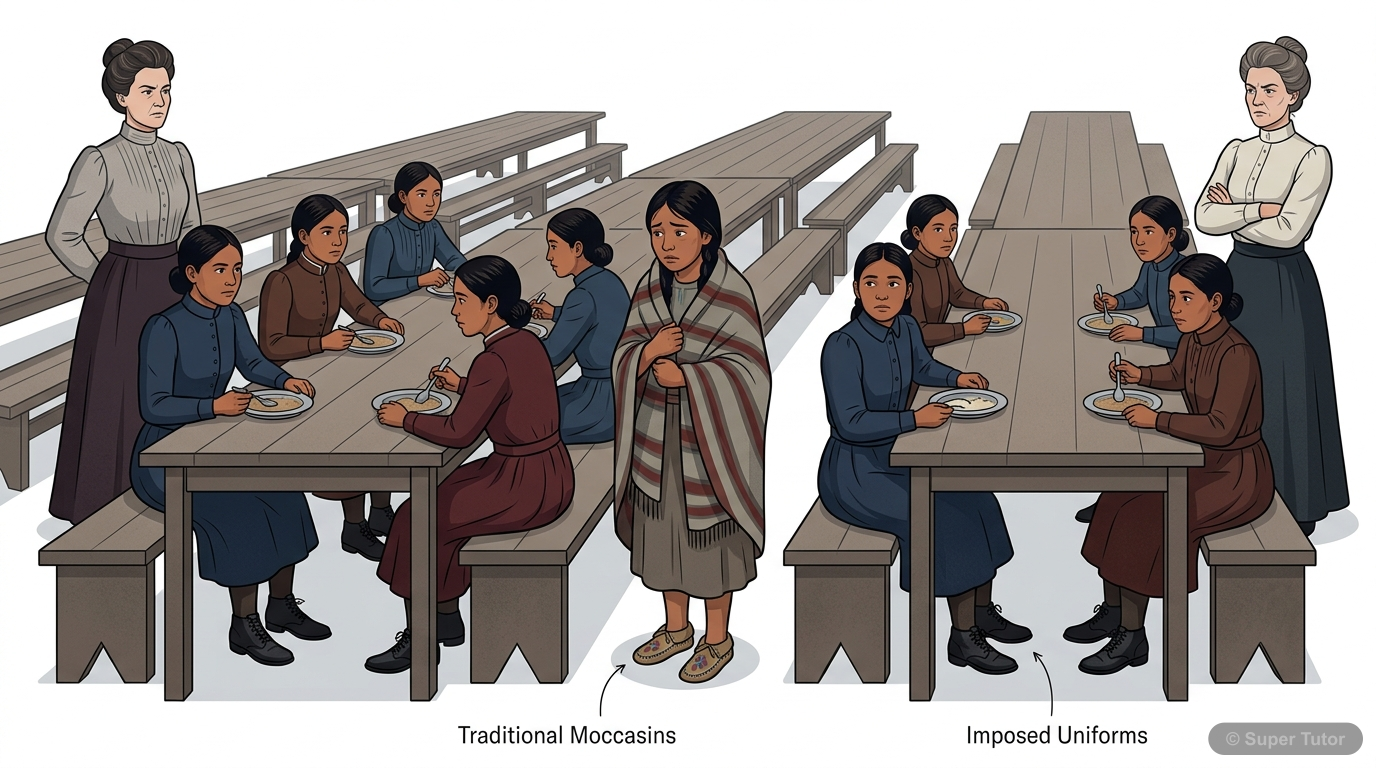
Learn better with visuals Super Tutor pairs illustrations like this with notes and quizzes for Memories of Childhood.
The first 2 solutions are open to read. The other 1 are free with a Super Tutor account.
Reading with Insight
1The two accounts that you read above are based in two distant cultures. What is the commonality of theme found in both of them?Show solution
Given: Two autobiographical accounts — one by Zitkala-Sa (a Native American girl) and one by Bama (a Tamil Dalit girl) — set in entirely different cultures and geographies.
Concept: Identifying a common/universal theme across two literary texts.
Answer:
Despite being rooted in two distant cultures — one in early twentieth-century America and the other in twentieth-century Tamil Nadu, India — both accounts share a powerful common theme: the pain of discrimination and the quest for dignity through education and resistance.
The key commonalities are:
- Discrimination based on identity: Zitkala-Sa faces discrimination because she is a Native American; her culture, hair, and identity are forcibly suppressed by the white-run boarding school. Bama faces discrimination because she belongs to a lower caste; she and her community are denied basic dignity and respect.
- Humiliation imposed by a dominant group: In both cases, the oppression is not self-inflicted but is imposed by those in power — the white colonisers in Zitkala-Sa's case and the upper-caste landlords in Bama's case.
- Awareness and resistance: Both protagonists become aware of the injustice at a young age and choose to resist. Zitkala-Sa resists by hiding and crying out against the cutting of her hair. Bama is motivated by her brother Annan's advice to study hard and earn respect.
- Education as a tool of liberation: Both stories ultimately suggest that education and self-awareness are the means by which the oppressed can reclaim their dignity and identity.
Conclusion: The universal theme is the struggle of the marginalised against social oppression, and the assertion of self-respect and identity in the face of discrimination.
2It may take a long time for oppression to be resisted, but the seeds of rebellion are sowed early in life. Do you agree that injustice in any form cannot escape being noticed even by children?Show solution
Given: The statement suggests that children are sensitive enough to notice injustice, and that early experiences of oppression plant the seeds of future rebellion.
Concept: Critical thinking and personal response based on the two texts.
Answer:
Yes, I completely agree that injustice in any form cannot escape being noticed even by children. Both the accounts in Memories of Childhood powerfully illustrate this truth.
Evidence from the texts:
- Zitkala-Sa was a young girl when she was taken to the Carlisle Indian School. She immediately sensed that something was wrong when she saw her friend Judewin's hair being cut. She understood that it was an act of humiliation and not merely a routine practice. Her instinct to hide under the bed and her fierce crying and kicking when she was finally caught show that even as a child, she recognised the assault on her identity and dignity. She could not articulate it in political terms, but she felt the injustice deeply.
- Bama was a young girl when she witnessed the humiliating manner in which a man from her community carried food to the landlord — holding the packet by its string without touching it, as if he himself were untouchable. She found it funny at first, but when her brother Annan explained the reality of caste discrimination to her, she was filled with anger and hurt. The seed of rebellion was sown at that very moment.
Personal reflection:
Children are naturally sensitive to fairness and unfairness. They may not have the vocabulary or the power to challenge oppression immediately, but they register it emotionally. These early experiences of injustice shape their consciousness and often become the driving force behind their later resistance and achievements. As seen in both cases, the childhood experience of discrimination ultimately motivated both women to write, resist, and inspire others.
Conclusion: The seeds of rebellion are indeed sown early. Injustice leaves a deep imprint on a child's mind, and it is often these early wounds that fuel the most powerful and lasting forms of resistance.
Free with a Super Tutor account
1 more solved question in Memories of Childhood
They are free with a Super Tutor account, along with practice quizzes and flashcards for this chapter. Free to start, no card needed.
Frequently Asked Questions
What are the important topics in Memories of Childhood for Chhattisgarh Board Class 12 English?
Are these NCERT Solutions for Memories of Childhood free?
How should I revise Memories of Childhood for the Chhattisgarh Board Class 12 board exam?
Sources & Official References
Content is aligned to the official syllabus. Refer to the board website for the latest curriculum.
More resources for Memories of Childhood
Practice Quiz
Test yourself with a quick quiz
Important Questions
Exam-style questions with answers
Revision Notes
Key points for last-minute revision
Chapter Summary
Understand the chapter at a glance
Concept Maps
See how topics connect
Study Plan
Step-by-step plan for this chapter
Flashcards
Quick-fire cards for active recall
Syllabus
What topics to cover
For serious students
Get the full Memories of Childhood chapter — start free.
Quizzes, flashcards, an AI doubt solver and a study plan for Chhattisgarh Board Class 12 English. Free to start, no card needed.