Security Aspects — Chapter Summary
Haryana Board · Class 12 · Computer Science
Summary of Security Aspects for Haryana Board Class 12 Computer Science. Part of the Haryana Board Class 12 Computer Science syllabus.
Interactive on Super Tutor
Studying Security Aspects? Get the full interactive chapter.
Quizzes, flashcards, AI doubt-solver and a step-by-step study plan — built for chapter summary and more.
Free trial, no card needed.
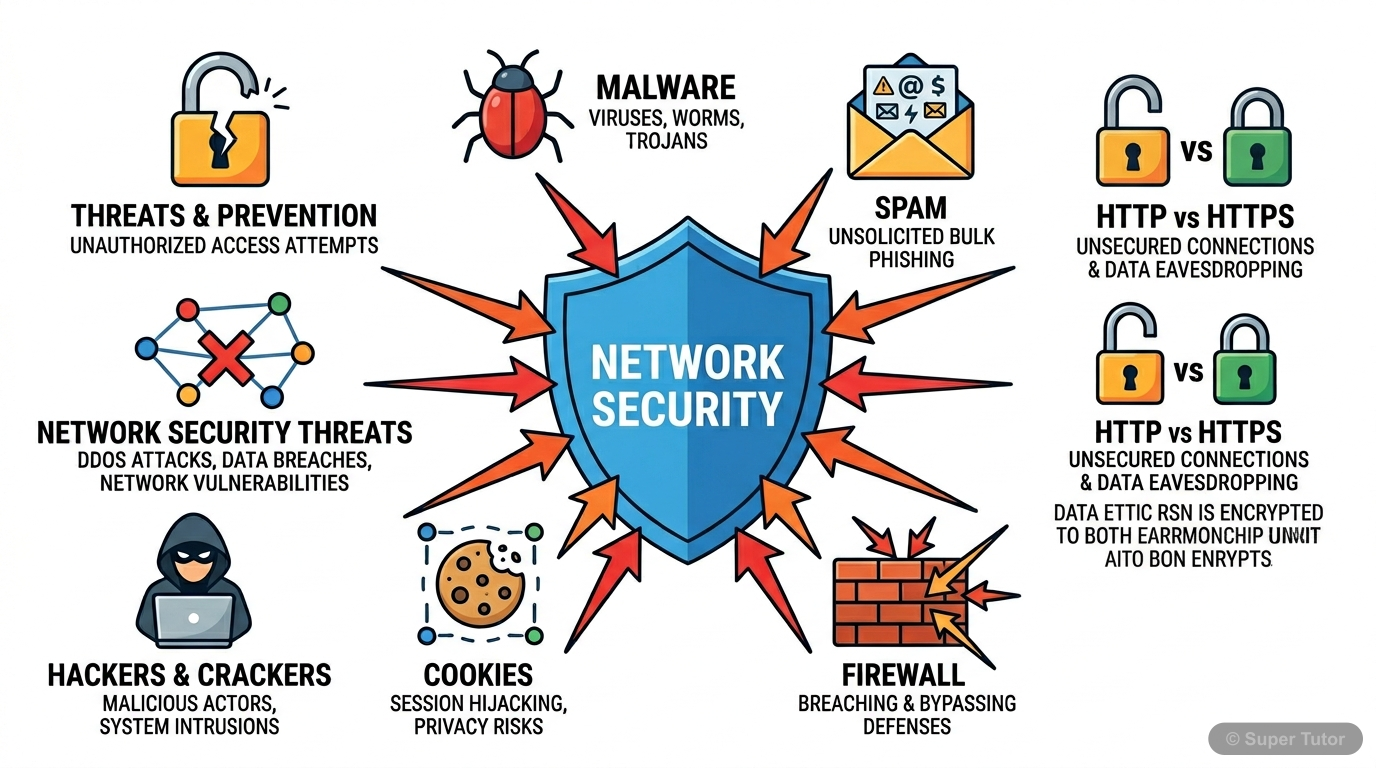
Learn better with visuals Super Tutor pairs illustrations like this with notes and quizzes for Security Aspects.
Overview
Security aspects in computer science focus on protecting computers, networks, and data from misuse, theft, damage, and unauthorized access. Malware, unsafe network traffic, weak authentication, and deceptive online practices are major threats. Protection depends on prevention, detection, and careful
Key Concepts
Malware is short for malicious software
Malware is short for malicious software. It is designed to damage hardware, steal data, or create trouble for the user. Major types include virus, wor
A virus is malicious software code
A virus is malicious software code that hampers computer resources such as CPU time, memory, personal files, or sensitive information. It needs a host
A worm is standalone malware
A worm is standalone malware that does not need a host program. It replicates on its own and spreads through the network without human triggering.
Ransomware blocks access to user data
Ransomware blocks access to user data or threatens to publish it online and demands ransom payment. A major example is WannaCry, which encrypted data
A trojan is malware disguised as
A trojan is malware disguised as legitimate software. It tricks the user into installing it, does not self-replicate, and spreads through user interac
Learning Objectives
- Understand common security threats to computers and networks
- Identify major types of malware and how they behave
- Explain how antivirus software detects malware
- Distinguish between HTTP and HTTPS
- Describe the role of firewalls in network protection
Frequently Asked Questions
What are the important topics in Security Aspects for Haryana Board Class 12 Computer Science?
How should I revise Security Aspects for the Haryana Board Class 12 board exam?
Sources & Official References
Content is aligned to the official syllabus. Refer to the board website for the latest curriculum.
More resources for Security Aspects
Practice Quiz
Test yourself with a quick quiz
Important Questions
Exam-style questions with answers
Revision Notes
Key points for last-minute revision
Concept Maps
See how topics connect
Study Plan
Step-by-step plan for this chapter
Flashcards
Quick-fire cards for active recall
Syllabus
What topics to cover
NCERT Solutions
Every textbook question solved step by step
For serious students
Get the full Security Aspects chapter — start free.
Quizzes, flashcards, an AI doubt solver and a study plan for Haryana Board Class 12 Computer Science. Free to start, no card needed.