The Demographic Structure of the Indian Society — Flashcards
Haryana Board · Class 12 · Sociology
68 flashcards for The Demographic Structure of the Indian Society (Haryana Board Class 12 Sociology) to test yourself on key terms and facts.
Interactive on Super Tutor
Studying The Demographic Structure of the Indian Society? Get the full interactive chapter.
Quizzes, flashcards, AI doubt-solver and a step-by-step study plan — built for flashcards and more.
Free trial, no card needed.
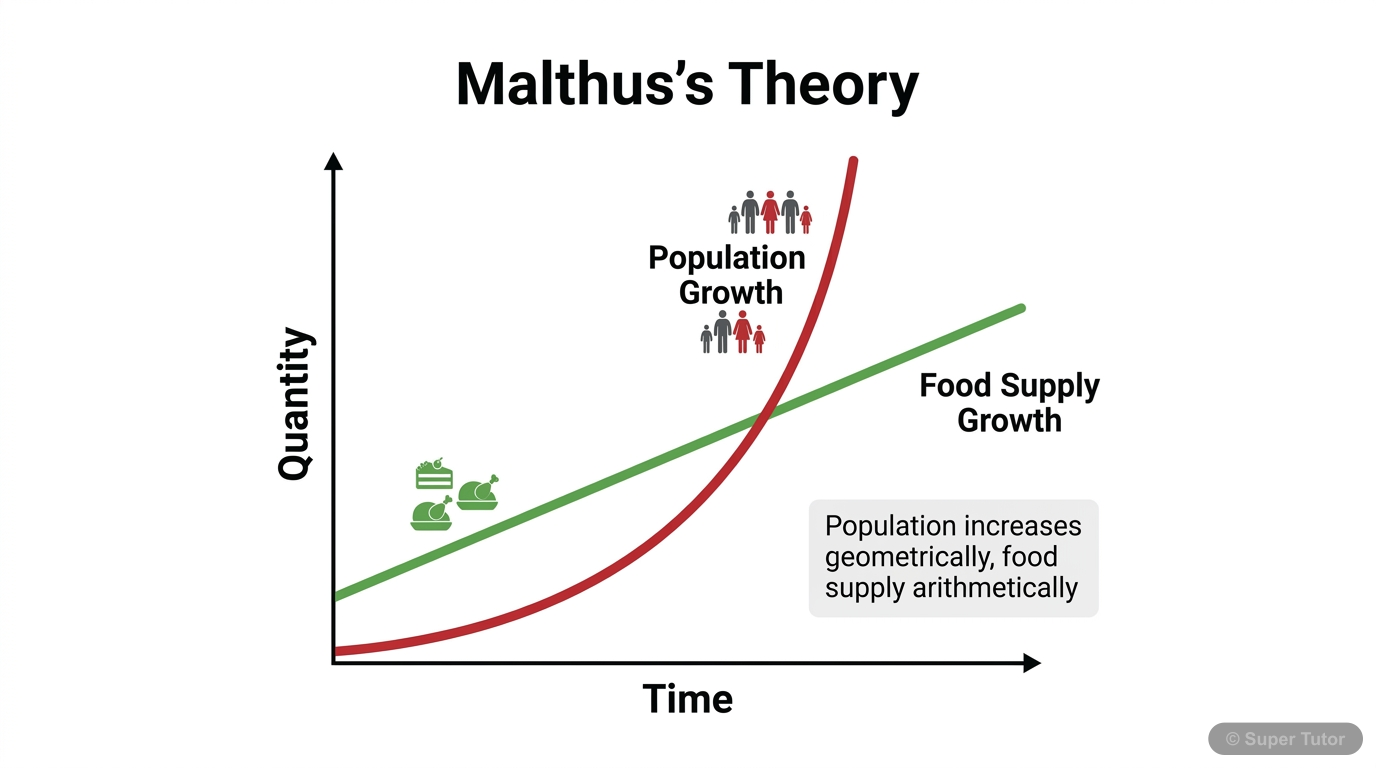
Learn better with visuals Super Tutor pairs illustrations like this with notes and quizzes for The Demographic Structure of the Indian Society.
What is demography?
Answer
Demography is the systematic study of population. It comes from the Greek words demos, meaning people, and graphein, meaning describe. It studies population size, births, deaths, migration, and the st…
जनसांख्यिकी क्या है?
Answer
जनसांख्यिकी (Demography) जनसंख्या का व्यवस्थित अध्ययन है। यह ग्रीक भाषा के दो शब्दों डेमोस (demos) अर्थात लोग और ग्राफीन (graphein) अर्थात वर्णन से बना है। इसमें जनसंख्या का आकार, जन्म, मृत्यु, प्रवास…
औपचारिक जनसांख्यिकी और सामाजिक जनसांख्यिकी में क्या अंतर है?
Answer
औपचारिक जनसांख्यिकी एक बहुत हद तक मात्रात्मक क्षेत्र है जो जनसंख्या परिवर्तन को मापता और विश्लेषण करता है और पूर्वानुमान के लिए गणितीय तरीकों का उपयोग करता है। सामाजिक जनसांख्यिकी, जिसे जनसंख्या अध्यय…
What is the difference between formal demography and social demography?
Answer
Formal demography is a largely quantitative field that measures and analyses population change and uses mathematical methods for forecasting. Social demography, also called population studies, focuses…
Why is demography important for sociology?
Answer
Demography helps show that population patterns are not only individual matters but also social phenomena. Rates such as death rate or suicide rate must be explained at the social level because they re…
समाजशास्त्र के लिए जनसांख्यिकी क्यों महत्वपूर्ण है?
Answer
जनसांख्यिकी यह दिखाने में मदद करती है कि जनसंख्या के पैटर्न केवल व्यक्तिगत मामले नहीं हैं, बल्कि सामाजिक घटनाएं भी हैं। मृत्यु दर या आत्महत्या दर जैसी दरों को सामाजिक स्तर पर समझाया जाना चाहिए क्योंकि…
जन्म दर क्या है?
Answer
जन्म दर किसी विशेष क्षेत्र में एक निश्चित अवधि में जीवित जन्मों की संख्या को उस क्षेत्र की कुल जनसंख्या से विभाजित करने पर प्राप्त संख्या है। यह एक स्थूल दर है, इसलिए यह पूरी जनसंख्या के लिए एक व्यापक…
What is the birth rate?
Answer
Birth rate is the number of live births in a particular area during a specified period divided by the total population of that area in thousands. It is a crude rate, so it gives a broad average for th…
+60 more flashcards
Practise AllFrequently Asked Questions
What are the important topics in The Demographic Structure of the Indian Society for Haryana Board Class 12 Sociology?
How many flashcards are available for The Demographic Structure of the Indian Society?
How should I revise The Demographic Structure of the Indian Society for the Haryana Board Class 12 board exam?
Sources & Official References
Content is aligned to the official syllabus. Refer to the board website for the latest curriculum.
More resources for The Demographic Structure of the Indian Society
Practice Quiz
Test yourself with a quick quiz
Important Questions
Exam-style questions with answers
Revision Notes
Key points for last-minute revision
Formula Sheet
The chapter's formulas in one place
Chapter Summary
Understand the chapter at a glance
Concept Maps
See how topics connect
Study Plan
Step-by-step plan for this chapter
Syllabus
What topics to cover
NCERT Solutions
Every textbook question solved step by step
For serious students
Get the full The Demographic Structure of the Indian Society chapter — start free.
Quizzes, flashcards, an AI doubt solver and a study plan for Haryana Board Class 12 Sociology. Free to start, no card needed.