Sexual Reproduction in Flowering Plants — Revision Notes
Himachal Pradesh Board · Class 12 · Biology
Sexual Reproduction in Flowering Plants revision notes for Himachal Pradesh Board Class 12 Biology: 4 topics in quick points.
Interactive on Super Tutor
Studying Sexual Reproduction in Flowering Plants? Get the full interactive chapter.
Quizzes, flashcards, AI doubt-solver and a step-by-step study plan — built for revision notes and more.
Free trial, no card needed.
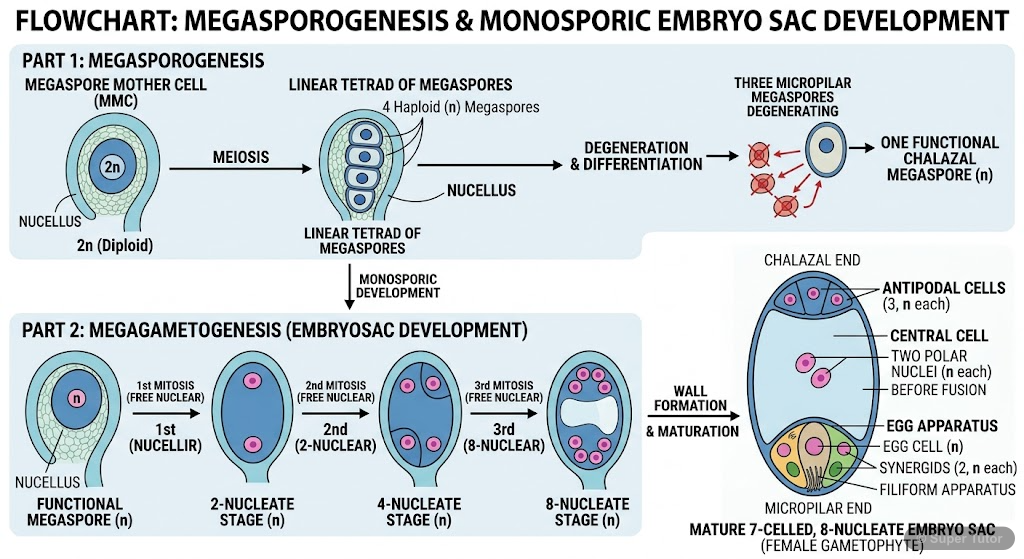
One of 16 illustrations for Sexual Reproduction in Flowering Plants in Super Tutor — alongside flashcards, concept maps and practice questions.
Key Topics to Revise
1. Flower, Stamen, and Pollen Formation
- A flower is the site of sexual reproduction in angiosperms.
- The male reproductive organ is the stamen, also called the androecium unit.
- A stamen has two parts: filament and anther.
2. Pistil, Ovule, and Female Gametophyte
- The female reproductive part is the pistil, which forms the gynoecium unit.
- A pistil has three parts: stigma, style, and ovary.
- The stigma receives pollen grains.
3. Pollination and Agents of Pollination
- Pollination is the transfer of pollen grains from anther to stigma.
- Autogamy is pollination within the same flower.
- Geitonogamy is transfer of pollen to another flower of the same plant.
4. Pollen-Pistil Interaction and Fertilisation
- After pollination, the pistil recognises whether pollen is compatible or incompatible.
- Compatible pollen is accepted and incompatible pollen is rejected.
- Rejection occurs by preventing pollen germination or pollen tube growth in the style.
Get complete notes with diagrams and examples
Full NotesKey Concepts
Frequently Asked Questions
What are the important topics in Sexual Reproduction in Flowering Plants for Himachal Pradesh Board Class 12 Biology?
How should I revise Sexual Reproduction in Flowering Plants for the Himachal Pradesh Board Class 12 board exam?
Sources & Official References
Content is aligned to the official syllabus. Refer to the board website for the latest curriculum.
More resources for Sexual Reproduction in Flowering Plants
Practice Quiz
Test yourself with a quick quiz
Important Questions
Exam-style questions with answers
Chapter Summary
Understand the chapter at a glance
Concept Maps
See how topics connect
Study Plan
Step-by-step plan for this chapter
Flashcards
Quick-fire cards for active recall
Syllabus
What topics to cover
NCERT Solutions
Every textbook question solved step by step
For serious students
Get the full Sexual Reproduction in Flowering Plants chapter — start free.
Quizzes, flashcards, an AI doubt solver and a study plan for Himachal Pradesh Board Class 12 Biology. Free to start, no card needed.