Human Body — Practice Quiz
ICSE · Class 3 · Science
Try a 4-question quiz on Human Body for ICSE Class 3 Science: tap an answer to check it and see why. 41 questions in the full chapter test.
Interactive on Super Tutor
Studying Human Body? Get the full interactive chapter.
Quizzes, flashcards, AI doubt-solver and a step-by-step study plan — built for practice quiz and more.
Free trial, no card needed.
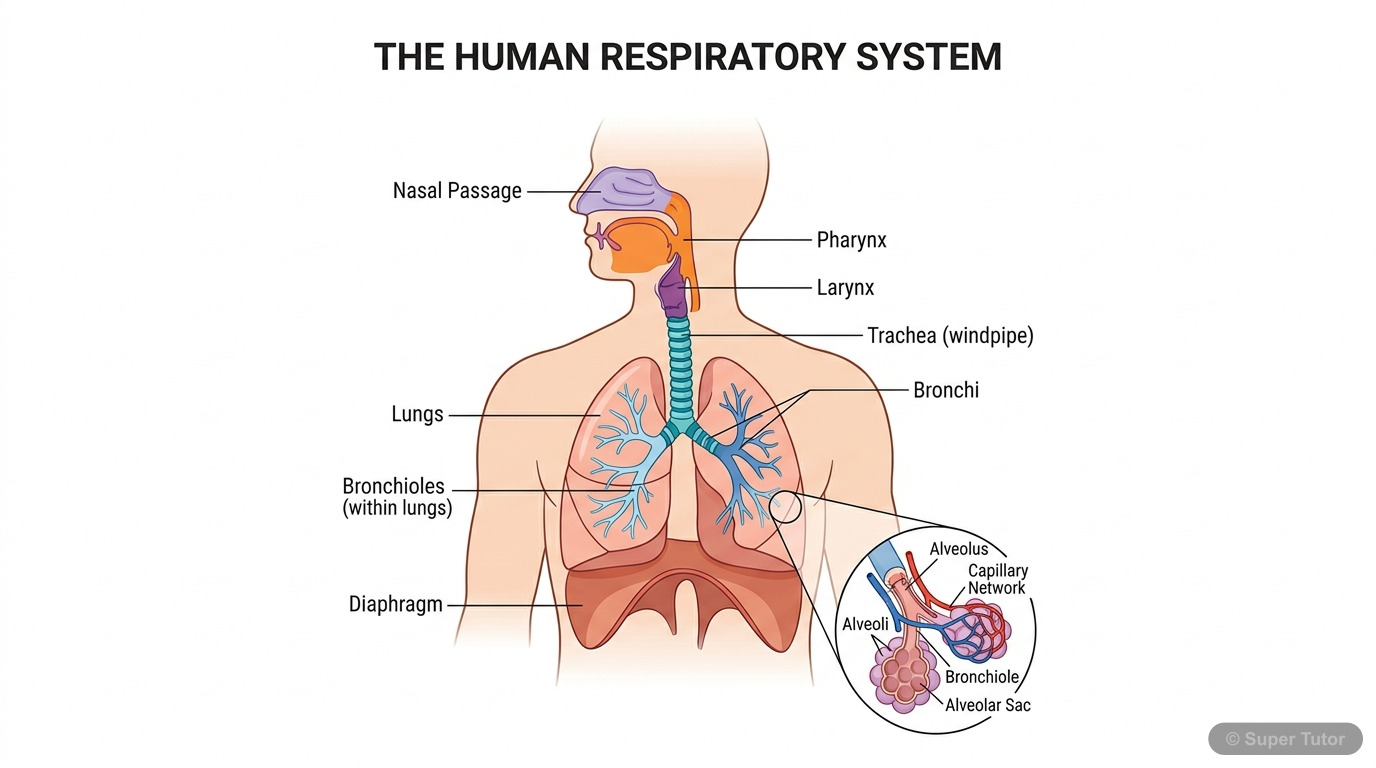
An illustration from Super Tutor's Human Body chapter — alongside flashcards, concept maps and practice questions.
Quick Quiz: Human Body
0/4Tap an answer to check it instantly. No sign-up needed for these 4.
Which organ is the most important organ in the human body?
Where is the heart located in the human body?
What is the main function of the kidneys?
Which organ system helps the body use the air we breathe?
Sample Questions
When we breathe in air, the process is called ________.
Show answer
Inhalation
When we breathe in air, the process is called inhalation, and the air we breathe in is called inhaled air. When we breathe out, it is called exhalation, and that air is called exhaled air. Respiration is the overall process of breathing, and circulation refers to blood moving through the body. So inhalation specifically means breathing in.
Which gas is absorbed by the lungs from the air we breathe in?
Show answer
Oxygen
Our lungs absorb oxygen gas from the inhaled air and send it to the blood. The blood then carries oxygen to all parts of the body. Carbon dioxide is the gas that the body gives back — it comes out when we exhale. Nitrogen is present in air but the body does not use it for breathing. Ammonia is a harmful gas, not something we absorb from breathing.
What happens to the diaphragm when we breathe in?
Show answer
It contracts and moves downward
When we breathe in (inhale), the diaphragm contracts and moves downward. This increases the space in the chest cavity, so the lungs can expand and fill with air. When we breathe out (exhale), the diaphragm relaxes and moves upward, making the chest cavity smaller and pushing air out of the lungs. The diaphragm never stays still during breathing — it moves with every breath.
Which of the following is an INTERNAL organ of the human body?
Show answer
Liver
Internal organs are those that are present inside the body and cannot be seen from outside. The liver is an internal organ. Ears, nose, and knees are external organs — they are on the outside of the body and we can see them. Other examples of internal organs include the brain, heart, stomach, lungs, intestines, and kidneys.
+37 more questions on Human Body (ICSE Class 3 Science)
Practise AllFrequently Asked Questions
What are the important topics in Human Body for ICSE Class 3 Science?
How many practice questions are there for Human Body?
Sources & Official References
Content is aligned to the official syllabus. Refer to the board website for the latest curriculum.
More resources for Human Body
Important Questions
Exam-style questions with answers
Revision Notes
Key points for last-minute revision
Chapter Summary
Understand the chapter at a glance
Concept Maps
See how topics connect
Study Plan
Step-by-step plan for this chapter
Flashcards
Quick-fire cards for active recall
Syllabus
What topics to cover
For serious students
Get the full Human Body chapter — start free.
Quizzes, flashcards, an AI doubt solver and a study plan for ICSE Class 3 Science. Free to start, no card needed.