Bhakti - Sufi Traditions: Changes in Religious Beliefs and Devotional Texts — Important Questions
Jharkhand Board · Class 12 · History
36 important questions from Bhakti - Sufi Traditions: Changes in Religious Beliefs and Devotional Texts for Jharkhand Board Class 12 History, with answers.
Interactive on Super Tutor
Studying Bhakti - Sufi Traditions: Changes in Religious Beliefs and Devotional Texts? Get the full interactive chapter.
Quizzes, flashcards, AI doubt-solver and a step-by-step study plan — built for important questions and more.
Free trial, no card needed.
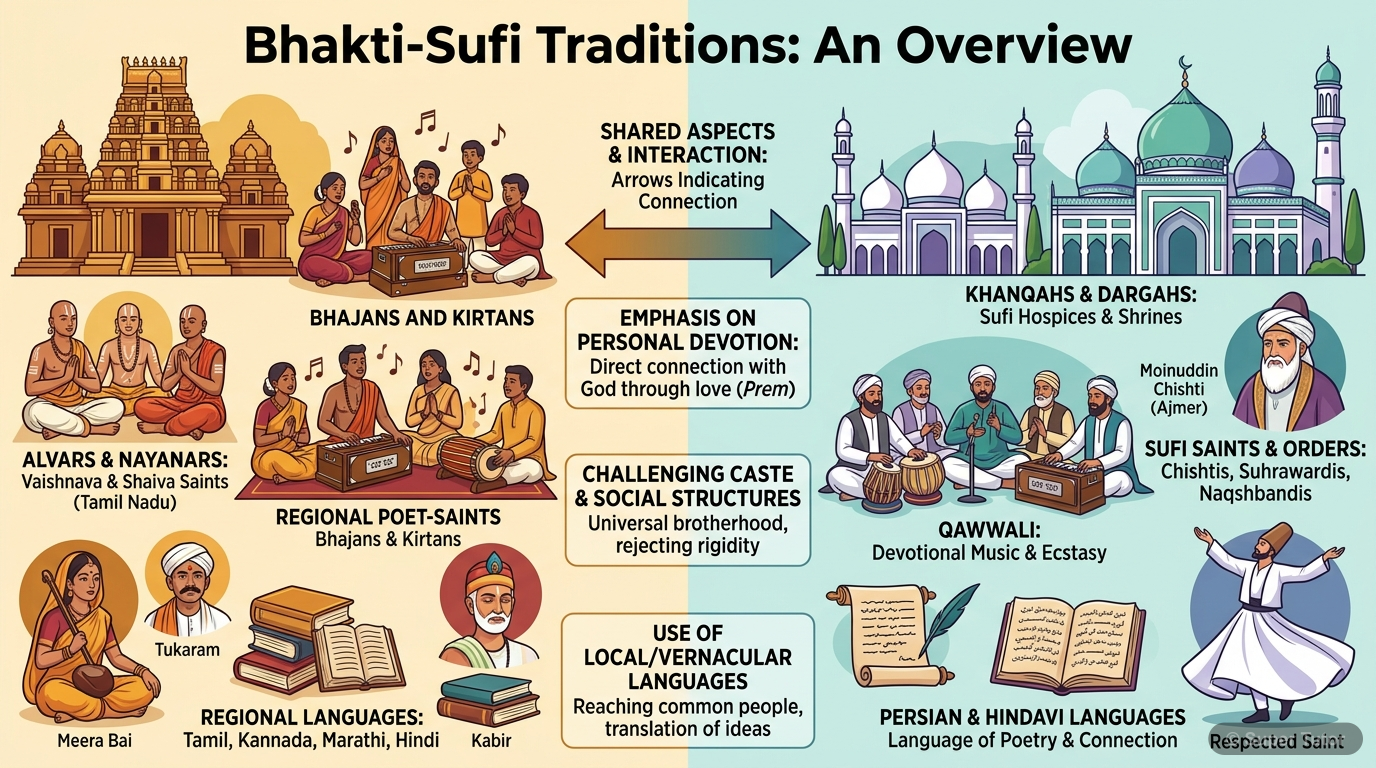
One of 15 illustrations for Bhakti - Sufi Traditions: Changes in Religious Beliefs and Devotional Texts in Super Tutor — alongside flashcards, concept maps and practice questions.
Important Questions from Bhakti - Sufi Traditions: Changes in Religious Beliefs and Devotional Texts
Which of the following practices were characteristic of the Lingayat movement? (Select all correct answers)
Show answer
Wearing a small linga, Challenging caste system, Post-puberty marriage
Lingayats wore a small linga in a silver case, challenged the caste system and pollution concepts, and encouraged post-puberty marriage and widow remarriage. They practiced burial instead of cremation and focused on worshipping Shiva alone, not multiple deities.
Which Sufi order was most influential in medieval India?
Show answer
Chishti
The Chishti order was the most influential in India because they successfully adapted to local conditions and adopted features of Indian devotional traditions. Major Chishti saints like Khwaja Muinuddin (Ajmer) and Nizamuddin Auliya (Delhi) attracted followers from all backgrounds.
What does the term 'sama' refer to in Sufi tradition?
Show answer
Mystical music and dance
Sama literally means 'audition' and refers to the performance of mystical music and dance to evoke divine ecstasy. It was particularly important to the Chishti order and showed their interaction with local devotional traditions. Qawwali evolved from sama practices.
Which of the following are examples of nirguna bhakti traditions? (Select all correct answers)
Show answer
Kabir's teachings, Guru Nanak's message, Abstract worship of formless God
Nirguna bhakti means worship of God without attributes or form. Kabir and Guru Nanak both emphasized worship of a formless, abstract divine reality. Mirabai's devotion to Krishna and Alvar hymns to Vishnu are examples of saguna bhakti (worship of God with specific forms and attributes).
+32 more questions on Bhakti - Sufi Traditions: Changes in Religious Beliefs and Devotional Texts (Jharkhand Board Class 12 History)
Practise AllFrequently Asked Questions
What are the important topics in Bhakti - Sufi Traditions: Changes in Religious Beliefs and Devotional Texts for Jharkhand Board Class 12 History?
How many important questions are there in Bhakti - Sufi Traditions: Changes in Religious Beliefs and Devotional Texts?
Sources & Official References
Content is aligned to the official syllabus. Refer to the board website for the latest curriculum.
More resources for Bhakti - Sufi Traditions: Changes in Religious Beliefs and Devotional Texts
Practice Quiz
Test yourself with a quick quiz
Revision Notes
Key points for last-minute revision
Chapter Summary
Understand the chapter at a glance
Concept Maps
See how topics connect
Study Plan
Step-by-step plan for this chapter
Flashcards
Quick-fire cards for active recall
Syllabus
What topics to cover
NCERT Solutions
Every textbook question solved step by step
For serious students
Get the full Bhakti - Sufi Traditions: Changes in Religious Beliefs and Devotional Texts chapter — start free.
Quizzes, flashcards, an AI doubt solver and a study plan for Jharkhand Board Class 12 History. Free to start, no card needed.