Structured Query a Language (SQL) — Study Plan
Karnataka Board · Class 12 · Computer Science
A step-by-step study plan for Structured Query a Language (SQL), Karnataka Board Class 12 Computer Science: what to learn first, what to practise and when.
Interactive on Super Tutor
Studying Structured Query a Language (SQL)? Get the full interactive chapter.
Quizzes, flashcards, AI doubt-solver and a step-by-step study plan — built for study plan and more.
Free trial, no card needed.
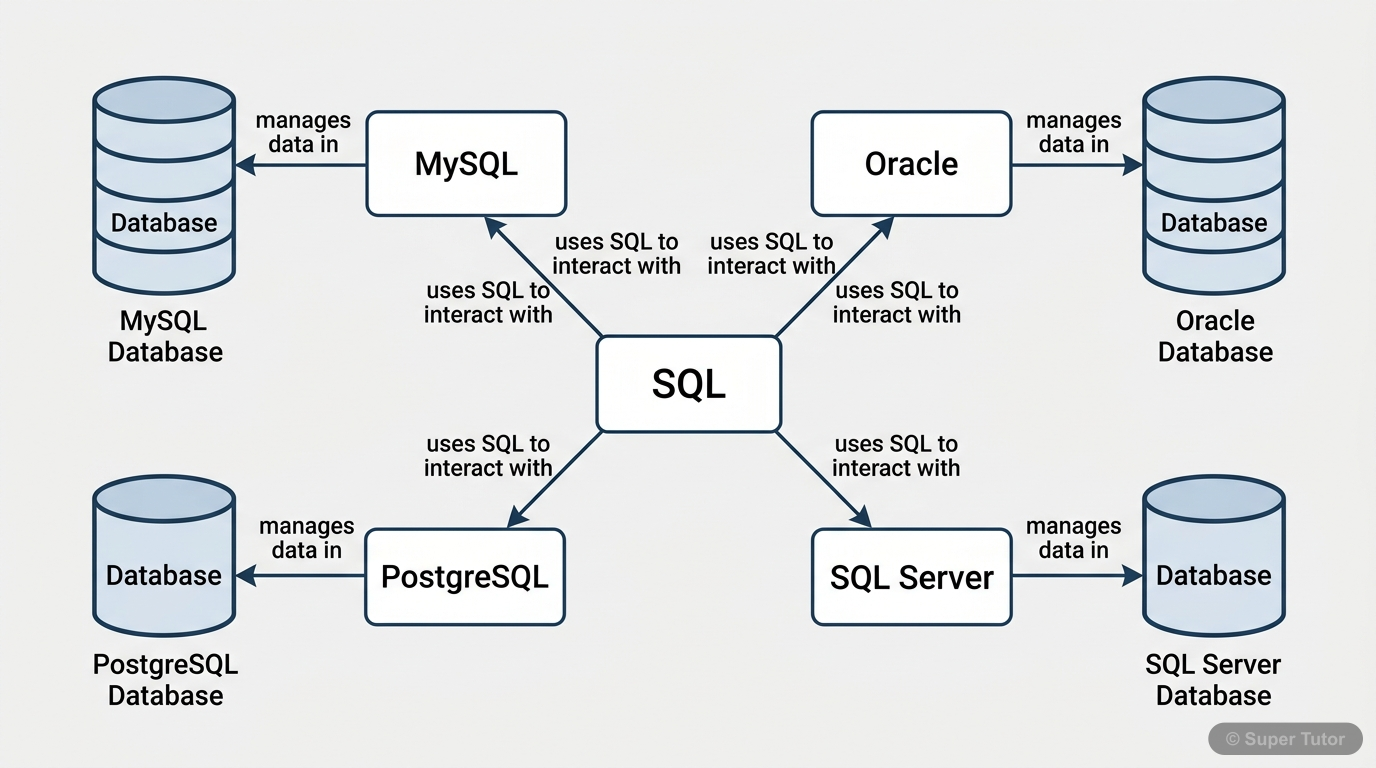
One of 17 illustrations for Structured Query a Language (SQL) in Super Tutor — alongside flashcards, concept maps and practice questions.
Study Plan
Learn the Theory
Read the textbook chapter carefully. Note down definitions, formulas and key ideas. Focus on: 1. SQL Basics and Data Types, 2. Constraints and Keys, 3. DDL and Table Structure Commands.
Practise
Solve the textbook exercises and extra practice questions. There are 50 questions available for this chapter.
Revise & Test
Revise key points without looking at your notes. Take a practice quiz and mark weak areas for another pass.
Spaced Revision
Come back to Structured Query a Language (SQL) after a week. Use flashcards for quick recall and try past exam questions on this chapter.
What to Focus On
- SQL is a query language used with relational databases.
- It is easy to learn because it uses descriptive English words.
- SQL statements are case insensitive.
- End every SQL statement with a semicolon.
- SQL keywords do not depend on letter case.
- Database and table names are case-sensitive in Linux.
- CHAR is fixed-length.
- VARCHAR is variable-length.
- INT and FLOAT both occupy 4 bytes.
Common Mistakes to Avoid
SQL statements are case sensitive, so salary and SALARY are different in queries.
NULL means 0, so arithmetic with NULL should work like arithmetic with zero.
PRIMARY KEY only means unique, so NOT NULL is separate and not part of it.
Memory Tips
Meaning and power of SQL
SQL is not case sensitive for statements
Always end SQL statements with semicolon
Data types CHAR and VARCHAR
Want a personalised study plan?
Super Tutor builds a day-by-day plan for Karnataka Board Class 12 Computer Science that fits your exam date and pace.
Create My Study PlanFrequently Asked Questions
What are the important topics in Structured Query a Language (SQL) for Karnataka Board Class 12 Computer Science?
How should I revise Structured Query a Language (SQL) for the Karnataka Board Class 12 board exam?
Sources & Official References
- Karnataka SSLC — kseeb.kar.nic.in
- Dept of Pre-University Education, Karnataka
- National Education Policy 2020 — education.gov.in
Content is aligned to the official syllabus. Refer to the board website for the latest curriculum.
More resources for Structured Query a Language (SQL)
Practice Quiz
Test yourself with a quick quiz
Important Questions
Exam-style questions with answers
Revision Notes
Key points for last-minute revision
Chapter Summary
Understand the chapter at a glance
Concept Maps
See how topics connect
Flashcards
Quick-fire cards for active recall
Syllabus
What topics to cover
NCERT Solutions
Every textbook question solved step by step
For serious students
Get the full Structured Query a Language (SQL) chapter — start free.
Quizzes, flashcards, an AI doubt solver and a study plan for Karnataka Board Class 12 Computer Science. Free to start, no card needed.