Mineral and Energy Resources — Flashcards
Manipur Board · Class 12 · Geography
80 flashcards for Mineral and Energy Resources (Manipur Board Class 12 Geography) to test yourself on key terms and facts. Sample: "खनिज क्या होता है?"
Interactive on Super Tutor
Studying Mineral and Energy Resources? Get the full interactive chapter.
Quizzes, flashcards, AI doubt-solver and a step-by-step study plan — built for flashcards and more.
Free trial, no card needed.
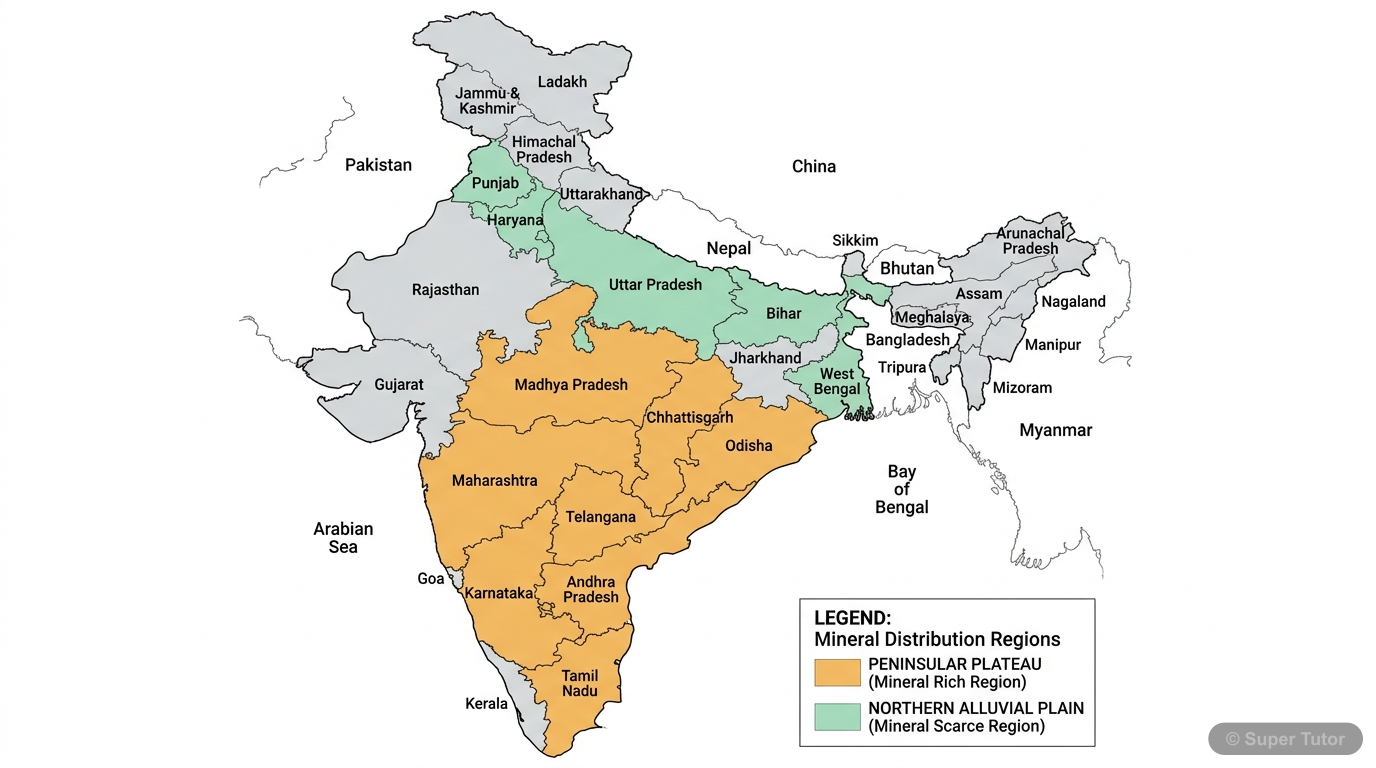
Learn better with visuals Super Tutor pairs illustrations like this with notes and quizzes for Mineral and Energy Resources.
खनिज क्या होता है?
Answer
खनिज (mineral) एक प्राकृतिक पदार्थ है जो कार्बनिक या अकार्बनिक मूल का होता है और जिसके निश्चित रासायनिक एवं भौतिक गुण होते हैं। खनिज उद्योग के लिए मूल कच्चा माल है और यह भारत में विभिन्न रूपों में पाय…
What is a mineral?
Answer
A mineral is a natural substance of organic or inorganic origin with definite chemical and physical properties. Minerals are the basic raw materials for industry and are found in different forms acros…
Why are minerals considered exhaustible resources?
Answer
Minerals take a long time to form geologically and cannot be replenished immediately when they are used. Because of this, they must be conserved and used carefully.
खनिज संपदाओं को समाप्त होने वाली संपदा क्यों माना जाता है?
Answer
खनिज भूवैज्ञानिक रूप से बनने में लंबा समय लेते हैं और जब उनका उपयोग किया जाता है तो उन्हें तुरंत फिर से नहीं भरा जा सकता है। इस कारण से, उन्हें संरक्षित किया जाना चाहिए और सावधानी से उपयोग किया जाना च…
धात्विक और अधात्विक खनिजों में मुख्य अंतर क्या है?
Answer
धात्विक खनिज (Metallic minerals) लोहे, ताँबे, बॉक्साइट आदि धातुओं के स्रोत हैं। अधात्विक खनिजों से धातु नहीं मिलती है। इनमें अकार्बनिक खनिज जैसे अभ्रक, चूना पत्थर, ग्रेफाइट आदि तथा कार्बनिक जीवाश्म ईं…
What is the main difference between metallic and non-metallic minerals?
Answer
Metallic minerals are sources of metals such as iron, copper, and bauxite. Non-metallic minerals do not yield metals and include inorganic minerals like mica, limestone, and graphite, as well as organ…
What does ferrous mean in mineral classification?
Answer
Ferrous refers to iron. Minerals that contain iron are called ferrous minerals, such as iron ore and manganese. Minerals without iron content are non-ferrous, such as copper and bauxite.
खनिज वर्गीकरण में फेरस का क्या अर्थ है?
Answer
लौह (Ferrous) का अर्थ लोहे से है। जिन खनिजों में लोहा होता है उन्हें लौह खनिज (Ferrous minerals) कहते हैं, जैसे लौह अयस्क और मैंगनीज। जिन खनिजों में लोहा नहीं होता उन्हें अलौह (Non-ferrous) कहते हैं, …
+72 more flashcards
Practise AllFrequently Asked Questions
What are the important topics in Mineral and Energy Resources for Manipur Board Class 12 Geography?
How many flashcards are available for Mineral and Energy Resources?
How should I revise Mineral and Energy Resources for the Manipur Board Class 12 board exam?
Sources & Official References
Content is aligned to the official syllabus. Refer to the board website for the latest curriculum.
More resources for Mineral and Energy Resources
Practice Quiz
Test yourself with a quick quiz
Important Questions
Exam-style questions with answers
Revision Notes
Key points for last-minute revision
Chapter Summary
Understand the chapter at a glance
Concept Maps
See how topics connect
Study Plan
Step-by-step plan for this chapter
Syllabus
What topics to cover
NCERT Solutions
Every textbook question solved step by step
For serious students
Get the full Mineral and Energy Resources chapter — start free.
Quizzes, flashcards, an AI doubt solver and a study plan for Manipur Board Class 12 Geography. Free to start, no card needed.