Aldehydes, Ketones and Carboxylic Acids — Chapter Summary
Mizoram Board · Class 12 · Chemistry
Summary of Aldehydes, Ketones and Carboxylic Acids for Mizoram Board Class 12 Chemistry. Part of the Mizoram Board Class 12 Chemistry syllabus.
Interactive on Super Tutor
Studying Aldehydes, Ketones and Carboxylic Acids? Get the full interactive chapter.
Quizzes, flashcards, AI doubt-solver and a step-by-step study plan — built for chapter summary and more.
Free trial, no card needed.
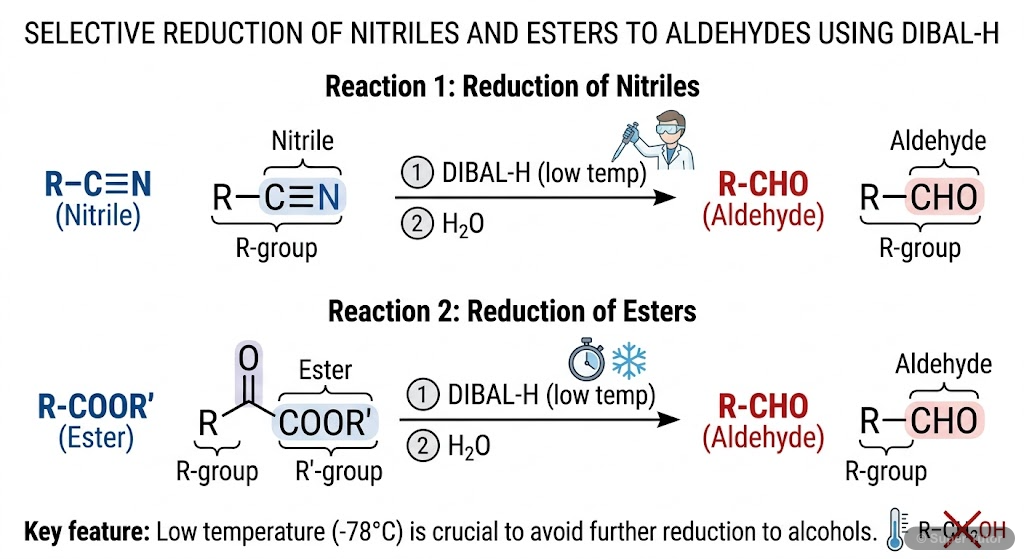
One of 27 illustrations for Aldehydes, Ketones and Carboxylic Acids in Super Tutor — alongside flashcards, concept maps and practice questions.
Overview
Carbonyl compounds are important organic compounds found in fabrics, flavourings, plastics and drugs. The carbonyl group is >C=O, and it gives aldehydes, ketones and carboxylic acids their main properties and reactions. Aldehydes contain a carbonyl carbon bonded to carbon and hydrogen, ketones conta
Key Concepts
Aldehydes have the group RCHO
Aldehydes have the group RCHO, ketones have R2CO, and carboxylic acids have RCOOH or ArCOOH. Aldehydes are named with the suffix -al, ketones with -on
The carbonyl carbon is sp2
The carbonyl carbon is sp2-hybridised with bond angles of about 120°. The carbonyl bond is highly polar, so the carbonyl carbon is electrophilic and t
Aldehydes and ketones are prepared by
Aldehydes and ketones are prepared by oxidation or dehydrogenation of alcohols, ozonolysis of alkenes, hydration of alkynes, Rosenmund reduction, Step
A nucleophile attacks the electrophilic carbonyl
A nucleophile attacks the electrophilic carbonyl carbon, the hybridisation changes from sp2 to sp3, and a tetrahedral intermediate forms before proton
HCN gives cyanohydrins
HCN gives cyanohydrins, NaHSO3 gives bisulphite addition compounds, alcohols give hemiacetals and acetals or ketals, and ammonia or derivatives give i
Learning Objectives
- Write the common and IUPAC names of aldehydes, ketones and carboxylic acids.
- Write the structures of compounds containing carbonyl and carboxyl groups.
- Describe important methods of preparation and reactions of these compounds.
- Relate physical properties and chemical reactions to structure.
- Explain the mechanism of selected reactions of aldehydes and ketones.
Frequently Asked Questions
What are the important topics in Aldehydes, Ketones and Carboxylic Acids for Mizoram Board Class 12 Chemistry?
How should I revise Aldehydes, Ketones and Carboxylic Acids for the Mizoram Board Class 12 board exam?
Sources & Official References
Content is aligned to the official syllabus. Refer to the board website for the latest curriculum.
More resources for Aldehydes, Ketones and Carboxylic Acids
Practice Quiz
Test yourself with a quick quiz
Important Questions
Exam-style questions with answers
Revision Notes
Key points for last-minute revision
Formula Sheet
The chapter's formulas in one place
Concept Maps
See how topics connect
Study Plan
Step-by-step plan for this chapter
Flashcards
Quick-fire cards for active recall
Syllabus
What topics to cover
NCERT Solutions
Every textbook question solved step by step
For serious students
Get the full Aldehydes, Ketones and Carboxylic Acids chapter — start free.
Quizzes, flashcards, an AI doubt solver and a study plan for Mizoram Board Class 12 Chemistry. Free to start, no card needed.