Chapter 10 of 10
Concept Maps
Financial Planning and Management — Concept Maps
NIOS · Class 12 · Business Studies
3 concept maps of Financial Planning and Management for NIOS Class 12 Business Studies, each also written out as a text outline.
45 questions30 flashcards5 concepts
Interactive on Super Tutor
Studying Financial Planning and Management? Get the full interactive chapter.
Quizzes, flashcards, AI doubt-solver and a step-by-step study plan — built for concept maps and more.
Free trial, no card needed.
Super Tutor
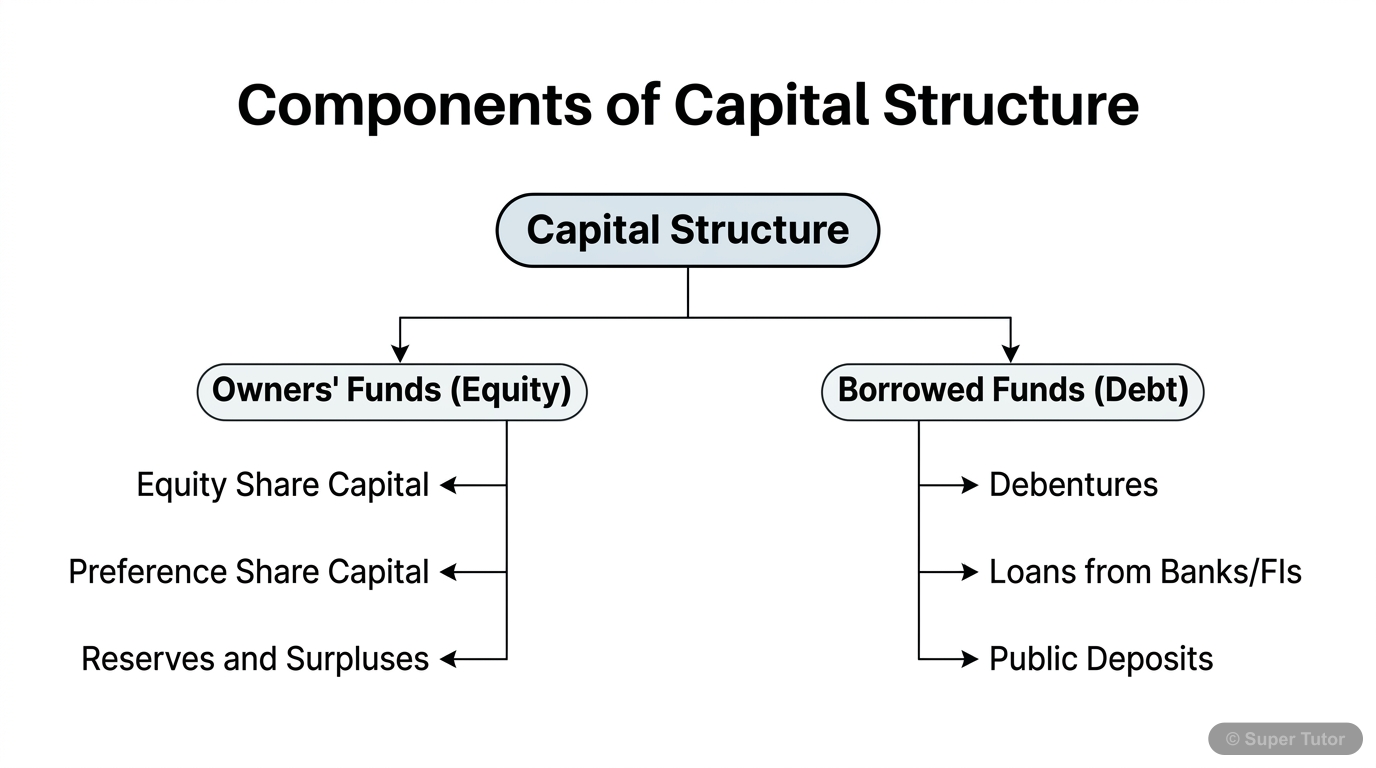
An illustration from Super Tutor's Financial Planning and Management chapter — alongside flashcards, concept maps and practice questions.
3 Concept Maps
Financial Planning and Management - Complete Overview
The map in words
- Financial Planning and Management
- Financial Decisions
- Investment Decision
- Capital Budgeting
- Working Capital
- Fixed Assets
- Current Assets
- Financing Decision
- Sources of Funds
- Equity Shares
- Debentures
- Term Loans
- Retained Earnings
- Capital Structure
- Optimal Mix
- Sources of Funds
- Dividend Decision
- Cash Dividends
- Stock Dividends
- Stock Repurchase
- Retention Ratio
- Investment Decision
- Objectives
- Wealth Maximization
- EPS Growth
- Share Value
- Time Value
- Risk Consideration
- Value Maximization
- Wealth Maximization
- Financial Planning
- Essentials
- Simplicity
- Flexibility
- Long-term View
- Optimal Use
- Liquidity
- Minimum Cost
- Essentials
- Capital Structure
- Equity Capital
- Retained Earnings
- Contributed Capital
- Debt Capital
- Debentures
- Loans
- Determinants
- Cash Flow
- ROI
- Tax Rate
- Risk
- Floatation Cost
- Equity Capital
- Leverage
- Operating Leverage
- Fixed Costs
- Business Risk
- Financial Leverage
- Debt Usage
- Financial Risk
- Combined Leverage
- Total Risk
- Operating Leverage
- Fixed Capital
- Sources
- Determinants
- Estimation
- Working Capital
- Concept
- Permanent
- Variable
- Estimation
- Operating Cycle
- Determinants
- Concept
- Financial Decisions
Financial Management - Complete Overview
The map in words
- Financial Management
- Three Key Decisions
- Investment Decision
- Capital Budgeting
- Working Capital
- Financing Decision
- Debt or Equity Mix
- Cost of Capital
- Dividend Decision
- Cash Dividend
- Bonus Shares
- Stock Repurchase
- Investment Decision
- Objectives
- Profit Maximisation
- Limitation Vague
- Ignores Risk
- Ignores Timing
- Wealth Maximisation
- Considers Time Value
- Considers Risk
- Maximises Share Price
- Profit Maximisation
- Capital Structure
- Equity Capital
- Share Capital
- Retained Earnings
- Debt Capital
- Debentures
- Term Loans
- Determinants
- Tax Rate
- ROI
- Risk
- Flexibility
- Equity Capital
- Leverage
- Operating Leverage
- Contribution over EBIT
- Business Risk
- Financial Leverage
- EBIT over EBT
- Financial Risk
- Combined Leverage
- OL multiplied by FL
- Operating Leverage
- Fixed Capital
- Long Term Assets
- Sources
- Determinants
- Working Capital
- Gross WC
- Net WC
- Permanent WC
- Variable WC
- Three Key Decisions
Financial Management Overview - Three Main Decisions
The map in words
- Financial Management
- Investment Decision
- Capital Budgeting
- Fixed Assets
- Long-term
- Working Capital
- Current Assets
- Short-term
- Portfolio Investment
- Merger & Takeover
- Capital Budgeting
- Financing Decision
- Cost of Capital
- Equity Cost
- Debt Cost
- Preference Cost
- Timing of Raising Funds
- Capital Structure
- Debt Mix
- Equity Mix
- Sources
- Shares
- Debentures
- Bank Loans
- Cost of Capital
- Dividend Decision
- Distribution Policy
- Cash Dividend
- Bonus Shares
- Buyback
- Retention Policy
- Growth vs Income
- Shareholder Returns
- Distribution Policy
- Investment Decision
Explore these maps interactively
Explore DiagramsFrequently Asked Questions
What are the important topics in Financial Planning and Management for NIOS Class 12 Business Studies?
Key topics in Financial Planning and Management include 1 Meaning and Types of Financial Management, 2 Objectives of Financial Management, 3 Financial Planning, 4 Capital Structure Concept and Determinants. Study these first, then practise questions on each for the NIOS Class 12 board exam.
What do the concept maps for Financial Planning and Management show?
The 3 maps show how the ideas in Financial Planning and Management connect: Financial Planning and Management - Complete Overview; Financial Management - Complete Overview. Each map is also written out as an outline on this page.
How should I revise Financial Planning and Management for the NIOS Class 12 board exam?
Learn the core ideas first, then work through the 45 practice questions on Financial Planning and Management. Revise definitions regularly and use flashcards for quick recall before the exam.
Sources & Official References
Content is aligned to the official syllabus. Refer to the board website for the latest curriculum.
More resources for Financial Planning and Management
For serious students
Get the full Financial Planning and Management chapter — start free.
Quizzes, flashcards, an AI doubt solver and a study plan for NIOS Class 12 Business Studies. Free to start, no card needed.