A Thing of Beauty
Tripura Board · Class 12 · English
NCERT Solutions for A Thing of Beauty — Tripura Board Class 12 English.
Interactive on Super Tutor
Studying A Thing of Beauty? Get the full interactive chapter.
Quizzes, flashcards, AI doubt-solver and a step-by-step study plan — built for ncert solutions and more.
1,000+ Class 12 students started this chapter today
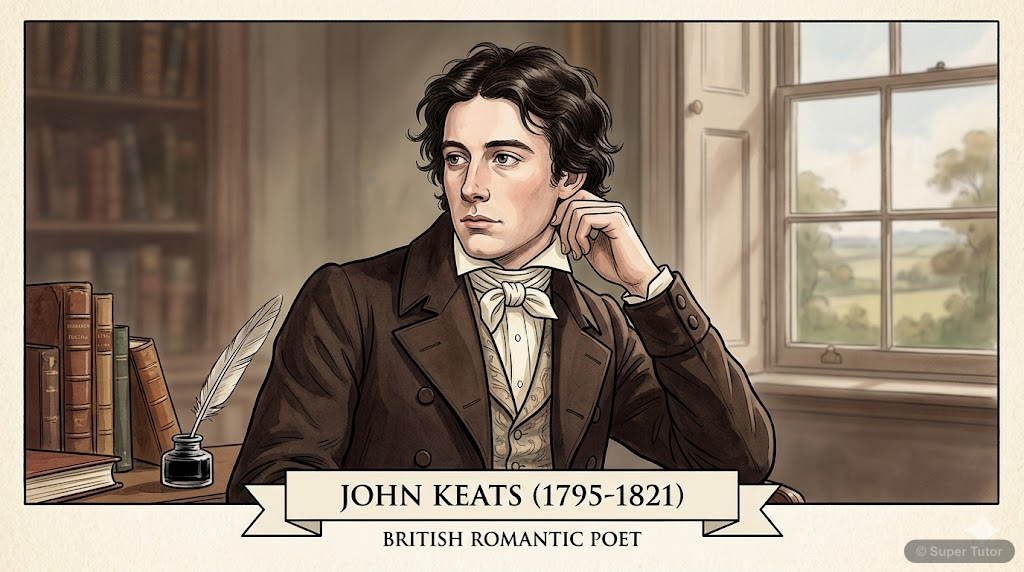
Super Tutor has 6+ illustrations like this for A Thing of Beauty alone — flashcards, concept maps, and step-by-step visuals.
See them allThink it out — A Thing of Beauty (Flamingo, Class 12)
1List the things of beauty mentioned in the poem.Show solution
Things of beauty mentioned in the poem:
Keats lists the following things of beauty:
1. The sun – a thing of eternal beauty that gives light and warmth.
2. The moon – provides gentle, soothing light.
3. Trees – old and young trees that provide shade and shelter.
4. Daffodils – simple, lovely flowers that bloom in the green world.
5. Clear rills (small streams) – cool, refreshing streams that make a shady cover against the heat.
6. The mid-forest brake – a thick mass of ferns in the heart of the forest.
7. Musk-rose blooms – fair, fragrant roses that add to the beauty of the forest.
8. The 'grandeur of the dooms' of the mighty dead – the grand and noble tales of great men who have died, which inspire us.
9. All lovely tales heard or read – stories and legends that enrich the human imagination.
10. An endless fountain of immortal drink – a metaphor for the never-ending joy and inspiration that beauty pours upon us from heaven.
Conclusion: The poet presents both natural objects and human creations (tales, legends) as things of beauty that bring joy and comfort.
2List the things that cause suffering and pain.Show solution
Things that cause suffering and pain, as mentioned in the poem:
1. Despondence – a state of hopelessness and low spirits that weighs down the human mind.
2. The lack of noble natures – the absence of goodness, virtue, and nobility among people causes moral suffering.
3. Gloomy days – days filled with sadness, grief, and darkness.
4. Unhealthy and o'er-darkened ways – the corrupt, immoral, and difficult paths that human beings are forced to take in life.
5. The inhuman dearth of noble natures – the scarcity of truly noble and virtuous people in the world.
Conclusion: Keats recognises that life is full of pain, moral corruption, and gloom, but argues that things of beauty help us overcome all these sufferings.
3What does the line, 'Therefore are we wreathing a flowery band to bind us to earth' suggest to you?Show solution
Concept: The line uses the metaphor of a 'flowery band' — a garland or wreath made of flowers.
Explanation:
- The line suggests that the beautiful things of nature and life act like a garland of flowers that ties human beings to the earth and to life itself.
- Despite all the pain, suffering, despondence, and gloom that life brings, it is the beauty around us — the sun, the moon, trees, flowers, streams — that gives us a reason to stay connected to life and to love it.
- The word 'wreathing' (making a wreath/garland) implies an active, ongoing process — beauty continuously weaves this bond between humans and the earth.
- The 'flowery band' is gentle yet strong — it does not force us to live, but lovingly draws us towards life through joy and wonder.
Conclusion: The line beautifully conveys that things of beauty are the invisible but powerful threads that keep human beings attached to life and prevent them from sinking into despair.
4What makes human beings love life in spite of troubles and sufferings?Show solution
Answer:
According to Keats, it is the endless supply of beautiful things in nature and human experience that makes human beings love life despite all troubles and sufferings.
Specifically:
1. Natural beauty – the sun, moon, trees, daffodils, clear streams, musk-roses, and ferns constantly refresh and soothe the human spirit.
2. Shade and shelter – trees provide a cool, shady resting place that gives comfort during hardship.
3. Inspiring tales – lovely tales of great and noble people (the mighty dead) fill the human heart with hope and admiration.
4. The 'endless fountain of immortal drink' – beauty is like an inexhaustible fountain that pours joy and inspiration upon us from heaven.
Keats argues that every beautiful thing, however small, 'leaves a bower quiet for us' — it creates a peaceful space in our minds that shelters us from pain.
Conclusion: It is the ever-present beauty of nature and human achievement that binds us to life and makes us love it, even in the face of suffering.
5Why is 'grandeur' associated with the 'mighty dead'?Show solution
Explanation:
- The 'mighty dead' refers to great heroes, warriors, poets, and noble figures of the past who have died but left behind a glorious legacy.
- The word 'grandeur' (greatness, magnificence) is associated with them because:
1. Their deeds and achievements were extraordinary and inspiring.
2. The tales and legends built around them are noble and uplifting.
3. Human beings have imagined grand and glorious fates (dooms) for them — they are remembered with reverence, honour, and awe.
4. Their memory continues to inspire future generations, making their lives a source of beauty even after death.
- The word 'dooms' here means 'destinies' or 'fates', not destruction. The grand destinies imagined for these great people elevate them to the level of beauty.
Conclusion: The 'mighty dead' are associated with grandeur because their noble lives, heroic deeds, and the magnificent stories told about them serve as a source of beauty, inspiration, and joy for the living.
6Do we experience things of beauty only for short moments or do they make a lasting impression on us?Show solution
Answer:
According to John Keats, things of beauty do not give joy for short moments alone — they make a lasting, permanent impression on us.
Evidence from the poem:
1. 'A joy forever' – beauty is not a passing pleasure; its joy is eternal and everlasting.
2. 'Its loveliness increases' – unlike material things that decay, the joy of beauty actually grows with time.
3. 'It will never pass into nothingness' – beauty is imperishable; it does not fade or disappear.
4. 'An endless fountain of immortal drink' – beauty is compared to an inexhaustible fountain, suggesting that its supply of joy never runs out.
5. 'A bower quiet for us' – beauty creates a permanent shelter of peace in our minds.
Conclusion: Things of beauty make a deep and lasting impression on us. Their joy is not momentary but eternal — they continue to nourish, comfort, and inspire us throughout our lives and beyond.
7What image does the poet use to describe the beautiful bounty of the earth?Show solution
The Image Used:
The poet uses the image of an 'endless fountain of immortal drink / Pouring unto us from the heaven's brink' to describe the beautiful bounty of the earth.
Explanation of the image:
- The 'endless fountain' suggests that the earth's beauty is inexhaustible and ever-flowing — it never dries up or runs out.
- The 'immortal drink' compares the joy given by beauty to a divine, life-giving nectar (like ambrosia in Greek mythology) that sustains and nourishes the human soul.
- 'Pouring unto us from the heaven's brink' suggests that this beauty is a divine gift, flowing down to us from the very edge of heaven — it has a sacred, spiritual quality.
- The image of pouring emphasises that beauty is generous and abundant — it is not given sparingly but flows freely and continuously.
Conclusion: Through this powerful and vivid image, Keats conveys that the earth's beauty is a divine, limitless, and life-sustaining gift that continuously pours joy, hope, and inspiration into human life.
Stuck on a step?
Ask Super Tutor AI to explain any solution on this page in a simpler way — free, 24x7.
Ask a Doubt FreeFrequently Asked Questions
What are the important topics in A Thing of Beauty for Tripura Board Class 12 English?
How to score full marks in A Thing of Beauty — Tripura Board Class 12 English?
Where can I get free NCERT Solutions for A Thing of Beauty Class 12 English?
Sources & Official References
Content is aligned to the official syllabus. Refer to the board website for the latest curriculum.
More resources for A Thing of Beauty
Important Questions
Practice with board exam-style questions
Syllabus
What topics to cover
Revision Notes
Key points for last-minute revision
Study Plan
Step-by-step plan to ace this chapter
Flashcards
Quick-fire cards for active recall
Formula Sheet
All formulas in one place
Chapter Summary
Understand the chapter at a glance
Practice Quiz
Test yourself with a quick quiz
Concept Maps
See how topics connect visually
For serious students
Get the full A Thing of Beauty chapter — for free.
Quizzes, flashcards, AI doubt-solver and a step-by-step study plan for Tripura Board Class 12 English.