Kinship, Caste and Class (Early Societies) (c. 600 BCE-600 CE) — Chapter Summary
Tripura Board · Class 12 · History
Summary of Kinship, Caste and Class (Early Societies) (c. 600 BCE-600 CE) for Tripura Board Class 12 History. Early Indian society between c. 600 BCE.
Interactive on Super Tutor
Studying Kinship, Caste and Class (Early Societies) (c. 600 BCE-600 CE)? Get the full interactive chapter.
Quizzes, flashcards, AI doubt-solver and a step-by-step study plan — built for chapter summary and more.
Free trial, no card needed.
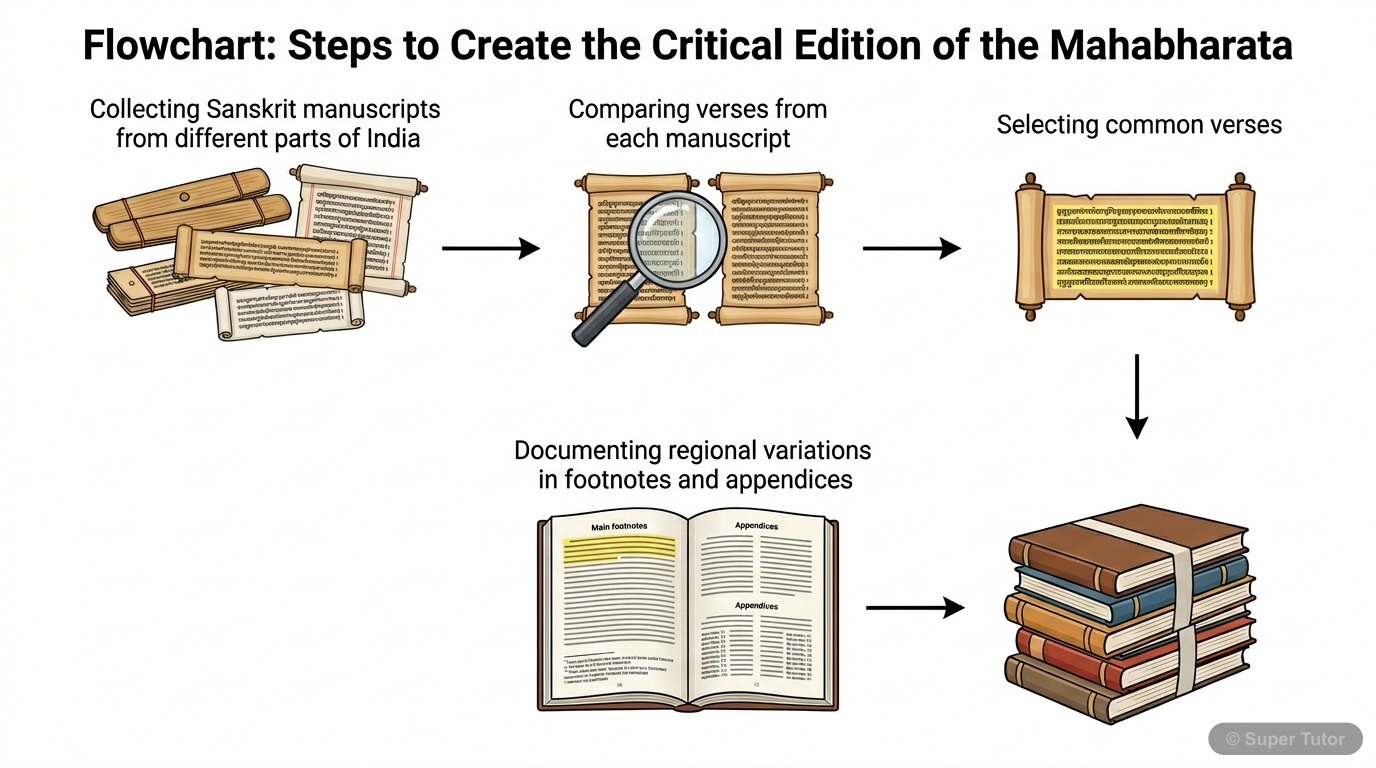
One of 16 illustrations for Kinship, Caste and Class (Early Societies) (c. 600 BCE-600 CE) in Super Tutor — alongside flashcards, concept maps and practice questions.
Overview
Early Indian society between c. 600 BCE and 600 CE was shaped by changing kinship patterns, marriage rules, caste ideas, access to property, and shifting ideas about social status. The Mahabharata, Dharmasutras, Dharmashastras, inscriptions, and Buddhist and Tamil texts present different social worl
Key Concepts
A colossal Sanskrit epic of over
A colossal Sanskrit epic of over 100,000 verses, composed over about 1,000 years from c. 500 BCE onwards. It combines narrative and didactic sections
A scholarly edition of the Mahabharata
A scholarly edition of the Mahabharata prepared by comparing many manuscripts and selecting verses common to most versions. It began in 1919 under V.S
A system in which descent
A system in which descent is traced from father to son to grandson and so on. In the Mahabharata, the victory of the Pandavas reinforces the idea of p
Kula means family
Kula means family, jnati means a larger network of kinfolk, and vamsha means lineage. These terms show how family relations were organised in Sanskrit
A Brahmanical kin category known from
A Brahmanical kin category known from c. 1000 BCE onwards and named after Vedic seers. Women were expected to adopt the husband’s gotra, and same-gotr
Learning Objectives
- Understand how texts and inscriptions help reconstruct early social history
- Explain kinship terms such as kula, jnati, vamsha, patriliny, matriliny, exogamy, endogamy, polygyny, and polyandry
- Describe the composition, growth, and importance of the Mahabharata and its Critical Edition
- Analyse how the Mahabharata reflects ideas about kinship, marriage, power, and duty
- Explain Brahmanical ideas about varna, jati, occupation, and caste hierarchy
Frequently Asked Questions
What are the important topics in Kinship, Caste and Class (Early Societies) (c. 600 BCE-600 CE) for Tripura Board Class 12 History?
How should I revise Kinship, Caste and Class (Early Societies) (c. 600 BCE-600 CE) for the Tripura Board Class 12 board exam?
Sources & Official References
Content is aligned to the official syllabus. Refer to the board website for the latest curriculum.
More resources for Kinship, Caste and Class (Early Societies) (c. 600 BCE-600 CE)
Practice Quiz
Test yourself with a quick quiz
Important Questions
Exam-style questions with answers
Revision Notes
Key points for last-minute revision
Concept Maps
See how topics connect
Study Plan
Step-by-step plan for this chapter
Flashcards
Quick-fire cards for active recall
Syllabus
What topics to cover
NCERT Solutions
Every textbook question solved step by step
For serious students
Get the full Kinship, Caste and Class (Early Societies) (c. 600 BCE-600 CE) chapter — start free.
Quizzes, flashcards, an AI doubt solver and a study plan for Tripura Board Class 12 History. Free to start, no card needed.