Water Resources — Study Plan
Uttar Pradesh Board · Class 10 · Social Science
A step-by-step study plan for Water Resources, Uttar Pradesh Board Class 10 Social Science: what to learn first, what to practise and when to revise.
Interactive on Super Tutor
Studying Water Resources? Get the full interactive chapter.
Quizzes, flashcards, AI doubt-solver and a step-by-step study plan — built for study plan and more.
Free trial, no card needed.
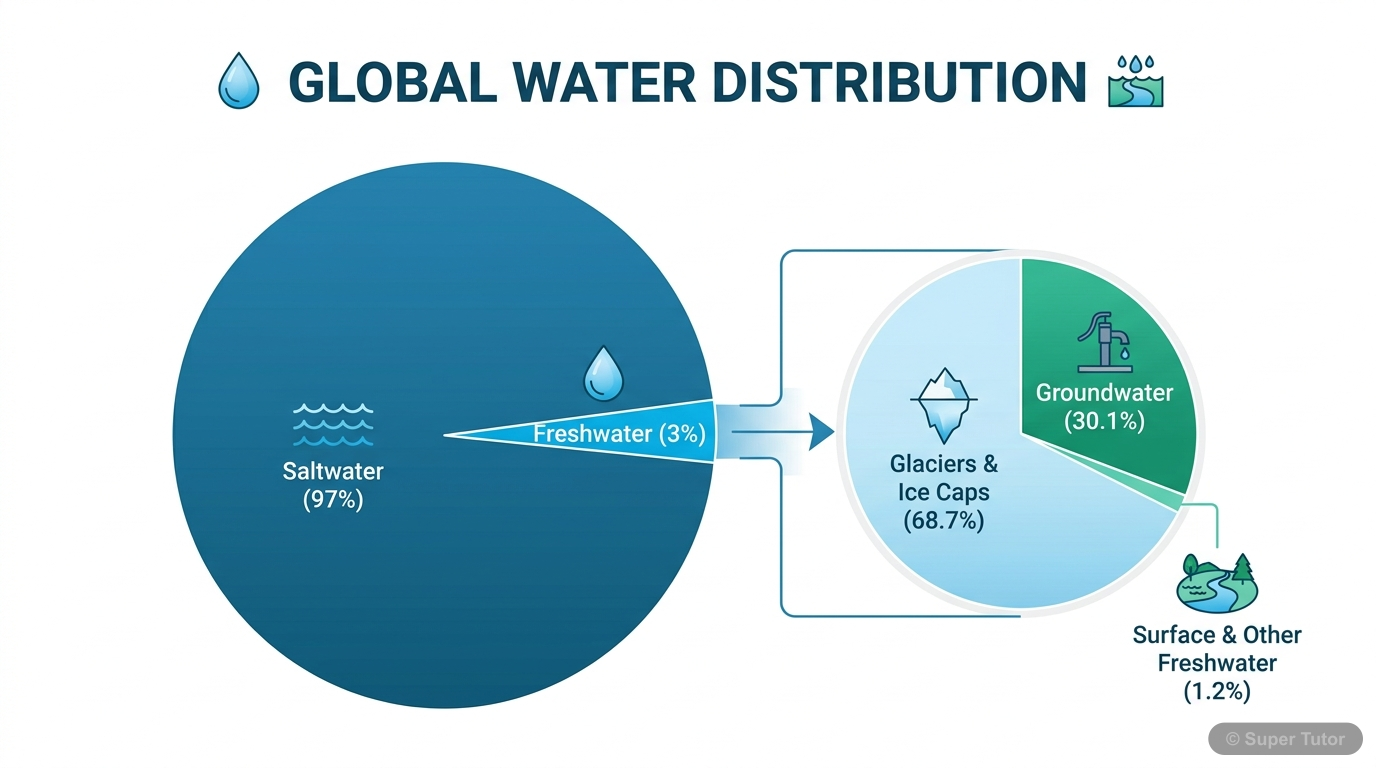
One of 12 illustrations for Water Resources in Super Tutor — alongside flashcards, concept maps and practice questions.
Study Plan
Learn the Theory
Read the textbook chapter carefully. Note down definitions, formulas and key ideas. Focus on: 1. Water as a Resource and Water Scarcity, 2. Need for Water Conservation and Management, 3. Ancient Hydraulic Structures in India.
Practise
Solve the textbook exercises and extra practice questions. There are 57 questions available for this chapter.
Revise & Test
Revise key points without looking at your notes. Take a practice quiz and mark weak areas for another pass.
Spaced Revision
Come back to Water Resources after a week. Use flashcards for quick recall and try past exam questions on this chapter.
What to Focus On
- Water scarcity means lack of usable water.
- It can be quantitative or qualitative.
- Irrigated agriculture is the largest consumer of water.
- Conservation reduces waste of water.
- Management improves storage, distribution, and efficient use.
- Water security supports health, food, and livelihoods.
- Ancient India had advanced water management systems.
- Chandragupta Maurya’s period saw extensive construction of water structures.
- Bhopal Lake was a major artificial lake of its time.
Common Mistakes to Avoid
Water scarcity happens only in deserts or places with very low rainfall.
Water is a non-renewable resource because people keep using it.
A dam means the physical wall across a river, and reservoir means something separate.
Memory Tips
Water scarcity can happen even when water is abundant in nature
Irrigated agriculture is the largest consumer of water
Atal Bhujal Yojana focuses on behaviour change from consumption to conservation
Atal Bhujal Yojana covers seven states
Want a personalised study plan?
Super Tutor builds a day-by-day plan for Uttar Pradesh Board Class 10 Social Science that fits your exam date and pace.
Create My Study PlanFrequently Asked Questions
What are the important topics in Water Resources for Uttar Pradesh Board Class 10 Social Science?
How should I revise Water Resources for the Uttar Pradesh Board Class 10 board exam?
Sources & Official References
Content is aligned to the official syllabus. Refer to the board website for the latest curriculum.
More resources for Water Resources
Practice Quiz
Test yourself with a quick quiz
Important Questions
Exam-style questions with answers
Revision Notes
Key points for last-minute revision
Chapter Summary
Understand the chapter at a glance
Concept Maps
See how topics connect
Flashcards
Quick-fire cards for active recall
Syllabus
What topics to cover
NCERT Solutions
Every textbook question solved step by step
For serious students
Get the full Water Resources chapter — start free.
Quizzes, flashcards, an AI doubt solver and a study plan for Uttar Pradesh Board Class 10 Social Science. Free to start, no card needed.