Chapter 8 of 13
NCERT Solutions

Microbes in Human Welfare

Uttar Pradesh Board · Class 12 · Biology

NCERT Solutions for Microbes in Human Welfare — Uttar Pradesh Board Class 12 Biology.

49 questions50 flashcards5 concepts

Interactive on Super Tutor

Studying Microbes in Human Welfare? Get the full interactive chapter.

Quizzes, flashcards, AI doubt-solver and a step-by-step study plan — built for ncert solutions and more.

1,000+ Class 12 students started this chapter today

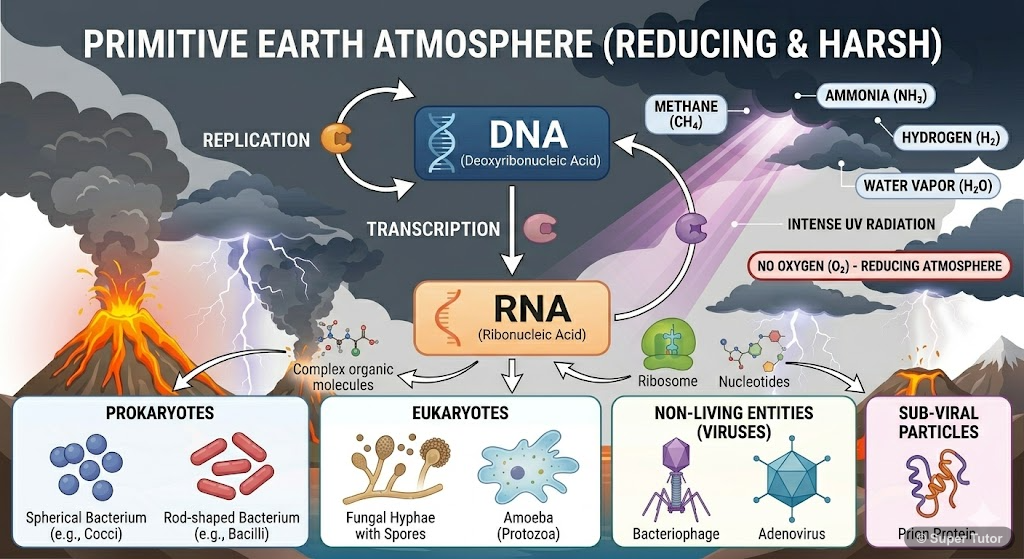
An infographic illustrating the different types of microbes (bacteria, fungi, viruses, protozoa, prions) with representative examples and their general characteristics or shapes.
Super Tutor

This is just one of 13+ visuals inside Super Tutor's Microbes in Human Welfare chapter

Explore the full set
15 Questions Solved · 1 Section

EXERCISES — Microbes in Human Welfare

1Bacteria cannot be seen with the naked eyes, but these can be seen with the help of a microscope. If you have to carry a sample from your home to your biology laboratory to demonstrate the presence of microbes with the help of a microscope, which sample would you carry and why?Show solution
Sample to carry: Curd (or a piece of bread with mould, or a sample of buttermilk).

Best choice — Curd:

Given: We need a sample that is readily available at home and contains microbes that can be demonstrated under a microscope.

Reason:
- Curd is prepared by the action of Lactic Acid Bacteria (LAB), specifically *Lactobacillus* species.
- These bacteria are present in very large numbers in curd (millions per mL).
- A thin smear of curd on a glass slide, when stained and observed under a microscope, clearly shows the rod-shaped or spherical bacterial cells.
- Curd is easily available at home, is safe to handle, and the bacteria in it are non-pathogenic.
- Other suitable samples: a piece of mouldy bread (shows fungal hyphae of *Rhizopus*), or a sample of fermenting dough (shows yeast cells).

Conclusion: Curd is the most convenient and safe sample to carry from home to demonstrate the presence of microbes under a microscope.
2Give examples to prove that microbes release gases during metabolism.Show solution
Concept: Microbes carry out various metabolic processes (fermentation, respiration, decomposition) during which gases are released as by-products.

Examples:

1. Carbon dioxide (CO₂) by Yeast:
- *Saccharomyces cerevisiae* (baker's yeast) ferments sugars anaerobically:
GlucoseYeastEthanol+CO2\text{Glucose} \xrightarrow{\text{Yeast}} \text{Ethanol} + CO_2
- The CO2CO_2 released causes dough to rise (leavening of bread) and produces froth in fermenting liquids (beer, wine).

2. Methane (CH₄) by Methanogens:
- Methanogenic bacteria (e.g., *Methanobacterium*) decompose organic matter in anaerobic conditions and release methane (biogas):
Organic matterMethanogensCH4+CO2+H2S\text{Organic matter} \xrightarrow{\text{Methanogens}} CH_4 + CO_2 + H_2S
- This is the basis of biogas production.

3. Hydrogen sulphide (H₂S) by decomposers:
- Bacteria decomposing proteins and sulphur-containing compounds release H2SH_2S, which gives a foul smell to sewage and rotten eggs.

4. CO₂ by LAB:
- Lactic acid bacteria fermenting milk also release small amounts of CO2CO_2.

Conclusion: The rising of bread dough, production of biogas, and frothing during fermentation are direct evidence that microbes release gases during metabolism.
3In which food would you find lactic acid bacteria? Mention some of their useful applications.Show solution
Foods containing Lactic Acid Bacteria (LAB):
- Curd — LAB (*Lactobacillus*) convert lactose in milk to lactic acid, causing coagulation and formation of curd.
- Cheese
- Buttermilk
- Fermented dough (for *idli*, *dosa*)
- Pickles
- Yoghurt

Useful Applications of LAB:

1. Curd formation: LAB ferment milk to produce curd, which is nutritionally superior to milk as it is more digestible.

2. Nutritional improvement: LAB increase the vitamin B12B_{12} content of the product during fermentation.

3. Checking harmful microbes: The lactic acid produced lowers the pH of the food, thereby checking the growth of disease-causing microbes. This acts as a natural preservative.

4. Cheese production: LAB are used in the preparation of various types of cheese.

5. Health benefits (Probiotics): LAB present in curd help in maintaining a healthy gut flora and improve digestion.

6. Industrial production of lactic acid: Lactic acid produced by LAB is used in the food and pharmaceutical industries.

Conclusion: LAB are found in curd and other fermented dairy products and play an important role in food preservation, nutrition, and industry.
4Name some traditional Indian foods made of wheat, rice and Bengal gram (or their products) which involve use of microbes.Show solution
Concept: Many traditional Indian foods are prepared by fermentation, which involves the action of microbes (bacteria, yeast, or fungi).

| Raw Material | Traditional Food | Microbe Involved |
|---|---|---|
| Rice | *Idli*, *Dosa* | Bacteria (*Leuconostoc*, *Lactobacillus*) and yeast |
| Rice | *Toddy* (fermented rice drink) | Yeast |
| Wheat | Bread | *Saccharomyces cerevisiae* (yeast) |
| Wheat | *Jalebi* | Yeast (*Saccharomyces*) |
| Bengal gram | *Dhokla*, *Khaman* | Bacteria (LAB) and yeast |
| Bengal gram | *Idli* (urad dal + rice) | LAB and yeast |

Details:
- ***Idli* and *Dosa*:** Made from a batter of rice and black gram (*urad dal*) that is fermented overnight by lactic acid bacteria and yeast. Fermentation makes the batter rise and improves nutritional quality.
- ***Dhokla*: Made from fermented batter of Bengal gram flour; microbes produce CO2CO_2 which makes it spongy.
-
Bread:** Wheat dough is fermented by *Saccharomyces cerevisiae*; CO2CO_2 produced makes the bread porous and soft.
- ***Jalebi*: Wheat flour batter is fermented by yeast before frying.

Conclusion:** Fermentation by microbes is an integral part of preparing many traditional Indian foods.
5In which way have microbes played a major role in controlling diseases caused by harmful bacteria?Show solution
Answer: Through the production of Antibiotics.

Definition: Antibiotics are chemical substances produced by some microbes that can kill or retard the growth of other (disease-causing) microbes.

How microbes help control bacterial diseases:

1. Production of Antibiotics: Certain fungi and bacteria produce antibiotics that are used to treat infectious diseases.
- *Penicillium notatum* / *P. chrysogenum* → produces Penicillin (first antibiotic discovered by Alexander Fleming in 1928).
- *Streptomyces* (bacteria) → produces Streptomycin, Tetracycline, Erythromycin.
- *Cephalosporium* (fungus) → produces Cephalosporins.

2. Mechanism: Antibiotics interfere with the cell wall synthesis, protein synthesis, or DNA replication of pathogenic bacteria, thereby killing them or stopping their growth.

3. Diseases controlled:
- Penicillin controls — Diphtheria, whooping cough (pertussis), pneumonia, syphilis.
- Streptomycin controls — Tuberculosis.
- Tetracycline controls — Cholera, typhoid.

Conclusion: Microbes have played a revolutionary role in human welfare by producing antibiotics that have saved millions of lives by controlling deadly bacterial infections.
6Name any two species of fungus, which are used in the production of the antibiotics.Show solution
Two fungal species used in antibiotic production:

1. *Penicillium notatum* (also *Penicillium chrysogenum*)
- Antibiotic produced: Penicillin
- Penicillin was the first antibiotic to be discovered (by Alexander Fleming, 1928) and is used against a wide range of gram-positive bacterial infections.

2. *Cephalosporium acremonium* (now reclassified as *Acremonium chrysogenum*)
- Antibiotic produced: Cephalosporin
- Cephalosporins are broad-spectrum antibiotics effective against both gram-positive and gram-negative bacteria.

Conclusion: *Penicillium* and *Cephalosporium* are two important fungal genera that have contributed significantly to antibiotic production and human medicine.
7What is sewage? In which way can sewage be harmful to us?Show solution
Definition of Sewage:
Sewage is the municipal wastewater that contains large amounts of organic matter, pathogenic microbes, and other pollutants. It is the waste water generated from homes, hospitals, offices, and industries that is carried through a network of sewers (underground pipes).

Composition of Sewage:
- Human excreta and urine
- Waste water from kitchens and bathrooms
- Industrial effluents
- Pathogenic microorganisms (bacteria, viruses, protozoa, worms)
- Suspended solids and dissolved organic matter

How Sewage is Harmful to Us:

1. Spread of Waterborne Diseases: Untreated sewage discharged into water bodies contaminates drinking water and causes diseases like:
- Typhoid (*Salmonella typhi*)
- Cholera (*Vibrio cholerae*)
- Dysentery (*Entamoeba histolytica*)
- Hepatitis A (virus)
- Polio (virus)

2. Water Pollution: Sewage increases the BOD (Biochemical Oxygen Demand) of water bodies, depleting dissolved oxygen and killing aquatic life.

3. Eutrophication: Nutrients (nitrates, phosphates) in sewage cause excessive algal growth (algal bloom), leading to oxygen depletion in water bodies.

4. Soil Pollution: Untreated sewage used for irrigation contaminates soil and crops.

5. Foul Odour and Aesthetic Pollution: Decomposing organic matter in sewage releases foul-smelling gases like H2SH_2S and NH3NH_3.

Conclusion: Sewage is a major source of water pollution and can cause serious public health hazards if not properly treated before disposal.
8What is the key difference between primary and secondary sewage treatment?Show solution
Key Difference:

| Feature | Primary Treatment | Secondary Treatment |
|---|---|---|
| Nature | Physical process | Biological process |
| Method | Filtration and sedimentation | Microbial decomposition (aerobic) |
| What is removed | Floating debris, suspended solids, grit | Dissolved organic matter, BOD |
| Product | Primary sludge + clarified water (effluent) | Secondary sludge + treated effluent |
| Microbes involved | None (physical) | Bacteria, fungi, protozoa (aerobic) |
| BOD reduction | Partial | Significant (BOD reduced to safe levels) |

Primary Treatment (Physical):
- Sewage is passed through bar screens to remove large floating objects.
- Then through a grit chamber to remove sand and gravel.
- Then into a sedimentation tank where suspended solids settle as primary sludge; the liquid (effluent) is passed for secondary treatment.

Secondary Treatment (Biological):
- The primary effluent is passed into large aeration tanks where it is constantly agitated and air is pumped in.
- Aerobic microbes form flocs (masses of bacteria held together by slime and fungal filaments).
- These microbes consume the dissolved organic matter, significantly reducing the BOD (Biochemical Oxygen Demand).
- The effluent then goes to a settling tank where the flocs settle as activated sludge.
- A part of the activated sludge is pumped back into the aeration tank as inoculum; the remaining is passed to anaerobic sludge digesters where methanogens decompose it, producing biogas.

Conclusion: The key difference is that primary treatment is a physical process removing suspended solids, while secondary treatment is a biological process using microbes to remove dissolved organic matter and reduce BOD.
9Do you think microbes can also be used as source of energy? If yes, how?Show solution
Yes, microbes can definitely be used as a source of energy.

How microbes are used as a source of energy:

1. Biogas Production:
- Methanogens (e.g., *Methanobacterium*) are anaerobic bacteria that decompose organic matter (animal dung, plant waste, sewage sludge) and produce biogas.
- Biogas is a mixture of gases, mainly methane (CH4CH_4, ~75%), CO2CO_2, H2SH_2S, and H2H_2.
- Methane is a clean fuel with high calorific value.
- Biogas plants (gobar gas plants): Cattle dung (gobar) mixed with water is fed into an anaerobic digester tank. Methanogens act on it and produce biogas, which is collected and used for cooking and lighting in rural areas.
Organic matterMethanogens (anaerobic)CH4+CO2+H2S\text{Organic matter} \xrightarrow{\text{Methanogens (anaerobic)}} CH_4 + CO_2 + H_2S

2. Bioethanol:
- Yeast (*Saccharomyces cerevisiae*) ferments sugarcane juice, corn starch, or cellulose to produce ethanol (bioethanol).
- Bioethanol is used as a biofuel, blended with petrol to run vehicles.
GlucoseYeast2C2H5OH+2CO2\text{Glucose} \xrightarrow{\text{Yeast}} 2C_2H_5OH + 2CO_2

3. Microbial Fuel Cells (MFCs):
- Certain bacteria can transfer electrons from organic matter oxidation to an electrode, generating electricity directly.

4. Biohydrogen:
- Some microbes (e.g., *Clostridium*, cyanobacteria) can produce hydrogen gas through fermentation or photolysis of water, which can be used as a clean fuel.

Conclusion: Microbes, especially methanogens and yeast, are important sources of renewable energy in the form of biogas and bioethanol, and their use reduces dependence on fossil fuels.
10Microbes can be used to decrease the use of chemical fertilisers and pesticides. Explain how this can be accomplished.Show solution
Microbes as Alternatives to Chemical Fertilisers — Biofertilisers:

1. Nitrogen-fixing bacteria:
- *Rhizobium* forms symbiotic nodules on roots of leguminous plants and fixes atmospheric N2N_2 into organic nitrogen (ammonia), enriching soil nitrogen.
- *Azotobacter* and *Azospirillum* are free-living nitrogen-fixing bacteria that enrich soil nitrogen without forming symbiosis.
- ***Anabaena*, *Nostoc*, *Oscillatoria* (cyanobacteria) fix atmospheric nitrogen in paddy fields and also add organic matter to soil.

2. Phosphate solubilising microbes:
- Fungi of genus
*Glomus* form mycorrhizal associations with plant roots. The fungal symbiont absorbs phosphorus from soil and passes it to the plant, reducing the need for phosphatic fertilisers.

3. Cyanobacteria as biofertilisers:
- Blue-green algae (cyanobacteria) fix nitrogen and add organic matter to soil, increasing soil fertility in paddy fields.

---

Microbes as Alternatives to Chemical Pesticides — Biocontrol Agents:

1. *Bacillus thuringiensis* (Bt):
- This bacterium produces
Bt toxin (crystal proteins / Cry proteins) that kills insect larvae (caterpillars, beetles, flies) by disrupting their gut.
- Bt spores are sprayed on crops as a biopesticide.
- Bt toxin genes have also been incorporated into crop plants (Bt cotton, Bt brinjal) to make them pest-resistant.

2. *Trichoderma* (fungus):
- Free-living fungi in the soil that act as
biocontrol agents against several plant pathogens, protecting plant roots.

3. *Baculoviruses* (Nuclear Polyhedrosis Viruses — NPV):
- These are species-specific viruses that attack and kill insect pests without harming other organisms, plants, or the environment.
- They are excellent biocontrol agents for integrated pest management (IPM).

4. Predatory microbes:
- The bacterium
*Bacillus sphaericus* is used to control mosquito larvae.

Conclusion:** By using biofertilisers (Rhizobium, Azotobacter, mycorrhiza, cyanobacteria) and biocontrol agents (Bt, Trichoderma, baculoviruses), the use of chemical fertilisers and pesticides can be significantly reduced, leading to sustainable and eco-friendly agriculture.
11Three water samples namely river water, untreated sewage water and secondary effluent discharged from a sewage treatment plant were subjected to BOD test. The samples were labelled A, B and C; but the laboratory attendant did not note which was which. The BOD values of the three samples A, B and C were recorded as 20mg/L20\mathrm{mg/L}, 8mg/L8\mathrm{mg/L} and 400mg/L400\mathrm{mg/L}, respectively. Which sample of the water is most polluted? Can you assign the correct label to each assuming the river water is relatively clean?Show solution
Concept: BOD (Biochemical Oxygen Demand) is the amount of oxygen (in mg/L) consumed by microbes to decompose the organic matter present in one litre of water. Higher BOD = more organic matter = more pollution.

Given BOD values:
- Sample A = 20 mg/L20 \text{ mg/L}
- Sample B = 8 mg/L8 \text{ mg/L}
- Sample C = 400 mg/L400 \text{ mg/L}

Most Polluted Sample:
Sample C with BOD=400 mg/L is the most polluted.\text{Sample C with BOD} = 400 \text{ mg/L is the most polluted.}

Assigning correct labels:

| Sample | BOD Value | Identity | Reasoning |
|---|---|---|---|
| C | 400 mg/L400 \text{ mg/L} | Untreated sewage water | Highest BOD — contains maximum dissolved organic matter and microbes; most polluted |
| A | 20 mg/L20 \text{ mg/L} | Secondary effluent (from sewage treatment plant) | Moderate BOD — organic matter has been partially removed by biological treatment but some remains |
| B | 8 mg/L8 \text{ mg/L} | River water (relatively clean) | Lowest BOD — least organic matter; relatively clean water |

Conclusion:
- Sample C (400 mg/L400 \text{ mg/L}) → Untreated sewage water (most polluted)
- Sample A (20 mg/L20 \text{ mg/L}) → Secondary effluent from sewage treatment plant
- Sample B (8 mg/L8 \text{ mg/L}) → River water (relatively clean, least polluted)

Note: The BOD of clean river water is typically less than 10 mg/L10 \text{ mg/L}, secondary effluent is around 101030 mg/L30 \text{ mg/L}, and untreated sewage can be several hundred mg/L.
12Find out the name of the microbes from which Cyclosporin A (an immunosuppressive drug) and Statins (blood cholesterol lowering agents) are obtained.Show solution
1. Cyclosporin A (Immunosuppressive drug):
- Source microbe: *Trichoderma polysporum* (a fungus)
- Use: Cyclosporin A is used as an immunosuppressive agent in organ transplant patients to prevent rejection of the transplanted organ. It suppresses the immune response of the recipient's body.

2. Statins (Blood cholesterol-lowering agents):
- Source microbe: *Monascus purpureus* (a yeast / fungus)
- Example: Lovastatin (first statin discovered)
- Use: Statins competitively inhibit the enzyme HMG-CoA reductase, which is involved in cholesterol biosynthesis in the liver, thereby lowering blood cholesterol levels.
- Statins are used to treat hypercholesterolaemia and reduce the risk of cardiovascular diseases.

Summary Table:

| Drug | Source Microbe | Use |
|---|---|---|
| Cyclosporin A | *Trichoderma polysporum* (fungus) | Immunosuppressant (organ transplant) |
| Statins (Lovastatin) | *Monascus purpureus* (yeast/fungus) | Lower blood cholesterol |

Conclusion: Both Cyclosporin A and Statins are important bioactive molecules produced by fungi that have revolutionised medicine in the fields of organ transplantation and cardiovascular disease management.
13Find out the role of microbes in the following and discuss it with your teacher.
(a) Single cell protein (SCP)
(b) Soil
Show solution
(a) Single Cell Protein (SCP):

Definition: Single Cell Protein refers to the dried cells of microorganisms (bacteria, yeast, algae, or fungi) that are used as a protein supplement in human food or animal feed.

Role of Microbes in SCP:
- Microbes have a very high protein content (40–80% of dry weight) and can be grown rapidly on cheap substrates (industrial waste, agricultural waste, molasses, whey, etc.).
- Microbes used for SCP production:
- *Spirulina* (cyanobacterium) — grown on waste water; rich in protein, fats, carbohydrates, vitamins, and minerals.
- *Methylophilus methylotrophus* (bacterium) — grown on methanol; used as animal feed ("Pruteen").
- *Saccharomyces cerevisiae* (yeast) — used as food supplement.
- *Fusarium* (fungus) — produces "Quorn" (mycoprotein) used as meat substitute.
- Advantages:
- Reduces pressure on conventional agricultural protein sources.
- Can be produced on industrial scale using waste materials.
- Provides protein to malnourished populations.
- Reduces environmental pollution by using industrial effluents as substrate.

---

(b) Role of Microbes in Soil:

Microbes play extremely important roles in maintaining soil health and fertility:

1. Decomposition / Nutrient Cycling:
- Bacteria and fungi decompose dead organic matter (leaf litter, animal remains) into simpler inorganic compounds, releasing nutrients back into the soil (carbon, nitrogen, phosphorus cycles).

2. Nitrogen Fixation:
- Free-living bacteria (*Azotobacter*, *Azospirillum*, cyanobacteria) and symbiotic bacteria (*Rhizobium* in legume root nodules) fix atmospheric N2N_2 into ammonia, enriching soil nitrogen.

3. Nitrification:
- *Nitrosomonas* converts NH3NH_3NO2NO_2^-; *Nitrobacter* converts NO2NO_2^-NO3NO_3^- (nitrates), which are absorbed by plants.

4. Denitrification:
- *Pseudomonas* and other bacteria convert nitrates back to N2N_2, completing the nitrogen cycle.

5. Mycorrhizal associations:
- Fungi (*Glomus*) form mycorrhiza with plant roots, helping in phosphorus absorption and improving plant growth.

6. Soil Structure:
- Microbial activity improves soil texture, aeration, and water-holding capacity.

7. Biocontrol:
- *Trichoderma* and other soil microbes suppress soil-borne plant pathogens.

Conclusion: Microbes are indispensable for soil fertility and ecosystem functioning.
14Arrange the following in the decreasing order (most important first) of their importance, for the welfare of human society. Give reasons for your answer.
Biogas, Citric acid, Penicillin and Curd
Show solution
Decreasing order of importance for human welfare:

\boxed{\text{Penicillin} > \text{Biogas} > \text{Curd} > \text{Citric acid}}

Reasons:

1. Penicillin (Most Important):
- Penicillin is an antibiotic produced by *Penicillium notatum*.
- It revolutionised medicine by providing an effective treatment against deadly bacterial infections like pneumonia, diphtheria, whooping cough, syphilis, and many others.
- Before antibiotics, these diseases killed millions of people. Penicillin has saved hundreds of millions of lives worldwide.
- Its discovery is considered one of the greatest achievements in medical history.
- Impact: Life-saving; affects the most fundamental aspect of human welfare — health and survival.

2. Biogas (Second):
- Biogas (mainly methane) is produced by methanogens from organic waste.
- It provides a clean, renewable source of energy to millions of rural households for cooking and lighting.
- It reduces dependence on fossil fuels, reduces deforestation (less firewood needed), and reduces greenhouse gas emissions.
- The spent slurry is an excellent organic manure.
- Impact: Addresses energy needs and environmental sustainability for a large population.

3. Curd (Third):
- Curd is produced by Lactic Acid Bacteria (LAB) fermenting milk.
- It is a nutritious food consumed daily by millions; it is more digestible than milk, contains probiotics, and has higher vitamin B12B_{12} content.
- It also acts as a food preservative and is the basis of many dairy products.
- Impact: Important for nutrition and food security, but less critical than medicines or energy.

4. Citric Acid (Least Important among these):
- Citric acid is produced by *Aspergillus niger* from molasses.
- It is used as a food additive (flavouring, preservative), in pharmaceuticals, and in the cosmetic industry.
- While useful, it is not as critical to human survival and welfare as antibiotics, energy, or staple food.
- Impact: Industrial/commercial importance, but not essential for survival.

Conclusion:
\text{Penicillin} > \text{Biogas} > \text{Curd} > \text{Citric acid}
15How do biofertilisers enrich the fertility of the soil?Show solution
Definition: Biofertilisers are organisms (mainly bacteria, fungi, and cyanobacteria) that enrich the nutrient quality of the soil through natural biological processes.

How biofertilisers enrich soil fertility:

1. Nitrogen Fixation by Bacteria:

(a) Symbiotic nitrogen fixation:
- *Rhizobium* bacteria form symbiotic associations with roots of leguminous plants (pea, bean, soybean, groundnut), forming root nodules.
- They fix atmospheric N2N_2 into ammonia (NH3NH_3), which is converted to organic nitrogen used by the plant.
- When the plant dies, this fixed nitrogen is released into the soil, enriching it.
N2+8H++8eNitrogenase2NH3+H2N_2 + 8H^+ + 8e^- \xrightarrow{\text{Nitrogenase}} 2NH_3 + H_2

(b) Free-living nitrogen fixation:
- *Azotobacter* and *Azospirillum* are free-living bacteria in soil that fix atmospheric nitrogen independently, directly enriching soil nitrogen content.

2. Nitrogen Fixation by Cyanobacteria:
- ***Anabaena*, *Nostoc*, *Oscillatoria* are cyanobacteria (blue-green algae) that fix atmospheric nitrogen.
- They are especially important as biofertilisers in
paddy fields.
- They also add organic matter to the soil, improving its structure and fertility.

3. Phosphorus Solubilisation by Mycorrhizal Fungi:
- Fungi of genus
*Glomus* form mycorrhizal associations with plant roots.
- The fungal hyphae have a large surface area and absorb
phosphorus from soil (even from insoluble forms) and transfer it to the plant.
- Plants with mycorrhizal associations also show:
- Resistance to root-borne pathogens
- Tolerance to salinity and drought
- Overall increase in plant growth and development

4. Addition of Organic Matter:
- Decomposition of microbial biomass adds humus and organic matter to soil, improving soil texture, water retention, and aeration.

Summary Table:**

| Biofertiliser | Microbe | Benefit |
|---|---|---|
| Nitrogen fixation (symbiotic) | *Rhizobium* | Fixes N2N_2 in legume root nodules |
| Nitrogen fixation (free-living) | *Azotobacter*, *Azospirillum* | Fixes N2N_2 directly in soil |
| Nitrogen fixation (aquatic) | *Anabaena*, *Nostoc* | Fixes N2N_2 in paddy fields |
| Phosphorus absorption | *Glomus* (mycorrhiza) | Absorbs and transfers phosphorus to plants |

Conclusion: Biofertilisers enrich soil fertility by fixing atmospheric nitrogen, solubilising phosphorus, and adding organic matter to the soil through natural biological processes, thereby reducing the need for chemical fertilisers and promoting sustainable agriculture.

Stuck on a step?

Ask Super Tutor AI to explain any solution on this page in a simpler way — free, 24x7.

Ask a Doubt Free

Frequently Asked Questions

What are the important topics in Microbes in Human Welfare for Uttar Pradesh Board Class 12 Biology?
Microbes in Human Welfare covers several key topics that are frequently asked in Uttar Pradesh Board Class 12 board exams. Focus on the core concepts listed on this page and practise related questions to build confidence.
How to score full marks in Microbes in Human Welfare — Uttar Pradesh Board Class 12 Biology?
Understand the core concepts first, then work through the 49 practice questions available for this chapter. Revise formulas and definitions regularly, and use flashcards for quick recall before the exam.
Where can I get free NCERT Solutions for Microbes in Human Welfare Class 12 Biology?
This page has free step-by-step NCERT Solutions for every exercise question in Microbes in Human Welfare (Uttar Pradesh Board Class 12 Biology) — written the way examiners award marks: given, formula, working, answer.

Sources & Official References

Content is aligned to the official syllabus. Refer to the board website for the latest curriculum.

For serious students

Get the full Microbes in Human Welfare chapter — for free.

Quizzes, flashcards, AI doubt-solver and a step-by-step study plan for Uttar Pradesh Board Class 12 Biology.