Sound — Practice Quiz
Uttar Pradesh Board · Class 9 · Science
Try a 4-question quiz on Sound for Uttar Pradesh Board Class 9 Science: tap an answer to check it and see why. 29 questions in the full chapter test.
Interactive on Super Tutor
Studying Sound? Get the full interactive chapter.
Quizzes, flashcards, AI doubt-solver and a step-by-step study plan — built for practice quiz and more.
Free trial, no card needed.
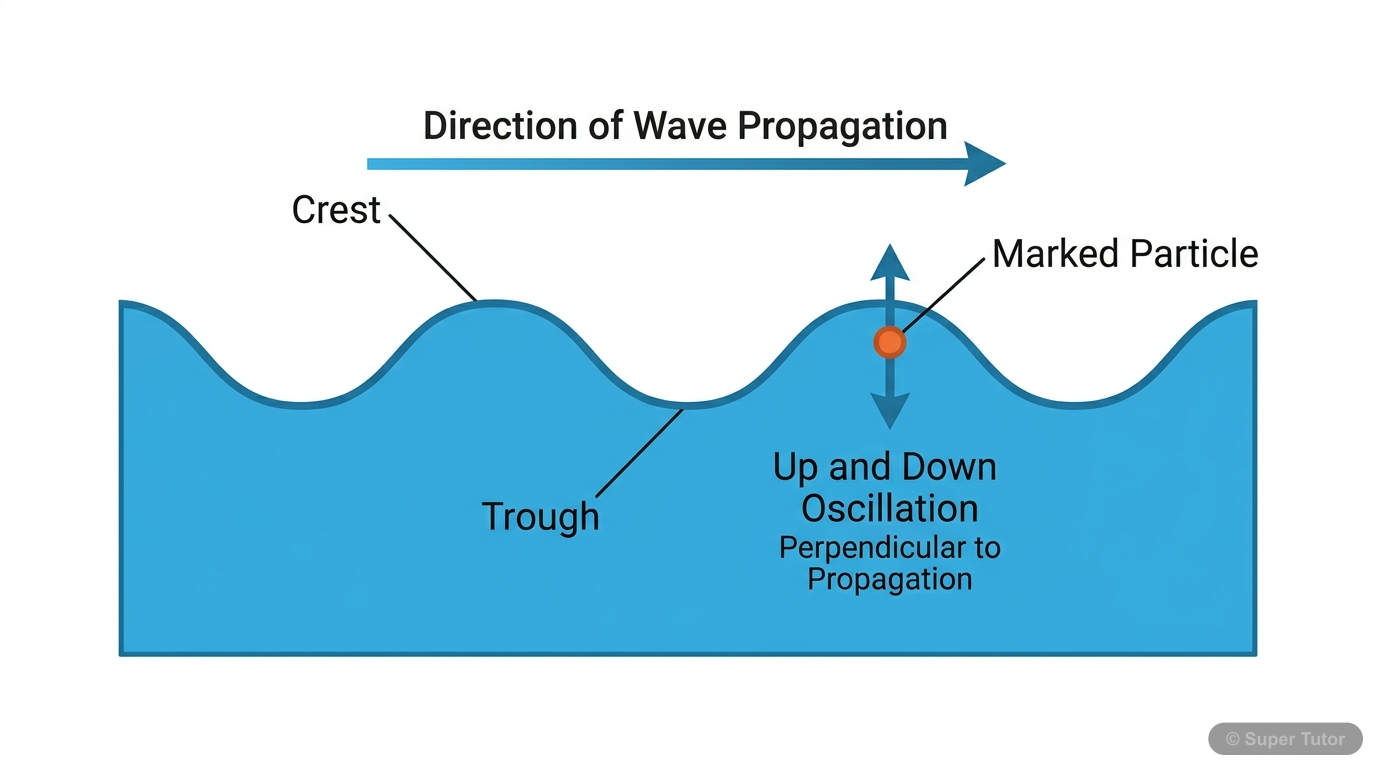
One of 2 illustrations for Sound in Super Tutor — alongside flashcards, concept maps and practice questions.
Quick Quiz: Sound
0/4Tap an answer to check it instantly. No sign-up needed for these 4.
What is the primary cause of sound production?
The SI unit of frequency is:
What is the minimum distance required to hear a distinct echo if the speed of sound is 344 m/s?
The audible range for average human beings is:
Sample Questions
Which of the following are examples of longitudinal waves?
Show answer
Sound waves in air, Sound waves in water, Sound waves in solids
Sound waves are longitudinal waves where particles oscillate parallel to the direction of wave propagation. This occurs in all media - solids, liquids, and gases. Light waves and surface water waves are transverse waves.
Sound cannot travel through vacuum.
Show answer
True
Sound requires a medium (solid, liquid, or gas) to travel. It cannot propagate through vacuum because there are no particles to carry the vibrations. This is why there is no sound in space.
Which factors affect the speed of sound?
Show answer
Nature of the medium, Temperature of the medium, Density of the medium
Speed of sound depends on the nature, temperature, and density of the medium. It travels fastest in solids, slower in liquids, and slowest in gases. Higher temperature increases speed. Frequency and amplitude do not affect the speed of sound.
Compressions in a sound wave are regions of:
Show answer
High pressure and high density
Compressions are regions where particles are crowded together, resulting in high pressure and high density. Rarefactions are regions of low pressure and low density where particles are spread apart.
+25 more questions on Sound (Uttar Pradesh Board Class 9 Science)
Practise AllFrequently Asked Questions
What are the important topics in Sound for Uttar Pradesh Board Class 9 Science?
How many practice questions are there for Sound?
Sources & Official References
Content is aligned to the official syllabus. Refer to the board website for the latest curriculum.
More resources for Sound
For serious students
Get the full Sound chapter — start free.
Quizzes, flashcards, an AI doubt solver and a study plan for Uttar Pradesh Board Class 9 Science. Free to start, no card needed.