Colonialism and the Countryside: Exploring Official Archives — Flashcards
Assam Board · Class 12 · History
84 flashcards for Colonialism and the Countryside: Exploring Official Archives (Assam Board Class 12 History) to test yourself on key terms and facts.
Interactive on Super Tutor
Studying Colonialism and the Countryside: Exploring Official Archives? Get the full interactive chapter.
Quizzes, flashcards, AI doubt-solver and a step-by-step study plan — built for flashcards and more.
Free trial, no card needed.
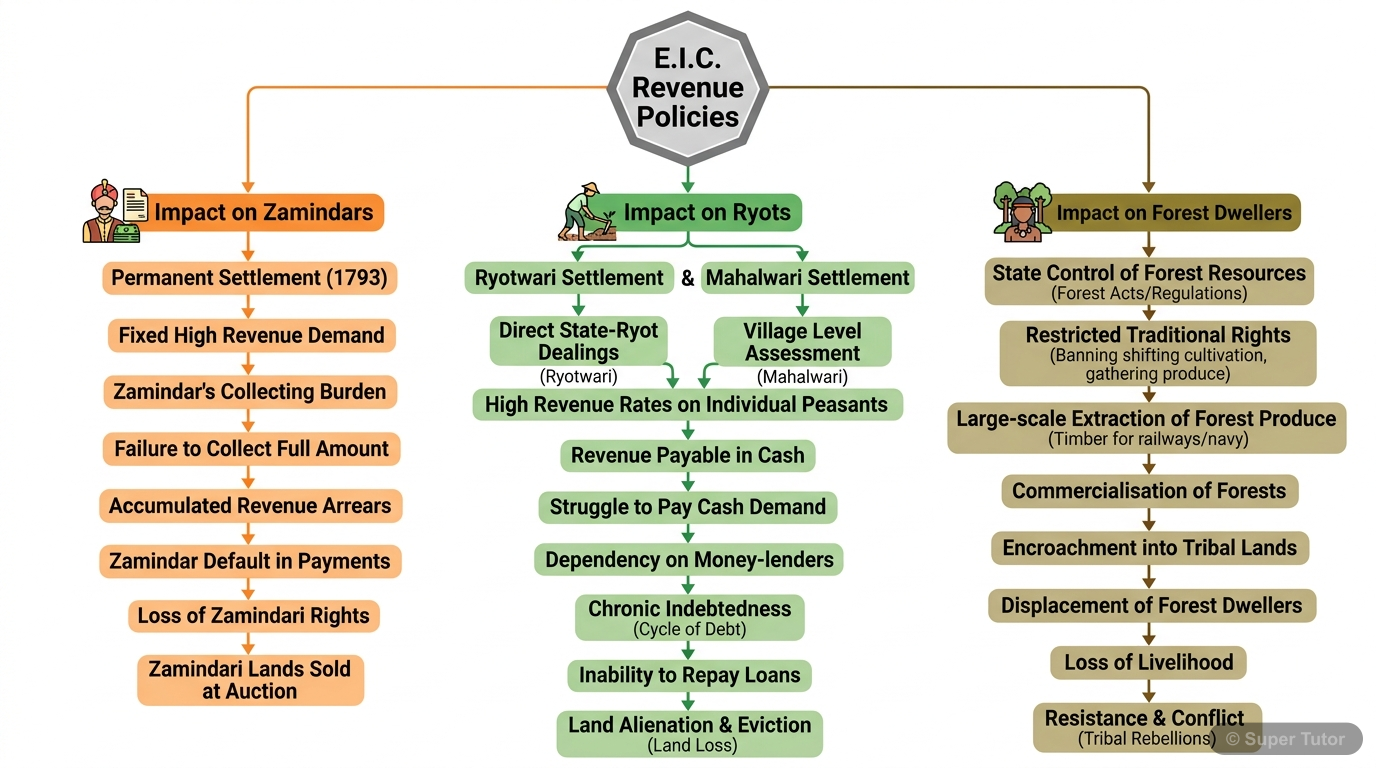
Learn better with visuals Super Tutor pairs illustrations like this with notes and quizzes for Colonialism and the Countryside: Exploring Official Archives.
What did colonial rule mean for the countryside in India?
Answer
Colonial rule changed land rights, revenue collection, and everyday rural life. It affected who gained land, who lost land, how peasants borrowed money, and how villagers responded through resistance …
भारत में औपनिवेशिक शासन का ग्रामीण इलाकों के लिए क्या अर्थ था?
Answer
औपनिवेशिक शासन ने भूमि अधिकारों, राजस्व संग्रह और रोजमर्रा के ग्रामीण जीवन को बदल दिया। इसने प्रभावित किया कि किसे भूमि मिली, किसे भूमि खो गई, किसान कैसे पैसे उधार लेते थे, और ग्रामीणों ने प्रतिरोध और…
स्थायी बंदोबस्त
Answer
स्थायी बंदोबस्त बंगाल की राजस्व प्रणाली थी जिसे 1793 में शुरू किया गया था। राजस्व की मांग हमेशा के लिए तय की गई थी और जमींदारों को इसे कंपनी को नियमित रूप से देना पड़ता था।…
Permanent Settlement
Answer
The Permanent Settlement was the Bengal revenue system introduced in 1793. The revenue demand was fixed in perpetuity, and zamindars had to pay it regularly to the Company.
Under the Permanent Settlement, what was a zamindar?
Answer
A zamindar was a revenue collector of the state, not a landowner in the village. The zamindar collected rent from villages, paid fixed revenue to the Company, and kept the difference as income.
स्थायी बंदोबस्त के अंतर्गत जमींदार कौन था?
Answer
ज़मींदार राज्य का राजस्व संग्राहक होता था, गांव का जमींदार नहीं। ज़मींदार गांव से किराया वसूलता था, कंपनी को नियत राजस्व देता था और बाकी की राशि आय के रूप में रखता था।…
1797 की बर्दवान नीलामी क्यों महत्वपूर्ण थी?
Answer
नीलामी ने दिखाया कि स्थायी बंदोबस्त व्यवहार में कैसे काम करता था। बर्दवान के राजा की संपत्तियों की सार्वजनिक रूप से अवैतनिक राजस्व के लिए नीलामी की गई, लेकिन बिक्री का 95 प्रतिशत से अधिक काल्पनिक था, …
Why did the Burdwan auction of 1797 matter?
Answer
The auction showed how the Permanent Settlement worked in practice. The Raja of Burdwan’s estates were publicly auctioned for unpaid revenue, but over 95 per cent of the sale was fictitious, so contro…
+76 more flashcards
Practise AllFrequently Asked Questions
What are the important topics in Colonialism and the Countryside: Exploring Official Archives for Assam Board Class 12 History?
How many flashcards are available for Colonialism and the Countryside: Exploring Official Archives?
How should I revise Colonialism and the Countryside: Exploring Official Archives for the Assam Board Class 12 board exam?
Sources & Official References
Content is aligned to the official syllabus. Refer to the board website for the latest curriculum.
More resources for Colonialism and the Countryside: Exploring Official Archives
Practice Quiz
Test yourself with a quick quiz
Important Questions
Exam-style questions with answers
Revision Notes
Key points for last-minute revision
Chapter Summary
Understand the chapter at a glance
Concept Maps
See how topics connect
Study Plan
Step-by-step plan for this chapter
Syllabus
What topics to cover
NCERT Solutions
Every textbook question solved step by step
For serious students
Get the full Colonialism and the Countryside: Exploring Official Archives chapter — start free.
Quizzes, flashcards, an AI doubt solver and a study plan for Assam Board Class 12 History. Free to start, no card needed.