Cultural Change
Assam Board · Class 12 · Sociology
Most important questions from Cultural Change for Assam Board Class 12 Sociology board exam 2026. MCQs, short answer, and long answer questions with marks.
Interactive on Super Tutor
Studying Cultural Change? Get the full interactive chapter.
Quizzes, flashcards, AI doubt-solver and a step-by-step study plan — built for important questions and more.
1,000+ Class 12 students started this chapter today
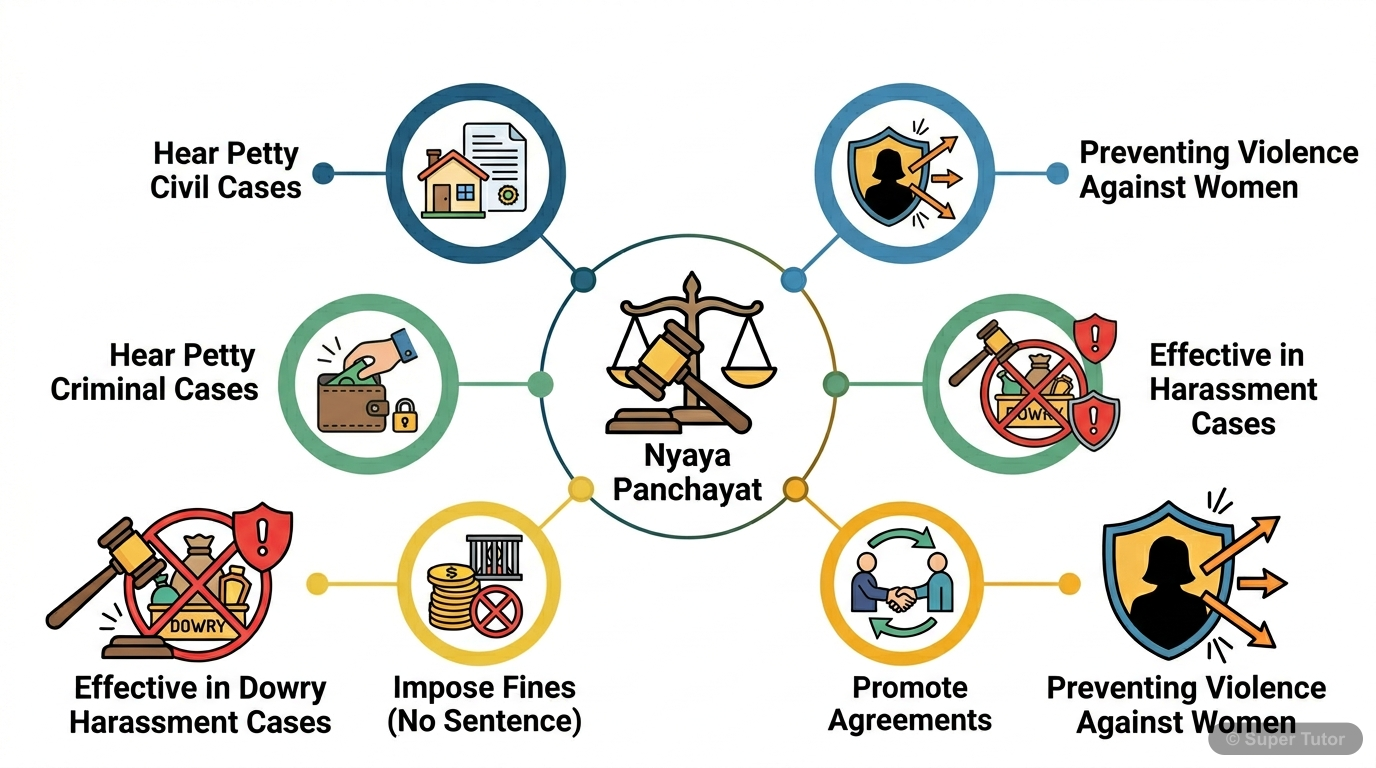
Super Tutor has 7+ illustrations like this for Cultural Change alone — flashcards, concept maps, and step-by-step visuals.
See them allSample Questions
Which of the following were major social evils that 19th century reformers fought against?
Show answer
Sati, Child marriage, Ban on widow remarriage, Caste discrimination
The 19th century social reform movements primarily targeted sati, child marriage, ban on widow remarriage, and caste discrimination as major social evils. The joint family system was not considered a social evil by reformers.
Raja Ram Mohun Roy attacked the practice of sati based on which approaches?
Show answer
Humanitarian doctrines, Natural rights doctrines, Hindu shastras
Raja Ram Mohun Roy used a creative combination of modern Western liberal ideas (humanitarian and natural rights doctrines) along with traditional Hindu scriptural authority (shastras) to argue against sati.
The modern context of 19th century social reform was characterized by which three aspects according to Satish Saberwal?
Show answer
Modes of communication, Forms of organisation, Nature of ideas
Sociologist Satish Saberwal identified three key aspects of the modern framework: new modes of communication (printing press, telegraph), modern forms of organisation (like Brahmo Samaj), and the nature of new liberal ideas.
True or False: Sanskritisation always leads to structural changes in society.
Show answer
False
Sanskritisation has been criticized for leading to no structural change but only positional change of some individuals. The inequality continues to persist though some individuals may improve their positions within the unequal structure.
+39 more questions available
Practice AllFrequently Asked Questions
What are the important topics in Cultural Change for Assam Board Class 12 Sociology?
How to score full marks in Cultural Change — Assam Board Class 12 Sociology?
How many important questions are there in Cultural Change?
Sources & Official References
Content is aligned to the official syllabus. Refer to the board website for the latest curriculum.
More resources for Cultural Change
Practice Quiz
Test yourself with a quick quiz
Revision Notes
Key points for last-minute revision
Formula Sheet
All formulas in one place
Chapter Summary
Understand the chapter at a glance
Concept Maps
See how topics connect visually
Study Plan
Step-by-step plan to ace this chapter
Flashcards
Quick-fire cards for active recall
Syllabus
What topics to cover
NCERT Solutions
Every textbook question solved step by step
For serious students
Get the full Cultural Change chapter — for free.
Quizzes, flashcards, AI doubt-solver and a step-by-step study plan for Assam Board Class 12 Sociology.