How do Organisms Reproduce? — Study Plan
CBSE · Class 10 · Science
A step-by-step study plan for How do Organisms Reproduce?, CBSE Class 10 Science: what to learn first, what to practise and when to revise.
Interactive on Super Tutor
Studying How do Organisms Reproduce?? Get the full interactive chapter.
Quizzes, flashcards, AI doubt-solver and a step-by-step study plan — built for study plan and more.
Free trial, no card needed.
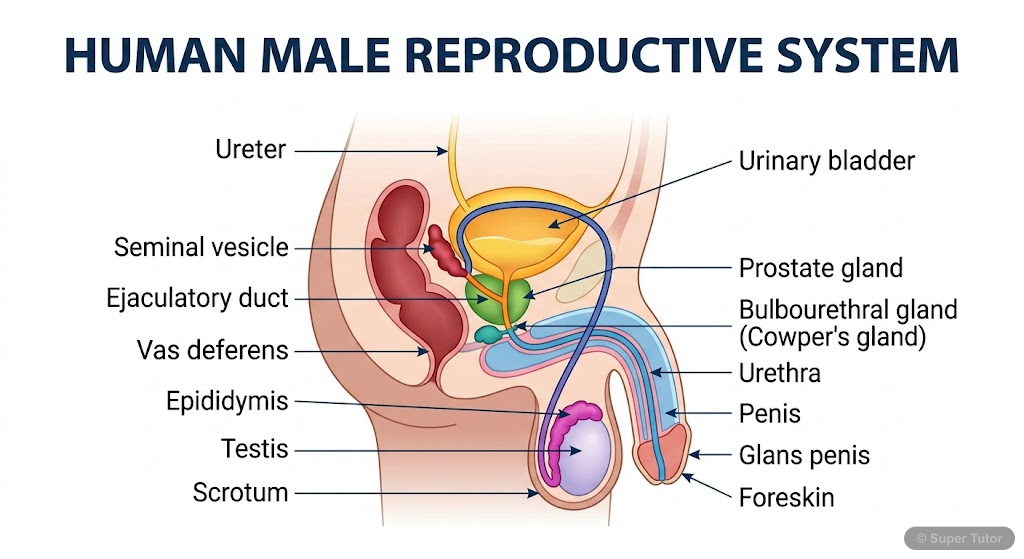
One of 20 illustrations for How do Organisms Reproduce? in Super Tutor — alongside flashcards, concept maps and practice questions.
Study Plan
Learn the Theory
Read the textbook chapter carefully. Note down definitions, formulas and key ideas. Focus on: 1. Why reproduction matters, 2. Asexual reproduction, 3. Sexual reproduction in plants.
Practise
Solve the textbook exercises and extra practice questions. There are 63 questions available for this chapter.
Revise & Test
Revise key points without looking at your notes. Take a practice quiz and mark weak areas for another pass.
Spaced Revision
Come back to How do Organisms Reproduce? after a week. Use flashcards for quick recall and try past exam questions on this chapter.
What to Focus On
- Reproduction is not necessary for the life of an individual organism.
- DNA copying happens during reproduction.
- DNA copying is accompanied by extra cellular apparatus formation before division.
- Asexual reproduction involves a single parent.
- Binary fission produces two daughter cells.
- Amoeba divides in any plane.
- Vegetative propagation is an asexual method in plants.
- It occurs through root, stem, or leaves.
- New plants flower and fruit earlier than seed-grown plants.
Common Mistakes to Avoid
Regeneration is the same as reproduction in Hydra and Planaria.
Hydra reproduces by regeneration only.
Amoeba and Leishmania both divide in exactly the same way and in any plane.
Memory Tips
Why reproduction matters for species
DNA copying and variation
DNA copy needs extra cell material
Variation helps survival of species
Want a personalised study plan?
Super Tutor builds a day-by-day plan for CBSE Class 10 Science that fits your exam date and pace.
Create My Study PlanFrequently Asked Questions
What are the important topics in How do Organisms Reproduce? for CBSE Class 10 Science?
How should I revise How do Organisms Reproduce? for the CBSE Class 10 board exam?
Sources & Official References
- NCERT Official — ncert.nic.in
- CBSE Academic — cbseacademic.nic.in
- CBSE Official — cbse.gov.in
- National Education Policy 2020 — education.gov.in
Content is aligned to the official syllabus. Refer to the board website for the latest curriculum.
More resources for How do Organisms Reproduce?
Practice Quiz
Test yourself with a quick quiz
Important Questions
Exam-style questions with answers
Revision Notes
Key points for last-minute revision
Chapter Summary
Understand the chapter at a glance
Concept Maps
See how topics connect
Flashcards
Quick-fire cards for active recall
Syllabus
What topics to cover
NCERT Solutions
Every textbook question solved step by step
For serious students
Get the full How do Organisms Reproduce? chapter — start free.
Quizzes, flashcards, an AI doubt solver and a study plan for CBSE Class 10 Science. Free to start, no card needed.