Geographical Perspective on Selected Issues and Problems
Chhattisgarh Board · Class 12 · Geography
NCERT Solutions for Geographical Perspective on Selected Issues and Problems — Chhattisgarh Board Class 12 Geography.
Interactive on Super Tutor
Studying Geographical Perspective on Selected Issues and Problems? Get the full interactive chapter.
Quizzes, flashcards, AI doubt-solver and a step-by-step study plan — built for ncert solutions and more.
1,000+ Class 12 students started this chapter today

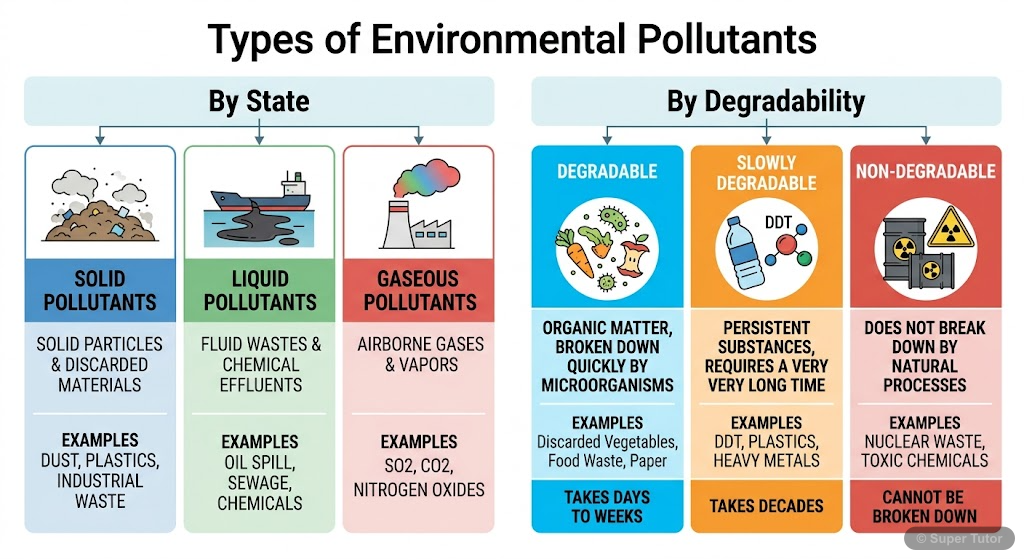
Super Tutor has 11+ illustrations like this for Geographical Perspective on Selected Issues and Problems alone — flashcards, concept maps, and step-by-step visuals.
See them allExercises
1(i)Which one of the following river is highly polluted?
(a) Brahmaputra
(b) Satluj
(c) Yamuna
(d) GodavariShow solution
The Yamuna river is one of the most polluted rivers in India. It receives enormous quantities of untreated industrial effluents, sewage, and domestic waste, especially as it flows through Delhi and other major urban-industrial centres. The Yamuna stretch between Delhi and Agra is considered critically polluted.
1(ii)Which one of the following diseases is caused by water pollution?
(a) Conjunctivitis
(b) Diarrhoea
(c) Respiratory infections
(d) BronchitisShow solution
Diarrhoea is a waterborne disease directly caused by consumption of contaminated (polluted) water containing harmful bacteria, viruses, or parasites. Respiratory infections and bronchitis are caused by air pollution, while conjunctivitis can be caused by various factors but is not primarily a water-pollution disease.
1(iii)Which one of the following is the cause of acid rain?
(a) Water pollution
(b) Land pollution
(c) Noise pollution
(d) Air pollutionShow solution
Acid rain is caused by air pollution. When pollutants such as sulphur dioxide () and nitrogen oxides () are released into the atmosphere by burning of fossil fuels and industrial processes, they react with water vapour to form sulphuric acid and nitric acid, which fall as acid rain.
1(iv)Push and pull factors are responsible for-
(a) Migration
(b) Land degradation
(c) Slums
(d) Air pollutionShow solution
Push factors (poverty, unemployment, lack of basic amenities in rural areas) compel people to leave their native places, while pull factors (employment opportunities, better living standards, education in cities) attract them to urban areas. Together, these push and pull factors are the primary drivers of migration.
2(i)What is the difference between pollution and pollutants?Show solution
Pollution refers to the undesirable change in the physical, chemical, or biological characteristics of air, water, or land that harmfully affects human life and other living organisms. It is the condition or state of the environment being contaminated.
Pollutants are the substances (solid, liquid, or gaseous) that cause pollution. They are the agents responsible for bringing about the undesirable change. For example, sulphur dioxide () and carbon monoxide () are air pollutants that cause air pollution.
In short: *Pollutants are the cause; pollution is the effect.*
2(ii)Describe the major sources of air pollution.Show solution
1. Industrial emissions: Factories and thermal power plants release sulphur dioxide (), nitrogen oxides (), carbon monoxide (), and particulate matter into the atmosphere.
2. Vehicular exhaust: Motor vehicles burning petrol and diesel emit carbon monoxide, hydrocarbons, and lead compounds.
3. Burning of fossil fuels: Combustion of coal, oil, and firewood in households and industries releases smoke and harmful gases.
4. Agricultural activities: Use of pesticides, burning of crop residue (stubble burning), and dust from tilling contribute to air pollution.
5. Mining operations: Dust and chemical fumes released during mining degrade air quality in surrounding areas.
2(iii)Mention major problems associated with urban waste disposal in India.Show solution
1. Rapid increase in waste generation: Fast-growing urban population produces enormous quantities of solid waste (garbage, plastics, e-waste) that exceeds the capacity of municipal bodies to collect and dispose of it.
2. Inadequate infrastructure: Most Indian cities lack sufficient landfill sites, waste treatment plants, and proper collection vehicles.
3. Mixing of waste: Biodegradable and non-biodegradable waste is not segregated at source, making recycling and treatment difficult.
4. Dumping in water bodies: Untreated waste and sewage are often dumped into rivers and lakes, causing serious water pollution.
5. Health hazards: Open dumping of waste creates breeding grounds for disease-carrying vectors like mosquitoes and flies, posing serious public health risks.
2(iv)What are the effects of air pollution on human health?Show solution
1. Respiratory diseases: Prolonged exposure to polluted air causes bronchitis, asthma, and other chronic obstructive pulmonary diseases (COPD).
2. Cardiovascular problems: Pollutants like carbon monoxide reduce the oxygen-carrying capacity of blood, leading to heart diseases.
3. Eye and skin irritation: Particulate matter and chemical pollutants cause irritation of the eyes and skin.
4. Cancer: Long-term exposure to carcinogenic pollutants such as benzene and asbestos fibres can cause lung cancer.
5. Neurological damage: Lead and mercury in the air can cause damage to the nervous system, especially in children.
6. Acid rain effects: Air pollutants causing acid rain indirectly harm human health through contaminated water and food crops.
3(i)Describe the nature of water pollution in India.Show solution
Given: India faces severe water pollution in both surface water (rivers, lakes) and groundwater sources.
Sources and Nature:
1. Industrial Effluents: Industries such as textiles, tanneries, paper mills, and chemical plants discharge toxic effluents containing heavy metals (lead, mercury, chromium), acids, and dyes directly into rivers without adequate treatment. The Ganga, Yamuna, Damodar, and Sutlej rivers are severely affected.
2. Agricultural Runoff: Excessive use of chemical fertilisers and pesticides in agriculture leads to runoff that carries nitrates, phosphates, and toxic chemicals into rivers and groundwater, causing eutrophication of water bodies.
3. Domestic Sewage: A large proportion of urban sewage — containing organic waste, detergents, and pathogens — is discharged untreated into rivers. Cities along the Ganga and Yamuna are major contributors.
4. Religious and Social Practices: Immersion of idols, flowers, ashes, and dead bodies in rivers adds to organic and chemical pollution.
5. Groundwater Pollution: Over-extraction and seepage of industrial and agricultural chemicals have led to contamination of groundwater with arsenic (West Bengal, Bihar) and fluoride (Rajasthan), causing serious health problems.
Effects: Water pollution causes waterborne diseases like cholera, typhoid, dysentery, and hepatitis. It also destroys aquatic ecosystems and reduces the availability of safe drinking water.
Conclusion: Water pollution in India is a multidimensional problem requiring strict enforcement of environmental laws, treatment of effluents before discharge, and public awareness.
3(ii)Describe the problem of slums in India.Show solution
Introduction: Slums are densely populated, poorly built settlements characterised by inadequate housing, lack of basic amenities, and insanitary conditions. They are a direct outcome of rapid and unplanned urbanisation in India.
Causes of Slum Formation:
Rural-to-urban migration driven by push factors (poverty, unemployment, drought) and pull factors (employment, better facilities) leads to a massive influx of people into cities. Since migrants cannot afford proper housing, they settle in unauthorised areas on the outskirts or vacant lands within cities, giving rise to slums.
Extent: According to Census data, a significant proportion of India's urban population lives in slums. Cities like Mumbai (Dharavi), Delhi, Kolkata, and Chennai have large slum populations. Mumbai alone has nearly half its population living in slums.
Problems Associated with Slums:
1. Poor housing: Structures are made of temporary materials — tin, plastic sheets, and mud — offering little protection.
2. Lack of sanitation: Open defecation, absence of proper drainage, and inadequate toilet facilities lead to unhygienic conditions.
3. Inadequate water supply: Residents depend on shared or contaminated water sources.
4. Health hazards: Overcrowding and poor sanitation make slum dwellers highly vulnerable to communicable diseases like tuberculosis, cholera, and malaria.
5. Social problems: Slums are associated with high crime rates, child labour, drug abuse, and lack of educational facilities.
6. Environmental degradation: Waste dumping and encroachment on water bodies by slums cause environmental damage.
Conclusion: The slum problem in India requires integrated urban planning, affordable housing schemes (like Pradhan Mantri Awas Yojana), improvement of rural livelihoods to check migration, and provision of basic services to existing slum dwellers.
3(iii)Suggest measures for reduction of land degradation.Show solution
Introduction: Land degradation refers to the decline in the productive capacity of land due to soil erosion, waterlogging, salinisation, deforestation, and overuse. The following measures can help reduce it:
1. Afforestation and Reforestation:
Planting trees on degraded and barren lands helps bind the soil, prevents erosion by wind and water, and restores the ecological balance. Shelter belts of trees in arid regions check wind erosion.
2. Controlled Grazing:
Overgrazing is a major cause of land degradation in semi-arid regions. Regulated and rotational grazing allows vegetation to regenerate and prevents soil compaction and erosion.
3. Proper Management of Wastelands:
Wastelands should be reclaimed through scientific land management practices such as bunding, terracing, and contour farming to reduce surface runoff and soil erosion.
4. Sustainable Agricultural Practices:
- Crop rotation and mixed farming maintain soil fertility.
- Reducing excessive use of chemical fertilisers and pesticides prevents soil toxicity.
- Organic farming and use of bio-fertilisers improve soil health.
5. Control of Waterlogging and Salinisation:
Proper drainage systems should be constructed in irrigated areas to prevent waterlogging. Leaching and use of gypsum can reclaim saline soils.
6. Mining Regulation:
Abandoned mine sites should be reclaimed and revegetated. Strict regulations should govern mining activities to minimise land disturbance.
7. Legislative Measures:
Strict enforcement of laws like the Forest Conservation Act and Environment Protection Act can prevent encroachment and misuse of land.
8. Public Awareness:
Educating farmers and local communities about sustainable land use practices is essential for long-term conservation.
Conclusion: A combination of technological, legislative, and community-based approaches is necessary to effectively reduce land degradation and ensure sustainable use of land resources in India.
Stuck on a step?
Ask Super Tutor AI to explain any solution on this page in a simpler way — free, 24x7.
Ask a Doubt FreeFrequently Asked Questions
What are the important topics in Geographical Perspective on Selected Issues and Problems for Chhattisgarh Board Class 12 Geography?
How to score full marks in Geographical Perspective on Selected Issues and Problems — Chhattisgarh Board Class 12 Geography?
Where can I get free NCERT Solutions for Geographical Perspective on Selected Issues and Problems Class 12 Geography?
Sources & Official References
Content is aligned to the official syllabus. Refer to the board website for the latest curriculum.
More resources for Geographical Perspective on Selected Issues and Problems
Important Questions
Practice with board exam-style questions
Syllabus
What topics to cover
Revision Notes
Key points for last-minute revision
Study Plan
Step-by-step plan to ace this chapter
Flashcards
Quick-fire cards for active recall
Formula Sheet
All formulas in one place
Chapter Summary
Understand the chapter at a glance
Practice Quiz
Test yourself with a quick quiz
Concept Maps
See how topics connect visually
For serious students
Get the full Geographical Perspective on Selected Issues and Problems chapter — for free.
Quizzes, flashcards, AI doubt-solver and a step-by-step study plan for Chhattisgarh Board Class 12 Geography.