Life Processes — Study Plan
Gujarat Board · Class 10 · Science
A step-by-step study plan for Life Processes, Gujarat Board Class 10 Science: what to learn first, what to practise and when to revise.
Interactive on Super Tutor
Studying Life Processes? Get the full interactive chapter.
Quizzes, flashcards, AI doubt-solver and a step-by-step study plan — built for study plan and more.
Free trial, no card needed.
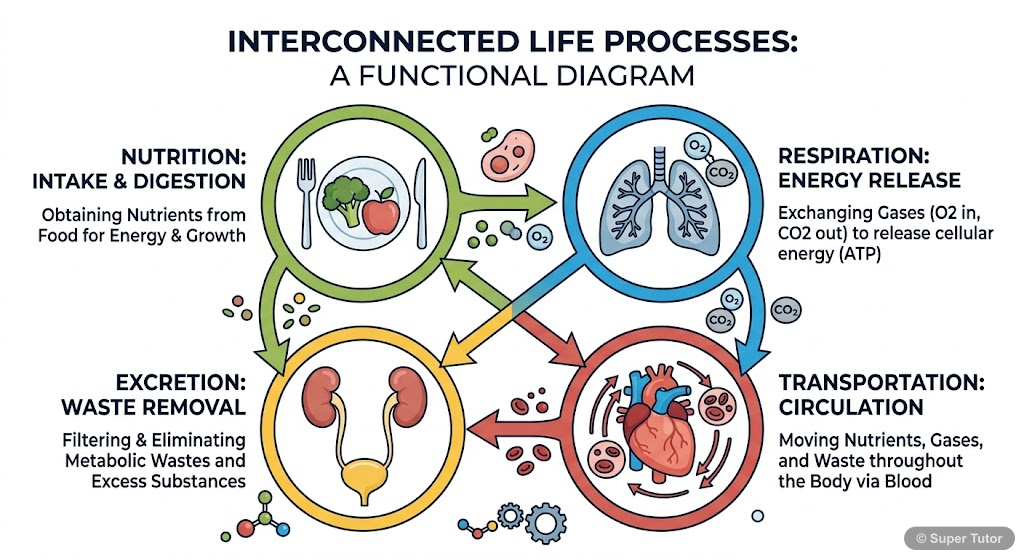
One of 20 illustrations for Life Processes in Super Tutor — alongside flashcards, concept maps and practice questions.
See them allStudy Plan
Learn the Theory
Read the textbook chapter carefully. Note down definitions, formulas and key ideas. Focus on: 1. What Makes an Organism Alive, 2. Nutrition, 3. Human Nutrition and Digestion.
Practise
Solve the textbook exercises and extra practice questions. There are 45 questions available for this chapter.
Revise & Test
Revise key points without looking at your notes. Take a practice quiz and mark weak areas for another pass.
Spaced Revision
Come back to Life Processes after a week. Use flashcards for quick recall and try past exam questions on this chapter.
What to Focus On
- Visible movement is not enough to decide whether something is alive.
- Internal molecular movement is necessary for life.
- Life processes continue even during rest and sleep.
- Autotrophs make their own food from carbon dioxide and water.
- Photosynthesis uses sunlight and chlorophyll.
- Carbohydrates not used immediately are stored as starch in plants.
- Respiration releases energy from food.
- Glucose breakdown to pyruvate occurs in the cytoplasm.
- Yeast fermentation produces ethanol and carbon dioxide.
Common Mistakes to Avoid
All plants make food only when the sun is shining, so photosynthesis stops completely at night and carbon dioxide is never taken in at night.
Xylem and phloem both carry food and water everywhere in the plant, so the two tissues do the same job.
Translocation in phloem is a passive process like water movement in xylem.
Memory Tips
Life processes are maintenance processes needed even during rest
Difference between living and non-living is not just visible movement
Viruses do not show molecular movement until they infect a cell
Autotrophs and heterotrophs
Want a personalised study plan?
Super Tutor builds a day-by-day plan for Gujarat Board Class 10 Science that fits your exam date and pace.
Create My Study PlanFrequently Asked Questions
What are the important topics in Life Processes for Gujarat Board Class 10 Science?
How should I revise Life Processes for the Gujarat Board Class 10 board exam?
Sources & Official References
Content is aligned to the official syllabus. Refer to the board website for the latest curriculum.
More resources for Life Processes
Practice Quiz
Test yourself with a quick quiz
Important Questions
Exam-style questions with answers
Revision Notes
Key points for last-minute revision
Chapter Summary
Understand the chapter at a glance
Concept Maps
See how topics connect
Flashcards
Quick-fire cards for active recall
Syllabus
What topics to cover
For serious students
Get the full Life Processes chapter — start free.
Quizzes, flashcards, an AI doubt solver and a study plan for Gujarat Board Class 10 Science. Free to start, no card needed.