Chapter 5 of 5
Concept Maps
Physical and Chemical Changes — Concept Maps
Gujarat Board · Class 7 · Science
3 concept maps of Physical and Chemical Changes for Gujarat Board Class 7 Science, each also written out as a text outline.
42 questions5 concepts
Interactive on Super Tutor
Studying Physical and Chemical Changes? Get the full interactive chapter.
Quizzes, flashcards, AI doubt-solver and a step-by-step study plan — built for concept maps and more.
Free trial, no card needed.
Super Tutor
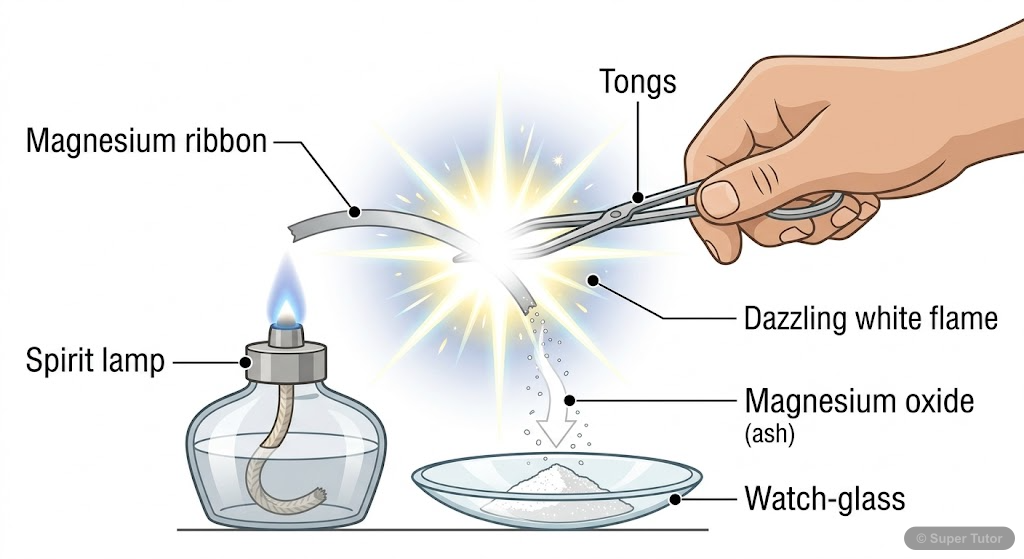
Learn better with visuals Super Tutor pairs illustrations like this with notes and quizzes for Physical and Chemical Changes.
3 Concept Maps
Chapter Overview: Physical and Chemical Changes
The map in words
- Physical and Chemical Changes
- Physical Changes
- No new substance formed
- Generally reversible
- Examples
- Melting of ice
- Dissolving sugar
- Cutting paper
- Boiling water
- Crystallisation
- Physical change
- Copper sulphate crystals
- Alum crystals
- Chemical Changes
- New substance formed
- Generally irreversible
- Signs
- Gas evolved
- Colour change
- Heat or light
- New smell
- Examples
- Burning of Mg
- Rusting of iron
- Souring of milk
- Digestion of food
- Photosynthesis
- Rusting of Iron
- Needs oxygen and water
- Faster in coastal areas
- Prevention
- Painting
- Greasing
- Galvanisation
- Stainless steel
- Chromium plating
- Key Reactions
- Mg plus O2 gives MgO
- CuSO4 plus Fe gives FeSO4 plus Cu
- CO2 turns lime water milky
- Vinegar plus baking soda gives CO2
- Physical Changes
Physical and Chemical Changes – Complete Chapter Overview
The map in words
- Changes in Matter
- Physical Changes
- Definition
- No new substance formed
- Physical properties change
- Features
- Generally reversible
- Shape size state colour
- Examples
- Melting of ice
- Dissolving sugar
- Cutting paper
- Boiling water
- Crystallisation
- Definition
- Chemical Changes
- Definition
- New substance formed
- Also called reaction
- Features
- Generally irreversible
- New properties appear
- Signs
- Gas formation
- Colour change
- Heat or light
- Smell change
- Examples
- Burning magnesium
- Rusting of iron
- Baking soda and vinegar
- Copper sulphate and iron
- Definition
- Rusting of Iron
- Conditions needed
- Oxygen from air
- Water or moisture
- Faster in
- Coastal areas
- High humidity
- Salt water
- Prevention
- Painting
- Galvanisation
- Stainless steel
- Greasing
- Conditions needed
- Crystallisation
- Type
- Physical change
- Process
- Saturated solution
- Slow cooling
- Example
- Copper sulphate crystals
- Type
- Physical Changes
Distinguishing Physical and Chemical Changes
The map in words
- Is there a change in the substance?
- Does it form a new substance?
- No, same substance": Physical Change
- Examples: Cutting, Melting, Boiling
- Reversible and No new substance
- Examples: Cutting, Melting, Boiling
- Yes, new substance formed": Chemical Change
- Examples: Burning, Rusting, Digestion
- Generally Irreversible, New substance formed
- Examples: Burning, Rusting, Digestion
- No, same substance": Physical Change
- Does it form a new substance?
Explore these maps interactively
Explore DiagramsFrequently Asked Questions
What are the important topics in Physical and Chemical Changes for Gujarat Board Class 7 Science?
Key topics in Physical and Chemical Changes include Physical Changes, Chemical Changes, Rusting of Iron and Its Prevention, Crystallisation. Study these first, then practise questions on each for Class 7 exams.
What do the concept maps for Physical and Chemical Changes show?
The 3 maps show how the ideas in Physical and Chemical Changes connect: Chapter Overview: Physical and Chemical Changes; Physical and Chemical Changes – Complete Chapter Overview. Each map is also written out as an outline on this page.
How should I revise Physical and Chemical Changes for Class 7 exams?
Learn the core ideas first, then work through the 42 practice questions on Physical and Chemical Changes. Revise definitions regularly and use flashcards for quick recall before the exam.
Sources & Official References
Content is aligned to the official syllabus. Refer to the board website for the latest curriculum.
More resources for Physical and Chemical Changes
For serious students
Get the full Physical and Chemical Changes chapter — start free.
Quizzes, flashcards, an AI doubt solver and a study plan for Gujarat Board Class 7 Science. Free to start, no card needed.