Physical and Chemical Changes — Chapter Summary
Gujarat Board · Class 7 · Science
Summary of Physical and Chemical Changes for Gujarat Board Class 7 Science. Part of the Gujarat Board Class 7 Science syllabus.
Interactive on Super Tutor
Studying Physical and Chemical Changes? Get the full interactive chapter.
Quizzes, flashcards, AI doubt-solver and a step-by-step study plan — built for chapter summary and more.
Free trial, no card needed.
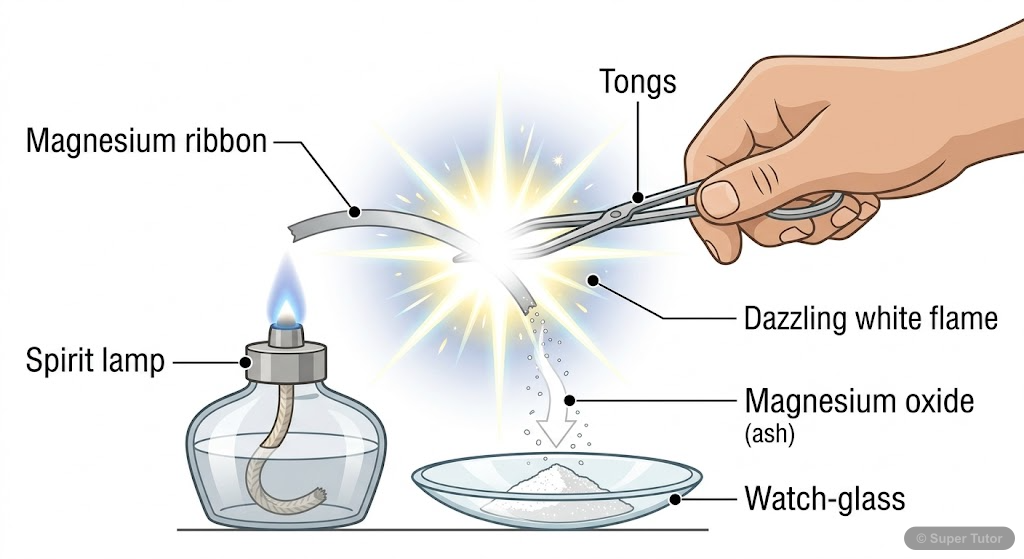
Learn better with visuals Super Tutor pairs illustrations like this with notes and quizzes for Physical and Chemical Changes.
Overview
In our daily life, we observe many changes happening around us. When you dissolve sugar in water to make juice, when milk turns into curd, or when an iron gate rusts, these are all examples of changes. Some changes seem simple, like breaking a piece of paper or melting ice, while others are more com
Key Concepts
A physical change is a change
A physical change is a change in which a substance undergoes a change in its physical properties such as shape, size, colour, or state (solid, liquid,
A chemical change is a change
A chemical change is a change in which one or more new substances are formed. In a chemical change, the original substance is transformed into a compl
Physical properties are characteristics of
Physical properties are characteristics of a substance that can be observed or measured without changing the substance into a new one. Common physical
Chemical changes are often accompanied by
Chemical changes are often accompanied by observable signs that indicate a new substance has been formed. These signs include: (1) Production of heat
Rusting is a chemical change
Rusting is a chemical change that occurs when iron combines with oxygen from the air and water (or water vapour) to form iron oxide, commonly known as
Learning Objectives
- Distinguish between physical and chemical changes based on their characteristics
- Understand that physical changes are reversible and do not form new substances
- Recognize that chemical changes form new substances and are generally irreversible
- Identify the signs and indicators of chemical changes such as heat, light, sound, and colour change
- Understand the process of rusting and methods to prevent it
Frequently Asked Questions
What are the important topics in Physical and Chemical Changes for Gujarat Board Class 7 Science?
How should I revise Physical and Chemical Changes for Class 7 exams?
Sources & Official References
Content is aligned to the official syllabus. Refer to the board website for the latest curriculum.
More resources for Physical and Chemical Changes
For serious students
Get the full Physical and Chemical Changes chapter — start free.
Quizzes, flashcards, an AI doubt solver and a study plan for Gujarat Board Class 7 Science. Free to start, no card needed.