Manufacturing Industries — Flashcards
Himachal Pradesh Board · Class 10 · Social Science
80 flashcards for Manufacturing Industries (Himachal Pradesh Board Class 10 Social Science) to test yourself on key terms and facts.
Interactive on Super Tutor
Studying Manufacturing Industries? Get the full interactive chapter.
Quizzes, flashcards, AI doubt-solver and a step-by-step study plan — built for flashcards and more.
Free trial, no card needed.
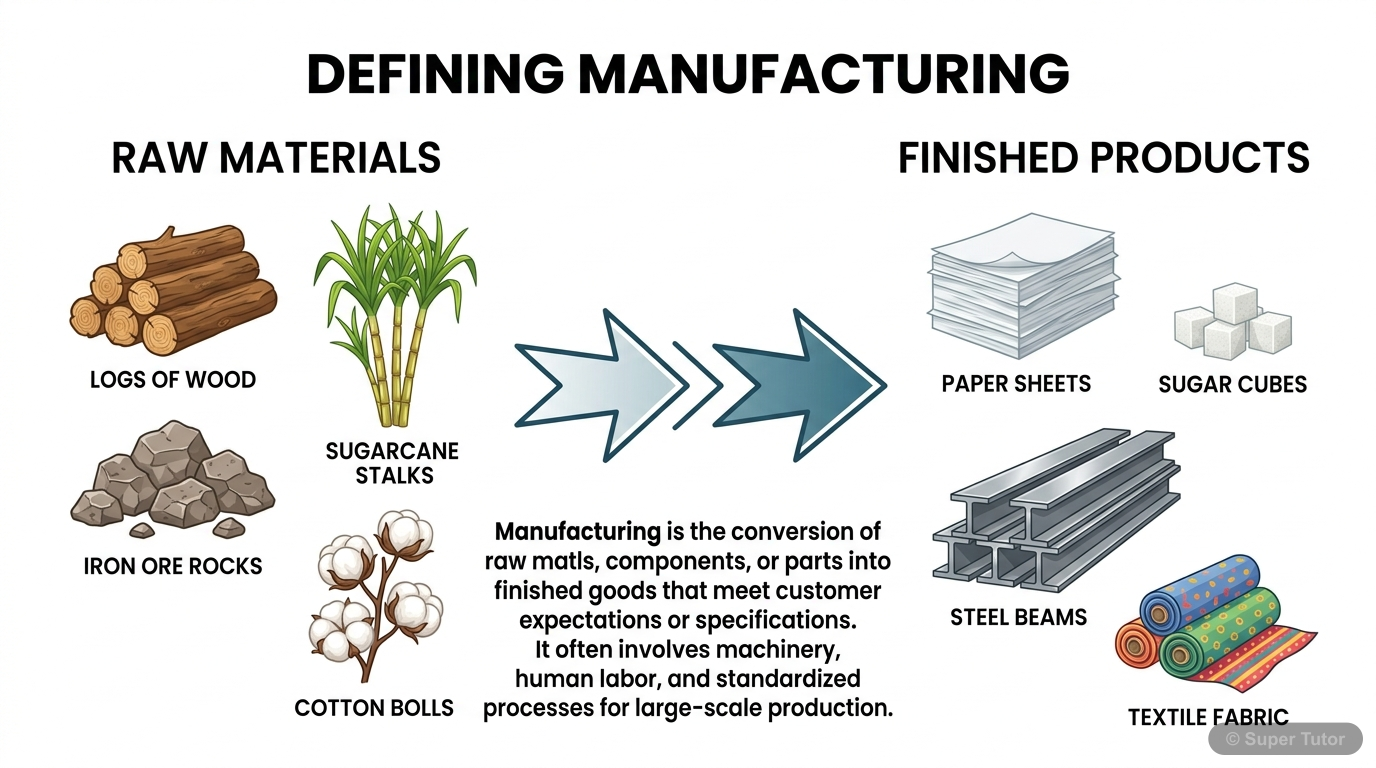
Learn better with visuals Super Tutor pairs illustrations like this with notes and quizzes for Manufacturing Industries.
विनिर्माण क्या है?
Answer
विनिर्माण (Manufacturing) कच्चे माल को संसाधित करके अधिक मूल्यवान उत्पादों में बदलने के बाद बड़ी मात्रा में वस्तुओं का उत्पादन है। उदाहरण के लिए, गन्ने से चीनी, लकड़ी से कागज, लौह अयस्क से लोहा और इस्…
What is manufacturing?
Answer
Manufacturing is the production of goods in large quantities after processing raw materials into more valuable products. Examples include sugar from sugarcane, paper from wood, iron and steel from iro…
Why are manufacturing industries considered important for a country's development?
Answer
Manufacturing industries are called the backbone of development because they help modernise agriculture, create jobs, reduce dependence on farming, increase exports, bring foreign exchange, and suppor…
किसी देश के विकास के लिए विनिर्माण उद्योगों को क्यों महत्वपूर्ण माना जाता है?
Answer
विनिर्माण उद्योगों को विकास की रीढ़ कहा जाता है क्योंकि वे कृषि के आधुनिकीकरण, रोजगार सृजन, खेती पर निर्भरता को कम करने, निर्यात बढ़ाने, विदेशी मुद्रा लाने और समग्र आर्थिक विकास का समर्थन करने में मदद…
विनिर्माण और कृषि एक दूसरे का समर्थन कैसे करते हैं?
Answer
कृषि से कृषि आधारित उद्योगों को कच्चा माल मिलता है और उद्योग से किसानों को सिंचाई के पंप, उर्वरक, कीटनाशक, कृमिनाशक, प्लास्टिक के पाइप, मशीन, औजार आदि मिलते हैं। दोनों क्षेत्र साथ-साथ चलते हैं।…
How do manufacturing and agriculture support each other?
Answer
Agriculture provides raw materials to agro-based industries, and industries provide farmers with products such as irrigation pumps, fertilisers, insecticides, pesticides, plastic pipes, machines, and …
What is a small scale industry?
Answer
A small scale industry is one whose maximum investment allowed on the assets of a unit is rupees one crore. This limit has changed over time.
लघु उद्योग क्या है?
Answer
लघु उद्योग वह है जिसमें एक इकाई की संपत्ति पर अधिकतम निवेश की अनुमति एक करोड़ रुपये है। यह सीमा समय के साथ बदल गई है।…
+72 more flashcards
Practise AllFrequently Asked Questions
What are the important topics in Manufacturing Industries for Himachal Pradesh Board Class 10 Social Science?
How many flashcards are available for Manufacturing Industries?
How should I revise Manufacturing Industries for the Himachal Pradesh Board Class 10 board exam?
Sources & Official References
Content is aligned to the official syllabus. Refer to the board website for the latest curriculum.
More resources for Manufacturing Industries
Practice Quiz
Test yourself with a quick quiz
Important Questions
Exam-style questions with answers
Revision Notes
Key points for last-minute revision
Formula Sheet
The chapter's formulas in one place
Chapter Summary
Understand the chapter at a glance
Concept Maps
See how topics connect
Study Plan
Step-by-step plan for this chapter
Syllabus
What topics to cover
NCERT Solutions
Every textbook question solved step by step
For serious students
Get the full Manufacturing Industries chapter — start free.
Quizzes, flashcards, an AI doubt solver and a study plan for Himachal Pradesh Board Class 10 Social Science. Free to start, no card needed.