Story Writing
ICSE · Class 10 · Hindi Grammar
Flashcards for Story Writing — ICSE Class 10 Hindi Grammar. Quick Q&A cards covering key concepts, definitions, and formulas.
Interactive on Super Tutor
Studying Story Writing? Get the full interactive chapter.
Quizzes, flashcards, AI doubt-solver and a step-by-step study plan — built for flashcards and more.
1,000+ Class 10 students started this chapter today
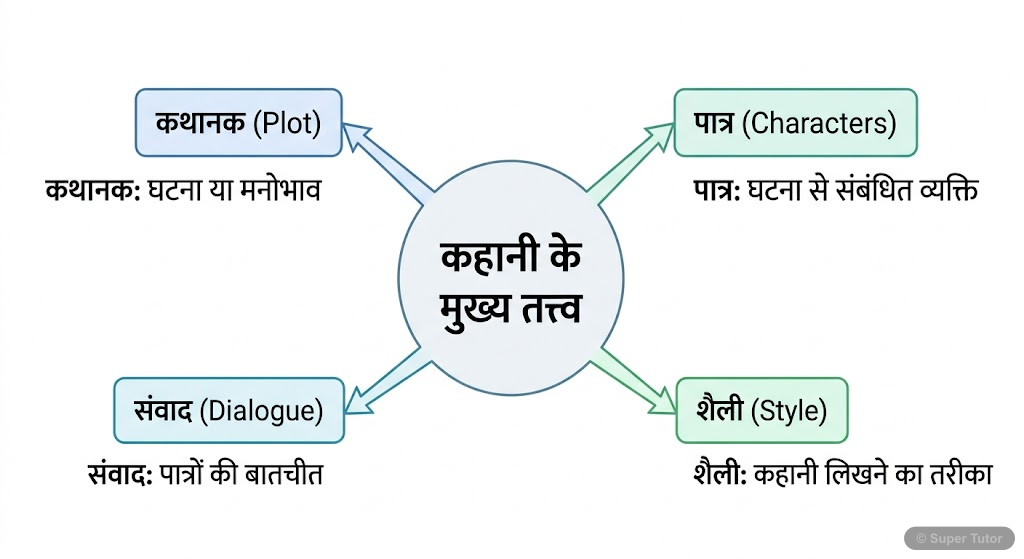
Learn better with visuals Super Tutor has hundreds of illustrations like this across every chapter — all free to try.
Get startedकहानी के चार मुख्य तत्त्व कौन-से हैं?
Answer
कथानक, पात्र, संवाद और शैली कहानी के चार मुख्य तत्त्व हैं। कथानक घटना का क्रम है, पात्र वे लोग हैं जिनसे घटना जुड़ी होती है, संवाद पात्रों की बातचीत है, और शैली कहानी लिखने का ढंग है।…
कथानक किसे कहते हैं?
Answer
किसी कहानी में घटने वाली घटनाओं का क्रम कथानक कहलाता है। यही कहानी की रीढ़ होता है। उदाहरण के लिए, 'ईश्वर की माया कहीं धूप कहीं छाया' वाली कहानी में भाईयों का बँटवारा, बकरियों की शर्त और विजय की घटना …
पात्र किसे कहते हैं?
Answer
घटना का संबंध जिन व्यक्तियों से होता है, वे पात्र कहलाते हैं। कहानी में पात्रों के स्वभाव, व्यवहार और बातचीत से कथानक आगे बढ़ता है। उदाहरण के लिए जीवन सिंह, चरण सिंह, कुलभूषण और चरण सिंह की पत्नी पात्…
संवाद कहानी में क्यों आवश्यक होते हैं?
Answer
संवाद पात्रों की बातचीत को जीवंत बनाते हैं और कहानी को स्वाभाविक बनाते हैं। अच्छे संवाद छोटे, चुस्त और अर्थपूर्ण होने चाहिए। बार-बार एक ही बात दोहराने से बचना चाहिए।…
कहानी की शैली किसे कहते हैं?
Answer
कहानी लिखने का ढंग शैली कहलाता है। इसमें भाषा का चयन, वाक्यों की रचना, संवादों की गति और घटनाओं को प्रस्तुत करने का तरीका शामिल होता है। सरल, स्वाभाविक और सजीव शैली प्रभावशाली मानी जाती है।…
मुहावरे या लोकोक्ति पर आधारित कहानी लिखते समय किस बात का ध्यान रखना चाहिए?
Answer
मुख्य भाव को समझकर उसी के अनुरूप घटना चुननी चाहिए। कहानी में अनावश्यक घटनाएँ नहीं होनी चाहिए। आरंभ और अंत प्रभावशाली होने चाहिए और दिया गया मुहावरा या लोकोक्ति कहानी के भीतर स्पष्ट रूप से झलकनी चाहिए।…
कहानी की भाषा कैसी होनी चाहिए?
Answer
कहानी की भाषा सरल, स्वाभाविक और सजीव होनी चाहिए। कठिन शब्दों का जानबूझकर प्रयोग नहीं करना चाहिए। भाषा ऐसी होनी चाहिए कि पाठक कहानी से तुरंत जुड़ सके।…
लोकोक्ति, सूक्ति और मुहावरे पर कहानी लिखने में अभ्यास क्यों आवश्यक है?
Answer
कहानी लेखन एक कला है। निरंतर अभ्यास से विचारों को सही क्रम में रखना, उचित पात्र चुनना, छोटे संवाद लिखना और प्रभावशाली अंत करना आसान हो जाता है।…
+30 more flashcards available
Practice AllFrequently Asked Questions
What are the important topics in Story Writing for ICSE Class 10 Hindi Grammar?
How to score full marks in Story Writing — ICSE Class 10 Hindi Grammar?
How many flashcards are available for Story Writing?
Sources & Official References
Content is aligned to the official syllabus. Refer to the board website for the latest curriculum.
More resources for Story Writing
Practice Quiz
Test yourself with a quick quiz
Important Questions
Practice with board exam-style questions
Revision Notes
Key points for last-minute revision
Formula Sheet
All formulas in one place
Chapter Summary
Understand the chapter at a glance
Concept Maps
See how topics connect visually
Study Plan
Step-by-step plan to ace this chapter
Syllabus
What topics to cover
NCERT Solutions
Every textbook question solved step by step
For serious students
Get the full Story Writing chapter — for free.
Quizzes, flashcards, AI doubt-solver and a step-by-step study plan for ICSE Class 10 Hindi Grammar.