The Sectors of Indian Economy — Chapter Summary
ICSE · Class 9 · Economic Applications
Summary of The Sectors of Indian Economy for ICSE Class 9 Economic Applications. Part of the ICSE Class 9 Economic Applications syllabus.
Interactive on Super Tutor
Studying The Sectors of Indian Economy? Get the full interactive chapter.
Quizzes, flashcards, AI doubt-solver and a step-by-step study plan — built for chapter summary and more.
Free trial, no card needed.
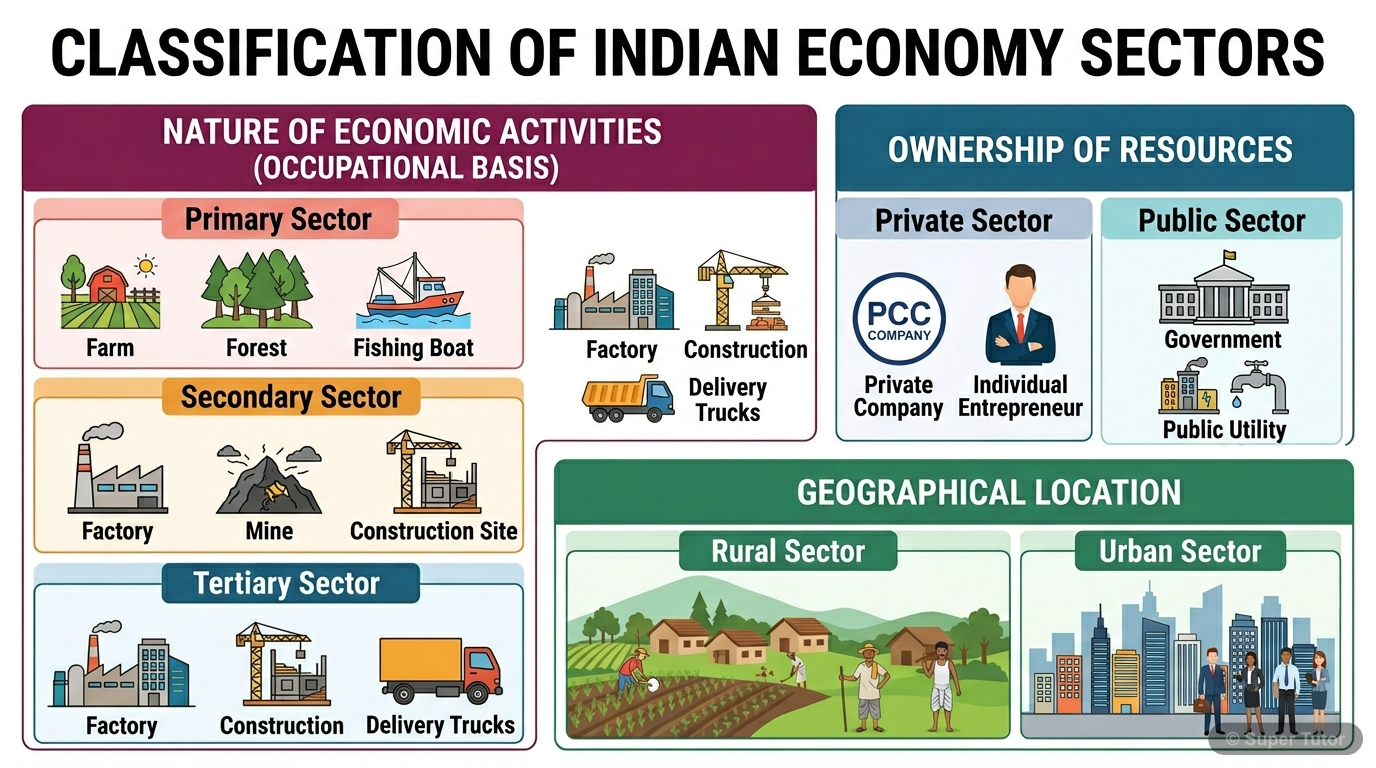
Learn better with visuals Super Tutor pairs illustrations like this with notes and quizzes for The Sectors of Indian Economy.
Overview
The Indian economy is studied through three different ways of classification: by nature of economic activity, by ownership, and by geographical type. On the basis of economic activity, the economy is divided into primary, secondary, and tertiary sectors. On the basis of ownership, it is divided into
Key Concepts
The primary sector includes activities carried
The primary sector includes activities carried on with the help of natural resources. It includes agriculture, animal husbandry, forestry, and fisheri
The secondary sector produces goods using
The secondary sector produces goods using raw materials from the primary sector. It includes manufacturing, mining, electricity, gas, and construction
The tertiary or service sector provides
The tertiary or service sector provides non-tangible services such as trade, transport, communication, banking, insurance, hotels, tourism, and other
The share of agriculture and allied
The share of agriculture and allied sector in GDP fell from 51.9% in 1950-51 to 17.5% in 2022-23. The industrial sector rose from 18.6% to 28.0%, and
The share of agriculture and allied
The share of agriculture and allied sector in working population fell from 72.1% in 1950-51 to 45.8% in 2022-23. The industrial and service sectors in
Learning Objectives
- Understand the three main ways of classifying the Indian economy
- Identify the primary, secondary, and tertiary sectors with suitable examples
- Explain why agriculture remains important even though its share in GDP has fallen
- Describe the growth, role, and problems of Indian agriculture
- Recognise the importance of industry and industrialisation in economic growth
Frequently Asked Questions
What are the important topics in The Sectors of Indian Economy for ICSE Class 9 Economic Applications?
How should I revise The Sectors of Indian Economy for Class 9 exams?
Sources & Official References
Content is aligned to the official syllabus. Refer to the board website for the latest curriculum.
More resources for The Sectors of Indian Economy
For serious students
Get the full The Sectors of Indian Economy chapter — start free.
Quizzes, flashcards, an AI doubt solver and a study plan for ICSE Class 9 Economic Applications. Free to start, no card needed.