The Nature of Indian Economy — Chapter Summary
ICSE · Class 9 · Economic Applications
Summary of The Nature of Indian Economy for ICSE Class 9 Economic Applications. Part of the ICSE Class 9 Economic Applications syllabus.
Interactive on Super Tutor
Studying The Nature of Indian Economy? Get the full interactive chapter.
Quizzes, flashcards, AI doubt-solver and a step-by-step study plan — built for chapter summary and more.
Free trial, no card needed.
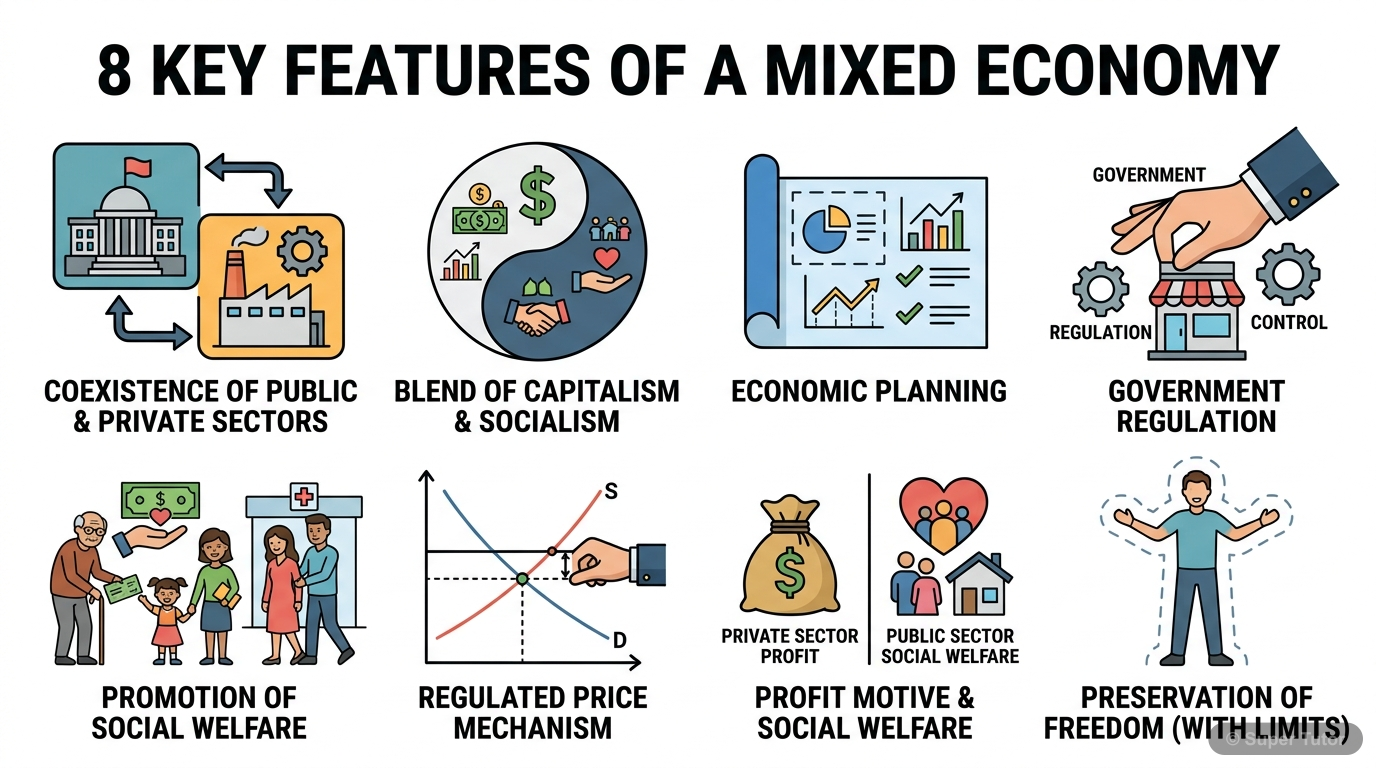
Learn better with visuals Super Tutor pairs illustrations like this with notes and quizzes for The Nature of Indian Economy.
Overview
Indian economy is a developing economy that has moved forward from the stagnation of the British period, but it still retains many features of an underdeveloped economy. Since the beginning of economic planning in 1951, national income, per capita income, industrial output, agricultural production,
Key Concepts
Indian economy has shown clear progress
Indian economy has shown clear progress in national income, per capita income, production, infrastructure, education, and technology since 1951. It is
National income grew at about 5
National income grew at about 5.4% per annum between 1951-52 and 2022-23, compared with 3.1% during 1901-51. Per capita income is a better measure of
The share of agriculture and allied
The share of agriculture and allied sector in national income fell from about 52% in 1950-51 to 17.5% in 2022-23. Industrial sector share rose from 18
Agricultural output grew
Agricultural output grew, irrigation expanded, Green Revolution and White Revolution changed production, and foodgrain output increased from about 51
Industrial output increased strongly over time
Industrial output increased strongly over time, and the industrial sector includes manufacturing, mining, construction, electricity, gas, and water su
Learning Objectives
- Understand the changing nature of the Indian economy since 1951
- Identify why Indian economy is called a developing economy
- Explain why Indian economy still shows features of an underdeveloped economy
- Describe the meaning of a mixed economy in the Indian context
- Recognise major sectoral changes in income, output, agriculture, industry, and services
Frequently Asked Questions
What are the important topics in The Nature of Indian Economy for ICSE Class 9 Economic Applications?
How should I revise The Nature of Indian Economy for Class 9 exams?
Sources & Official References
Content is aligned to the official syllabus. Refer to the board website for the latest curriculum.
More resources for The Nature of Indian Economy
For serious students
Get the full The Nature of Indian Economy chapter — start free.
Quizzes, flashcards, an AI doubt solver and a study plan for ICSE Class 9 Economic Applications. Free to start, no card needed.