Contemporary Centers of Power — Flashcards
Jharkhand Board · Class 12 · Political Science
96 flashcards for Contemporary Centers of Power (Jharkhand Board Class 12 Political Science) to test yourself on key terms and facts.
Interactive on Super Tutor
Studying Contemporary Centers of Power? Get the full interactive chapter.
Quizzes, flashcards, AI doubt-solver and a step-by-step study plan — built for flashcards and more.
Free trial, no card needed.
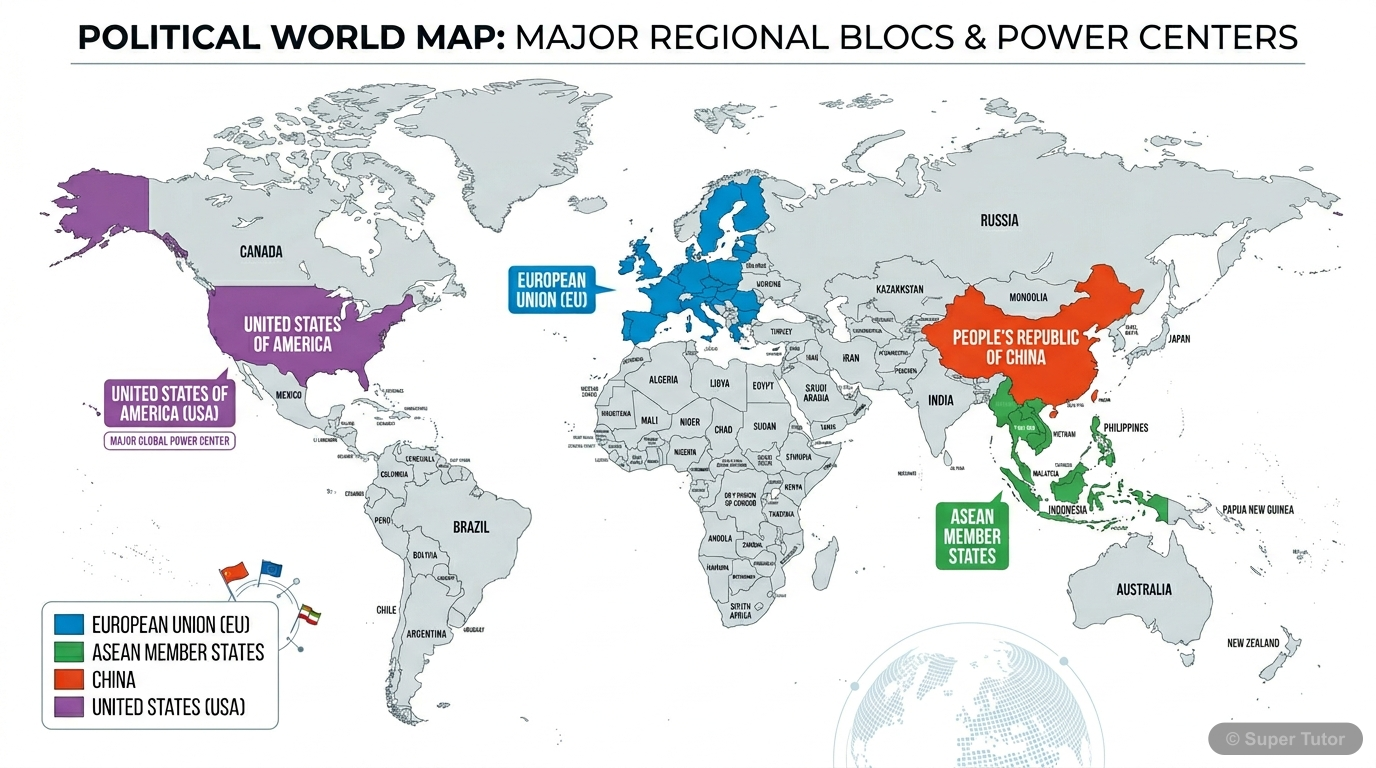
One of 11 illustrations for Contemporary Centers of Power in Super Tutor — alongside flashcards, concept maps and practice questions.
समकालीन विश्व राजनीति में शक्ति केंद्र से क्या तात्पर्य है?
Answer
शक्ति-केन्द्र (centre of power) किसी देश या क्षेत्रीय समूह को कहते हैं जिसके पास विश्व के मामलों को प्रभावित करने के लिए पर्याप्त आर्थिक, राजनीतिक, सैन्य या कूटनीतिक शक्ति हो। इस अध्याय में यूरोपीय सं…
What is meant by a centre of power in contemporary world politics?
Answer
A centre of power is a country or regional grouping that has enough economic, political, military, or diplomatic strength to influence world affairs. In this chapter, the European Union, ASEAN, China,…
Why did alternative centres of power grow after the end of the bipolar world order?
Answer
After the early 1990s, America’s dominance became more visible because the bipolar structure ended. In response, regional groupings and rising economies like the EU, ASEAN, and China became important …
द्विध्रुवी विश्व व्यवस्था के अंत के बाद वैकल्पिक सत्ता केंद्र क्यों बढ़े?
Answer
प्रारंभिक 1990s के बाद, अमेरिका का प्रभुत्व अधिक स्पष्ट हो गया क्योंकि द्विध्रुवीय संरचना समाप्त हो गई। इसके जवाब में, क्षेत्रीय समूह और EU, ASEAN और चीन जैसी बढ़ती अर्थव्यवस्थाएँ विश्व राजनीति में सं…
यूरोपीय संघ (EU) क्या है?
Answer
यूरोपीय संघ यूरोपीय राज्यों द्वारा गठित एक क्षेत्रीय राजनीतिक-आर्थिक गुट है। यह १९५१ में यूरोपीय कोयला और इस्पात समुदाय से विकसित हुआ, फिर १९५७ में यूरोपीय आर्थिक समुदाय और १९९२ में मास्ट्रिच संधि के …
What is the European Union (EU)?
Answer
The European Union is a regional political-economic bloc formed by European states. It grew from the European Coal and Steel Community in 1951, then the European Economic Community in 1957, and became…
Why was European integration important after the Second World War?
Answer
Europe faced economic ruin and deep political insecurity after the Second World War. Integration helped former rivals cooperate, rebuild the economy, and reduce the chance of future conflict. Cold War…
द्वितीय विश्व युद्ध के बाद यूरोपीय एकीकरण क्यों महत्वपूर्ण था?
Answer
द्वितीय विश्व युद्ध के बाद यूरोप को आर्थिक बर्बादी और गहरी राजनीतिक असुरक्षा का सामना करना पड़ा। एकीकरण ने पूर्व प्रतिद्वंद्वियों को सहयोग करने, अर्थव्यवस्था के पुनर्निर्माण और भविष्य में संघर्ष की सं…
+88 more flashcards
Practise AllFrequently Asked Questions
What are the important topics in Contemporary Centers of Power for Jharkhand Board Class 12 Political Science?
How many flashcards are available for Contemporary Centers of Power?
How should I revise Contemporary Centers of Power for the Jharkhand Board Class 12 board exam?
Sources & Official References
Content is aligned to the official syllabus. Refer to the board website for the latest curriculum.
More resources for Contemporary Centers of Power
Practice Quiz
Test yourself with a quick quiz
Important Questions
Exam-style questions with answers
Revision Notes
Key points for last-minute revision
Chapter Summary
Understand the chapter at a glance
Concept Maps
See how topics connect
Study Plan
Step-by-step plan for this chapter
Syllabus
What topics to cover
NCERT Solutions
Every textbook question solved step by step
For serious students
Get the full Contemporary Centers of Power chapter — start free.
Quizzes, flashcards, an AI doubt solver and a study plan for Jharkhand Board Class 12 Political Science. Free to start, no card needed.