पतंग (आलोक धन्वा) (Part 3) — Flashcards
Mizoram Board · Class 12 · Hindi
24 flashcards for पतंग (आलोक धन्वा) (Part 3) (Mizoram Board Class 12 Hindi) to test yourself on key terms and facts.
Interactive on Super Tutor
Studying पतंग (आलोक धन्वा)? Get the full interactive chapter.
Quizzes, flashcards, AI doubt-solver and a step-by-step study plan — built for flashcards and more.
Free trial, no card needed.
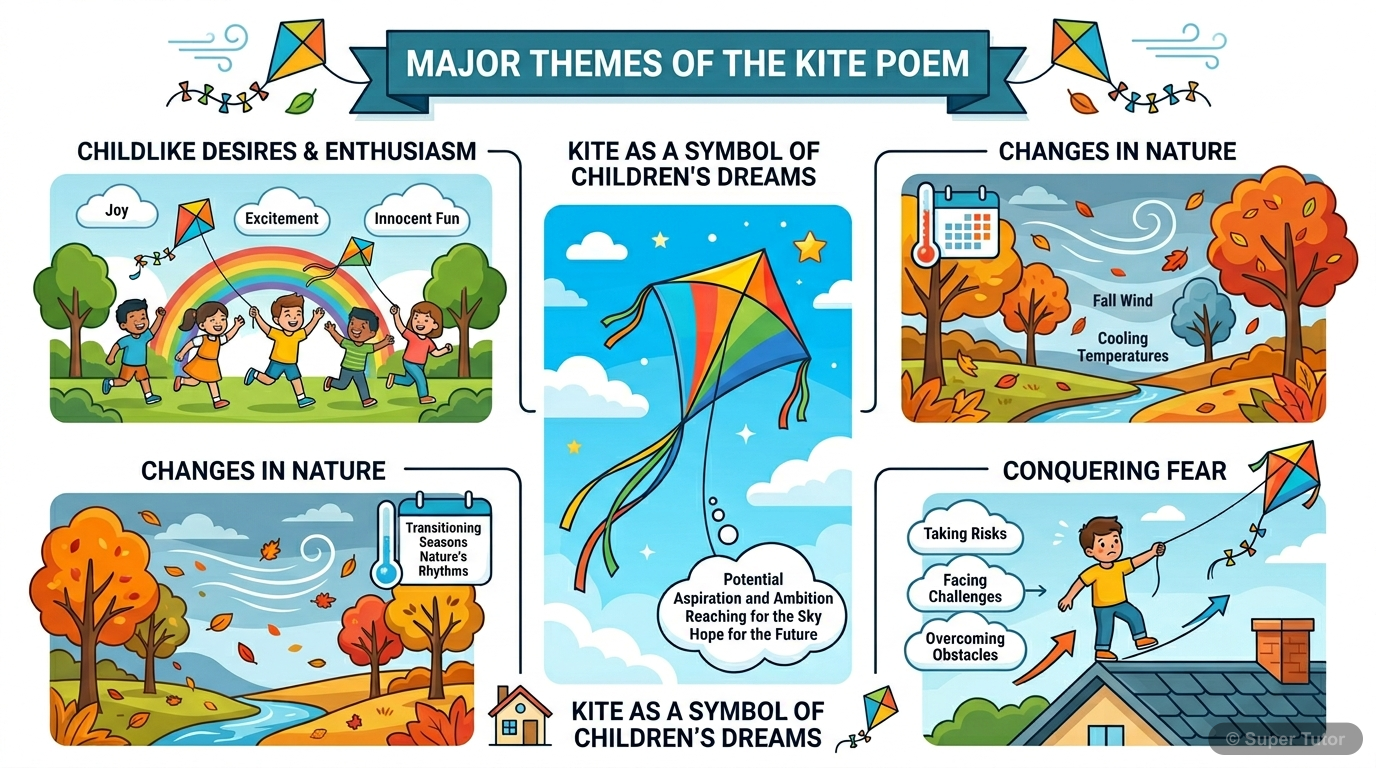
Learn better with visuals Super Tutor pairs illustrations like this with notes and quizzes for पतंग (आलोक धन्वा).
कविता ‘पतंग’ का केंद्रीय प्रतीक क्या है?
Answer
केंद्रीय प्रतीक ‘पतंग’ है। यह बच्चों की उमंगों का रंग-बिरंगा सपना है और वह ऊँचाई भी है जिसे बालमन छूना और पार जाना चाहता है।…
कविता में भादो और शरद का प्रतीकात्मक अर्थ क्या है?
Answer
भादो अँधेरे का प्रतीक है और शरद उजाले का प्रतीक है। भादो के बाद शरद का आना अँधेरे से उजाले की ओर बदलाव दिखाता है।…
‘सबसे तेज बौछारें गयीं भादो गया / सवेरा हुआ’ पंक्ति का मुख्य भाव क्या है?
Answer
इन पंक्तियों में वर्षा के तीव्र दौर के बीत जाने और नए सवेरे के आने का चित्र है। इसका भाव अँधेरे से रोशनी और निराशा से आशा की ओर बढ़ना है।…
‘खरगोश की आँखों जैसा लाल सवेरा’ में कौन-सा अलंकारिक प्रभाव है?
Answer
यह उपमा और बिंबात्मकता का सुंदर प्रयोग है। सवेरे को खरगोश की आँखों जैसा लाल कहकर उसके रंग और ताजगी का जीवंत चित्र बनाया गया है।…
शरद ऋतु का आगमन कैसे चित्रित किया गया है?
Answer
शरद को एक मानवीकृत रूप में दिखाया गया है। वह पुलों को पार करते हुए, नई चमकीली साइकिल तेज चलाते हुए और घंटी बजाते हुए आता है। इससे शरद में गति, चमक और उत्साह का भाव बनता है।…
‘दुनिया की सबसे हलकी और रंगीन चीज उड़ सके’ पंक्ति पतंग के बारे में क्या बताती है?
Answer
यह पंक्ति पतंग की हल्केपन, रंगीनता और उड़ान की क्षमता को दिखाती है। पतंग को इतना सूक्ष्म और सुंदर बताया गया है कि वह आकाश में सहजता से उठ सके।…
‘दुनिया का सबसे पतला कागज उड़ सके— बाँस की सबसे पतली कमानी उड़ सके—’ से क्या संकेत मिलता है?
Answer
इन पंक्तियों से पतंग की रचना की नाजुकता और उसकी उड़ान के लिए आवश्यक हल्के, पतले पदार्थों का संकेत मिलता है। यह कविता की सूक्ष्म बिंब-योजना को भी दर्शाता है।…
बच्चों के बारे में ‘जन्म से ही वे अपने साथ लाते हैं कपास’ का क्या अर्थ है?
Answer
इस पंक्ति में बच्चों की जन्मजात कोमलता, उजास और संवेदनशीलता का बिंब है। ‘कपास’ कोमलता और हल्केपन का प्रतीक बनकर आता है।…
+16 more flashcards
Practise AllFrequently Asked Questions
What are the important topics in पतंग (आलोक धन्वा) for Mizoram Board Class 12 Hindi?
How many flashcards are available for पतंग (आलोक धन्वा)?
How should I revise पतंग (आलोक धन्वा) for the Mizoram Board Class 12 board exam?
Sources & Official References
Content is aligned to the official syllabus. Refer to the board website for the latest curriculum.
More resources for पतंग (आलोक धन्वा)
Practice Quiz
Test yourself with a quick quiz
Important Questions
Exam-style questions with answers
Revision Notes
Key points for last-minute revision
Chapter Summary
Understand the chapter at a glance
Concept Maps
See how topics connect
Study Plan
Step-by-step plan for this chapter
Syllabus
What topics to cover
NCERT Solutions
Every textbook question solved step by step
For serious students
Get the full पतंग (आलोक धन्वा) chapter — start free.
Quizzes, flashcards, an AI doubt solver and a study plan for Mizoram Board Class 12 Hindi. Free to start, no card needed.