Mahatma Gandhi and the Nationalist Movement: Civil Disobedience and Beyond — Flashcards
Mizoram Board · Class 12 · History
84 flashcards for Mahatma Gandhi and the Nationalist Movement: Civil Disobedience and Beyond (Mizoram Board Class 12 History) to test yourself on key.
Interactive on Super Tutor
Studying Mahatma Gandhi and the Nationalist Movement: Civil Disobedience and Beyond? Get the full interactive chapter.
Quizzes, flashcards, AI doubt-solver and a step-by-step study plan — built for flashcards and more.
Free trial, no card needed.
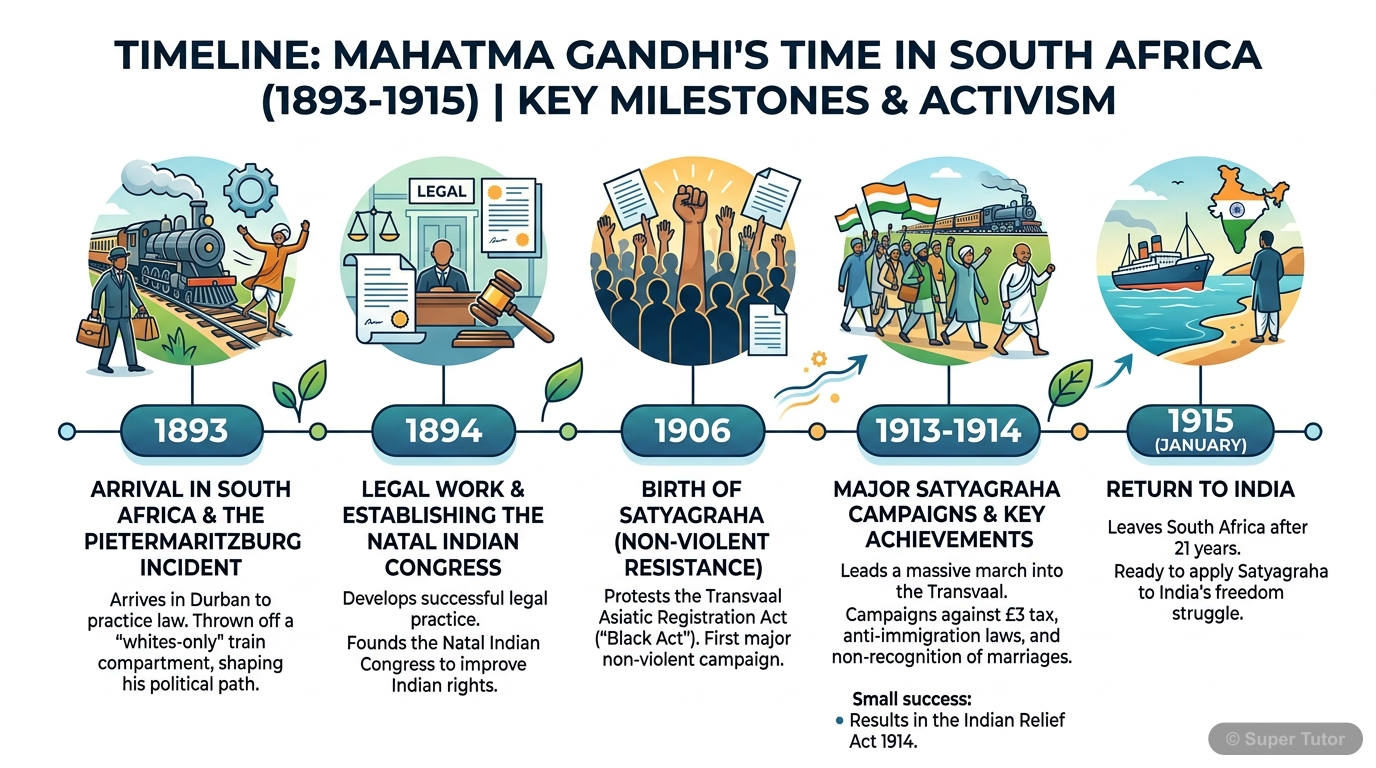
One of 11 illustrations for Mahatma Gandhi and the Nationalist Movement: Civil Disobedience and Beyond in Super Tutor — alongside flashcards, concept maps and practice questions.
Why is Mahatma Gandhi seen as a central figure in Indian nationalism?
Answer
Mahatma Gandhi became the most influential and revered leader of the freedom struggle. He connected politics with social reform, brought peasants, workers, students, women, and others into national po…
भारतीय राष्ट्रवाद में महात्मा गांधी को एक केंद्रीय व्यक्ति के रूप में क्यों देखा जाता है?
Answer
महात्मा गाँधी स्वतंत्रता संग्राम के सबसे प्रभावशाली एवं श्रद्धेय नेता बने। उन्होंने राजनीति को समाज सुधार से जोड़ा, किसानों, मजदूरों, छात्रों, महिलाओं आदि को राष्ट्रीय राजनीति में शामिल किया और संघर्ष…
गांधी की राजनीतिक पद्धति में सत्याग्रह का क्या अर्थ है?
Answer
सत्याग्रह गांधी का सत्य, आत्म-अनुशासन और नैतिक शक्ति पर आधारित अहिंसक विरोध का तरीका था। यह सबसे पहले दक्षिण अफ्रीका में विकसित किया गया था और बाद में भारत में औपनिवेशिक अन्याय के खिलाफ इसका इस्तेमाल …
What does satyagraha mean in Gandhi’s political method?
Answer
Satyagraha was Gandhi’s method of non-violent protest based on truth, self-discipline, and moral force. It was first developed in South Africa and later used in India against colonial injustice.
What was the significance of Gandhi’s return to India in January 1915?
Answer
His return marked the beginning of a new phase in Indian nationalism. After two decades abroad, mostly in South Africa, Gandhi began studying Indian society closely and later shaped a mass political m…
जनवरी 1915 में गांधी के भारत लौटने का क्या महत्व था?
Answer
उनकी वापसी ने भारतीय राष्ट्रवाद में एक नए चरण की शुरुआत की। दो दशकों तक विदेश में रहने के बाद, ज्यादातर दक्षिण अफ्रीका में, गांधी ने भारतीय समाज का बारीकी से अध्ययन करना शुरू किया और बाद में स्थानीय म…
फरवरी 1916 में बनारस हिंदू विश्वविद्यालय के उद्घाटन पर क्या हुआ था?
Answer
यह भारत में गांधी की पहली बड़ी सार्वजनिक उपस्थिति थी। उन्होंने अमीर मेहमानों और सभा में अनुपस्थित गरीब लोगों के बीच के अंतर की आलोचना की और तर्क दिया कि भारत का उद्धार किसानों और मेहनतकश गरीबों पर निर…
What happened at the opening of Banaras Hindu University in February 1916?
Answer
It was Gandhi’s first major public appearance in India. He criticised the contrast between the rich guests and the poor people absent from the gathering, and he argued that India’s salvation depended …
+76 more flashcards
Practise AllFrequently Asked Questions
What are the important topics in Mahatma Gandhi and the Nationalist Movement: Civil Disobedience and Beyond for Mizoram Board Class 12 History?
How many flashcards are available for Mahatma Gandhi and the Nationalist Movement: Civil Disobedience and Beyond?
How should I revise Mahatma Gandhi and the Nationalist Movement: Civil Disobedience and Beyond for the Mizoram Board Class 12 board exam?
Sources & Official References
Content is aligned to the official syllabus. Refer to the board website for the latest curriculum.
More resources for Mahatma Gandhi and the Nationalist Movement: Civil Disobedience and Beyond
Practice Quiz
Test yourself with a quick quiz
Important Questions
Exam-style questions with answers
Revision Notes
Key points for last-minute revision
Chapter Summary
Understand the chapter at a glance
Concept Maps
See how topics connect
Study Plan
Step-by-step plan for this chapter
Syllabus
What topics to cover
NCERT Solutions
Every textbook question solved step by step
For serious students
Get the full Mahatma Gandhi and the Nationalist Movement: Civil Disobedience and Beyond chapter — start free.
Quizzes, flashcards, an AI doubt solver and a study plan for Mizoram Board Class 12 History. Free to start, no card needed.