Biotechnology : Principles and Processes — Practice Quiz
Madhya Pradesh Board · Class 12 · Biology
Try a 4-question quiz on Biotechnology : Principles and Processes for Madhya Pradesh Board Class 12 Biology: tap an answer to check it and see why.
Interactive on Super Tutor
Studying Biotechnology : Principles and Processes? Get the full interactive chapter.
Quizzes, flashcards, AI doubt-solver and a step-by-step study plan — built for practice quiz and more.
Free trial, no card needed.
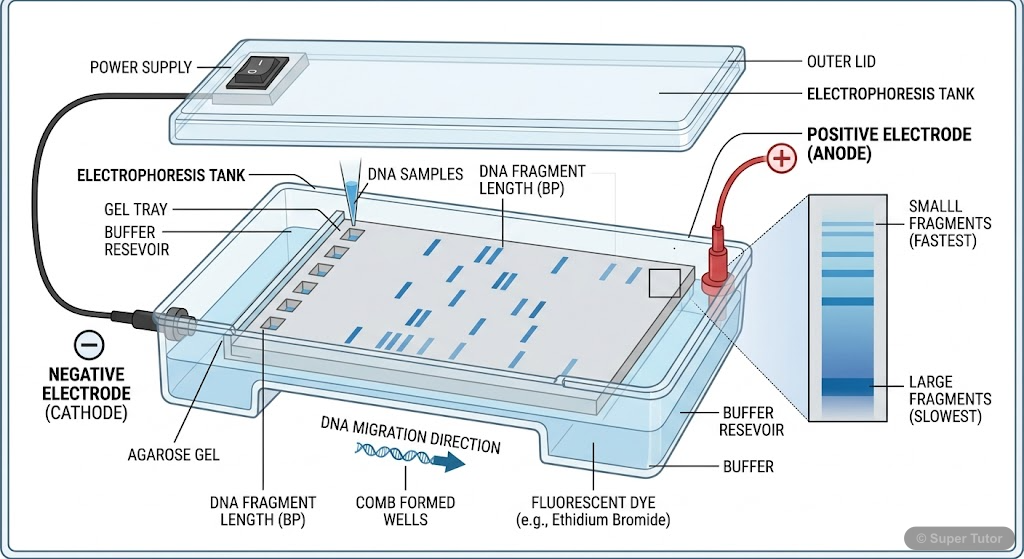
One of 19 illustrations for Biotechnology : Principles and Processes in Super Tutor — alongside flashcards, concept maps and practice questions.
Quick Quiz: Biotechnology : Principles and Processes
0/4Tap an answer to check it instantly. No sign-up needed for these 4.
What is the full form of EFB in the context of biotechnology?
What are enzymes that cut DNA at specific sequences called?
What does the 'ori' sequence in a vector represent?
Which scientist duo created the first recombinant DNA in 1972?
Sample Questions
Which of the following are core techniques of modern biotechnology?
Show answer
Genetic engineering, Bioprocess engineering
The two core techniques that enabled modern biotechnology are genetic engineering (altering DNA and RNA chemistry) and bioprocess engineering (maintaining sterile conditions for desired organism growth).
The first restriction enzyme isolated was HindII in 1963.
Show answer
False
False. While restriction enzymes were first discovered in 1963, HindII was isolated and characterized five years later. The first restriction endonuclease HindII was isolated in 1968.
Which of the following are characteristics of palindromic sequences in DNA?
Show answer
Read the same in both directions, Recognized by restriction enzymes, Create sticky ends when cut
Palindromic sequences read the same on both strands in the same direction (5' to 3'), are recognized by restriction enzymes, and when cut, create sticky ends that facilitate ligation.
What technique is used to separate DNA fragments based on their size?
Show answer
Gel electrophoresis
Gel electrophoresis separates DNA fragments based on their size. Smaller fragments move farther through the gel matrix under an electric field due to the sieving effect.
+45 more questions on Biotechnology : Principles and Processes (Madhya Pradesh Board Class 12 Biology)
Practise AllFrequently Asked Questions
What are the important topics in Biotechnology : Principles and Processes for Madhya Pradesh Board Class 12 Biology?
How many practice questions are there for Biotechnology : Principles and Processes?
Sources & Official References
Content is aligned to the official syllabus. Refer to the board website for the latest curriculum.
More resources for Biotechnology : Principles and Processes
Important Questions
Exam-style questions with answers
Revision Notes
Key points for last-minute revision
Chapter Summary
Understand the chapter at a glance
Concept Maps
See how topics connect
Study Plan
Step-by-step plan for this chapter
Flashcards
Quick-fire cards for active recall
Syllabus
What topics to cover
NCERT Solutions
Every textbook question solved step by step
For serious students
Get the full Biotechnology : Principles and Processes chapter — start free.
Quizzes, flashcards, an AI doubt solver and a study plan for Madhya Pradesh Board Class 12 Biology. Free to start, no card needed.