Andhayug — Important Questions
NIOS · Class 12 · English
45 important questions from Andhayug for NIOS Class 12 English, with answers. Includes multiple choice questions. Written for the board exams 2027.
Interactive on Super Tutor
Studying Andhayug? Get the full interactive chapter.
Quizzes, flashcards, AI doubt-solver and a step-by-step study plan — built for important questions and more.
Free trial, no card needed.
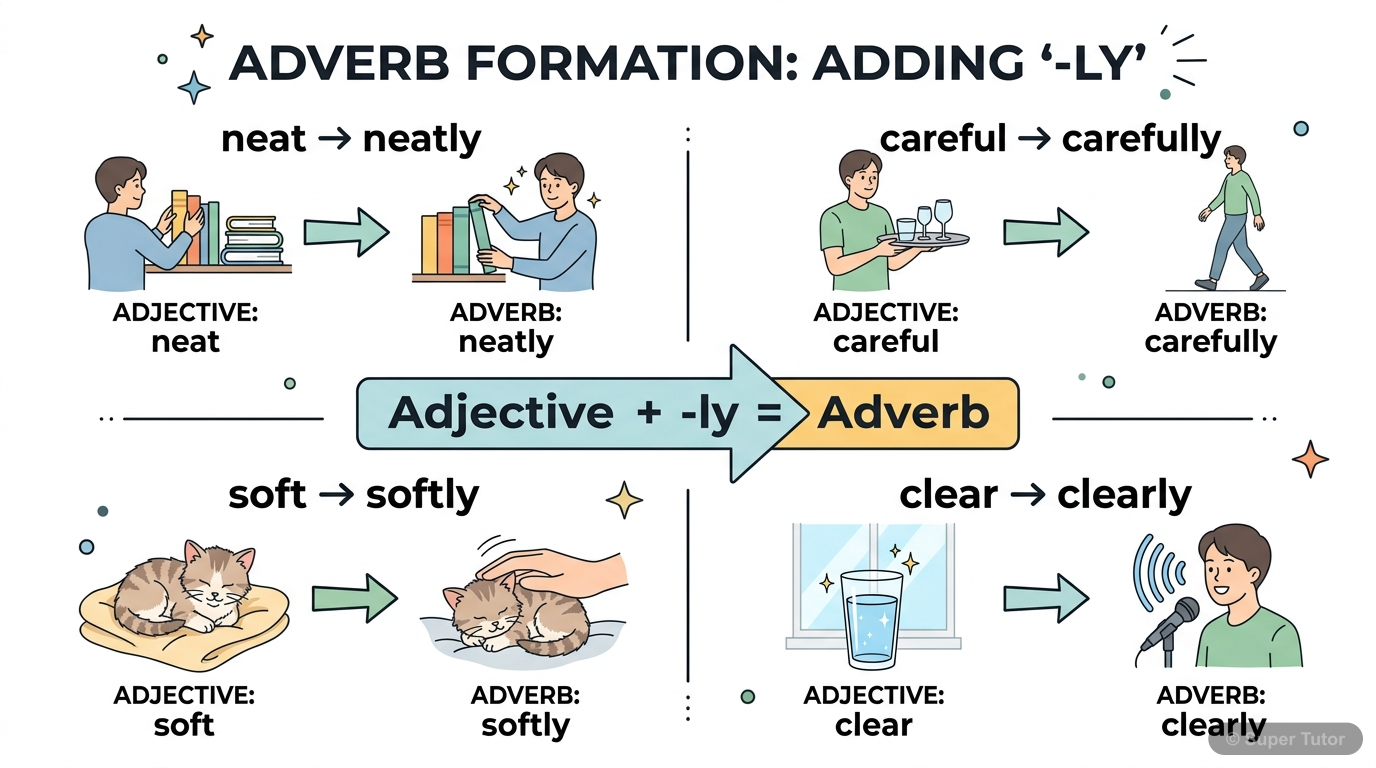
Learn better with visuals Super Tutor pairs illustrations like this with notes and quizzes for Andhayug.
Important Questions from Andhayug
The peacock feather in Section III is contrasted with the 'blood-soaked feather of a black crow.' What does this contrast most effectively represent?
Show answer
The conflict between Krishna's divine grace and Ashwatthama's destructive hatred
Step 1: The peacock feather is identified as having fallen from Krishna's crown – it is associated with Krishna's divinity, grace, and beauty. Step 2: The 'blood-soaked feather of a black crow' is directly used to describe Ashwatthama's hatred – dark, violent, and terrifying. Step 3: The Mendicant even asks, 'Can a small peacock feather defeat it?' – suggesting the symbolic battle between divine grace and consuming hatred. Step 4: Option A reduces a rich symbol to a simple aesthetic observation about nature. Options C and D are literal and miss the symbolic dimension entirely. Step 5: This con
Yuyutsu says he feels 'as if I had spun on the wrong axle and have lost my bearings.' Considering Yuyutsu's unique historical role in the Mahabharata, what makes this statement particularly ironic?
Show answer
Yuyutsu was the only Kaurava who chose to fight for the Pandavas, yet he still feels morally lost
Step 1: From the 'Do You Know' section, recall that Yuyutsu was 'the sole son of Dhritarashtra who decided to fight on the side of the Pandavas' – he chose righteousness over family loyalty. Step 2: He is described as 'a moral warrior who chose the path of righteousness.' Step 3: The irony is that despite making the morally correct choice, Yuyutsu still feels he 'spun on the wrong axle' and has 'lost his bearings' – meaning even righteousness did not bring clarity or peace in this age of blindness. Step 4: Option B is a literal reading that ignores metaphor. Option C contradicts the text – he
The Mendicant says, 'He is the embodiment of time as it flows in its stately dignity.' To whom does this refer, and what does the phrase 'stately dignity' add to the characterisation?
Show answer
Krishna – suggesting he is not merely divine but the very personification of majestic, unstoppable time
Step 1: The Mendicant picks up a peacock feather from Krishna's crown and hears the bells of Krishna's chariot – so this reference is clearly about Krishna. Step 2: The phrase 'embodiment of time' means Krishna IS time itself – this connects to the Bhagavad Gita where Krishna declares himself as 'Kaal' (time/death). Step 3: 'Stately dignity' adds a sense of grace and inevitability – time does not rush or panic; it moves with authority. Step 4: This also explains why the Mendicant 'cannot stop' Krishna – you cannot halt time itself. Step 5: Options A, C, and D are incorrect by context. The char
Andha Yug was originally written as a radio play and first broadcast by Allahabad All India Radio. How does this origin influence the play's heavy reliance on sound as a dramatic device in the sections studied?
Show answer
It explains why the play uses stage directions involving chariot bells, wheels, and roars to create atmosphere without visual effects
Step 1: A radio play is heard, not seen – all drama must be conveyed through sound and spoken word. Step 2: Notice the stage directions: 'There is a sound of bells offstage,' 'The sounds of chariot wheels grow louder,' 'A terrifying roar is heard offstage' – all auditory elements. Step 3: Even the chariot of Ashwatthama's arrival is announced by sound, not by the actor walking in. Step 4: Option B is incorrect – the play is considered one of India's greatest theatrical works and is performed widely. Option C is wrong; Bharati deeply engaged with the Mahabharata, a Sanskrit epic. Option D contr
+41 more questions on Andhayug (NIOS Class 12 English)
Practise AllFrequently Asked Questions
What are the important topics in Andhayug for NIOS Class 12 English?
How many important questions are there in Andhayug?
Sources & Official References
Content is aligned to the official syllabus. Refer to the board website for the latest curriculum.
More resources for Andhayug
For serious students
Get the full Andhayug chapter — start free.
Quizzes, flashcards, an AI doubt solver and a study plan for NIOS Class 12 English. Free to start, no card needed.