Security in the Contemporary World — Flashcards
Assam Board · Class 12 · Political Science
84 flashcards for Security in the Contemporary World (Assam Board Class 12 Political Science) to test yourself on key terms and facts.
Interactive on Super Tutor
Studying Security in the Contemporary World? Get the full interactive chapter.
Quizzes, flashcards, AI doubt-solver and a step-by-step study plan — built for flashcards and more.
Free trial, no card needed.
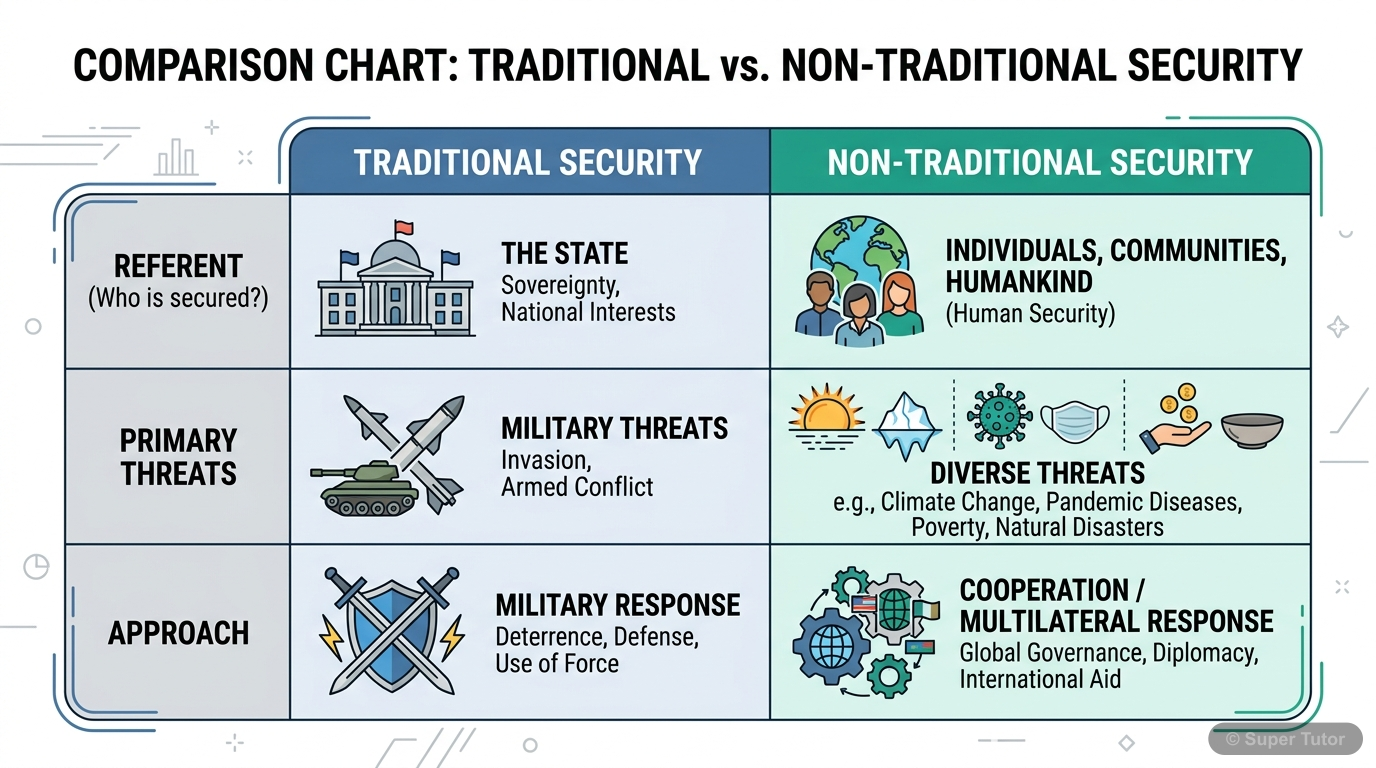
One of 7 illustrations for Security in the Contemporary World in Super Tutor — alongside flashcards, concept maps and practice questions.
What does security mean in the most basic sense?
Answer
Security means freedom from threats. It refers only to extremely dangerous threats that can damage core values beyond repair if they are not dealt with in time.
सबसे बुनियादी अर्थ में सुरक्षा का क्या मतलब है?
Answer
सुरक्षा का अर्थ है खतरों से मुक्ति। यह केवल उन अत्यंत खतरनाक खतरों को संदर्भित करता है जो मूल मूल्यों को नुकसान पहुंचा सकते हैं यदि समय रहते उनसे निपटा नहीं गया।…
सुरक्षा दैनिक जीवन में हर जोखिम का सामना करने के समान क्यों नहीं है?
Answer
हर खतरा सुरक्षा समस्या नहीं माना जाता है। सुरक्षा उन खतरों पर ध्यान केंद्रित करती है जो इतने गंभीर हैं कि वे सुरक्षा, संप्रभुता या मानव जीवन जैसे महत्वपूर्ण मूल्यों को नष्ट कर सकते हैं।…
Why is security not the same as facing every risk in daily life?
Answer
Not every danger counts as a security issue. Security focuses on threats that are so serious that they can destroy important values such as safety, sovereignty, or human life beyond repair.
What is traditional security?
Answer
Traditional security deals mainly with external military threats between states. It protects sovereignty, independence, and territorial integrity against attacks from other countries.
पारंपरिक सुरक्षा क्या है?
Answer
पारंपरिक सुरक्षा मुख्य रूप से राज्यों के बीच बाहरी सैन्य खतरों से संबंधित है। यह अन्य देशों के हमलों से संप्रभुता, स्वतंत्रता और क्षेत्रीय अखंडता की रक्षा करता है।…
डिटेरेंस और डिफेंस में क्या अंतर है?
Answer
प्रतिरोध का अर्थ है कि युद्ध को रोकने के लिए विरोधी को यह विश्वास दिलाना कि आक्रमण की कीमत बहुत अधिक होगी। रक्षा का अर्थ है कि युद्ध शुरू होने के बाद उसे सीमित करना या समाप्त करना, ताकि हमलावर अपने लक…
What is the difference between deterrence and defence?
Answer
Deterrence means preventing war by making the opponent believe the cost of attack will be too high. Defence means limiting or ending war after it has started, so the attacker cannot achieve its aims.
+76 more flashcards
Practise AllFrequently Asked Questions
What are the important topics in Security in the Contemporary World for Assam Board Class 12 Political Science?
How many flashcards are available for Security in the Contemporary World?
How should I revise Security in the Contemporary World for the Assam Board Class 12 board exam?
Sources & Official References
Content is aligned to the official syllabus. Refer to the board website for the latest curriculum.
More resources for Security in the Contemporary World
Practice Quiz
Test yourself with a quick quiz
Important Questions
Exam-style questions with answers
Revision Notes
Key points for last-minute revision
Chapter Summary
Understand the chapter at a glance
Concept Maps
See how topics connect
Study Plan
Step-by-step plan for this chapter
Syllabus
What topics to cover
NCERT Solutions
Every textbook question solved step by step
For serious students
Get the full Security in the Contemporary World chapter — start free.
Quizzes, flashcards, an AI doubt solver and a study plan for Assam Board Class 12 Political Science. Free to start, no card needed.