Biotechnology : Principles and Processes
CBSE · Class 12 · Biology
Flashcards for Biotechnology : Principles and Processes — CBSE Class 12 Biology. Quick Q&A cards covering key concepts, definitions, and formulas.
Interactive on Super Tutor
Studying Biotechnology : Principles and Processes? Get the full interactive chapter.
Quizzes, flashcards, AI doubt-solver and a step-by-step study plan — built for flashcards and more.
1,000+ Class 12 students started this chapter today
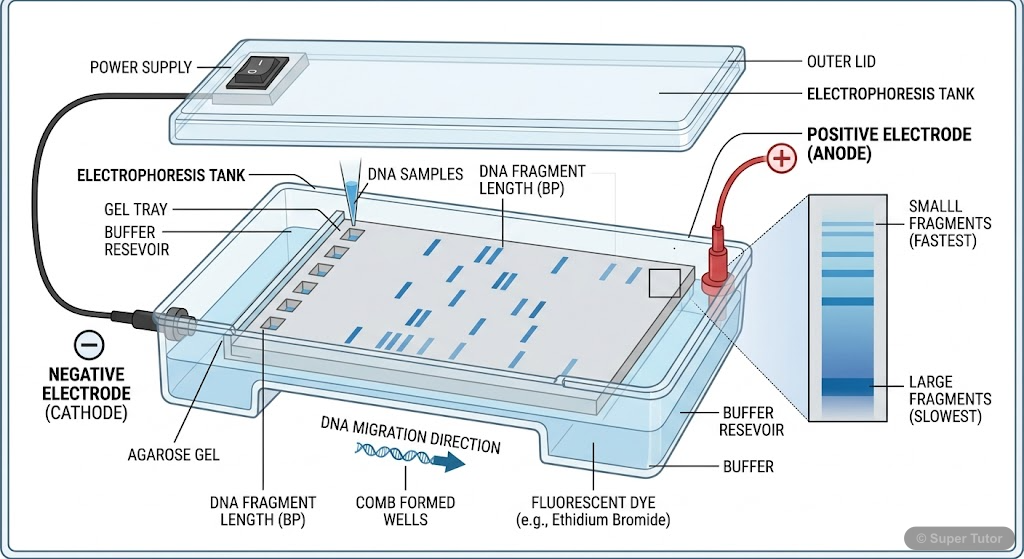
Learn better with visuals Super Tutor has hundreds of illustrations like this across every chapter — all free to try.
Get startedWhat is biotechnology in the broad sense?
Answer
Biotechnology is the use of live organisms, cells, or enzymes to produce useful products and processes. It includes traditional processes such as making curd, bread, and wine, as well as modern geneti…
व्यापक अर्थ में जैव प्रौद्योगिकी क्या है?
Answer
जैव प्रौद्योगिकी (Biotechnology) उपयोगी उत्पादों और प्रक्रियाओं के उत्पादन के लिए जीवित जीवों, कोशिकाओं या एंजाइमों का उपयोग है। इसमें दही, रोटी और शराब बनाने जैसी पारंपरिक प्रक्रियाएं शामिल हैं, साथ …
What is the definition of biotechnology given by the European Federation of Biotechnology?
Answer
Biotechnology is defined as the integration of natural science and organisms, cells, parts thereof, and molecular analogues for products and services.
यूरोपीय जैव प्रौद्योगिकी संघ द्वारा जैव प्रौद्योगिकी की क्या परिभाषा दी गई है?
Answer
जैव प्रौद्योगिकी को प्राकृतिक विज्ञान और जीवों, कोशिकाओं, उनके भागों और उत्पादों और सेवाओं के लिए आणविक समरूपों के एकीकरण के रूप में परिभाषित किया गया है।…
What are the two core techniques that formed the basis of modern biotechnology?
Answer
The two core techniques are genetic engineering and bioprocess engineering. Genetic engineering changes the chemistry of DNA or RNA and introduces it into a host, while bioprocess engineering maintain…
आधुनिक जैव प्रौद्योगिकी का आधार बनाने वाली दो मुख्य तकनीकें क्या हैं?
Answer
दो मुख्य तकनीकें हैं आनुवंशिक अभियांत्रिकी और जैवप्रक्रिया अभियांत्रिकी। आनुवंशिक अभियांत्रिकी DNA या RNA के रसायन को बदल देती है और इसे एक पोषक में डाल देती है, जबकि जैवप्रक्रिया अभियांत्रिकी बड़े पै…
Why does a piece of foreign DNA usually need an origin of replication?
Answer
A foreign DNA fragment needs an origin of replication so that it can be copied inside the host cell. The origin of replication starts replication and also controls the copy number of the linked DNA.
विदेशी DNA के एक टुकड़े को आम तौर पर प्रतिकृति की उत्पत्ति की आवश्यकता क्यों होती है?
Answer
एक विदेशी DNA खंड को प्रतिकृति के मूल की आवश्यकता होती है ताकि इसे मेजबान कोशिका के अंदर कॉपी किया जा सके। प्रतिकृति का मूल प्रतिकृति शुरू करता है और लिंक किए गए DNA की प्रतिलिपि संख्या को भी नियंत्रि…
+64 more flashcards available
Practice AllFrequently Asked Questions
What are the important topics in Biotechnology : Principles and Processes for CBSE Class 12 Biology?
How to score full marks in Biotechnology : Principles and Processes — CBSE Class 12 Biology?
How many flashcards are available for Biotechnology : Principles and Processes?
Sources & Official References
- NCERT Official — ncert.nic.in
- CBSE Academic — cbseacademic.nic.in
- CBSE Official — cbse.gov.in
- National Education Policy 2020 — education.gov.in
Content is aligned to the official syllabus. Refer to the board website for the latest curriculum.
More resources for Biotechnology : Principles and Processes
Practice Quiz
Test yourself with a quick quiz
Important Questions
Practice with board exam-style questions
Revision Notes
Key points for last-minute revision
Formula Sheet
All formulas in one place
Chapter Summary
Understand the chapter at a glance
Concept Maps
See how topics connect visually
Study Plan
Step-by-step plan to ace this chapter
Syllabus
What topics to cover
NCERT Solutions
Every textbook question solved step by step
For serious students
Get the full Biotechnology : Principles and Processes chapter — for free.
Quizzes, flashcards, AI doubt-solver and a step-by-step study plan for CBSE Class 12 Biology.