Sexual Reproduction in Flowering Plants
CBSE · Class 12 · Biology
Step-by-step guide to study Sexual Reproduction in Flowering Plants in CBSE Class 12 Biology. Topics to cover, practice strategy, and time allocation.
Interactive on Super Tutor
Studying Sexual Reproduction in Flowering Plants? Get the full interactive chapter.
Quizzes, flashcards, AI doubt-solver and a step-by-step study plan — built for study plan and more.
1,000+ Class 12 students started this chapter today
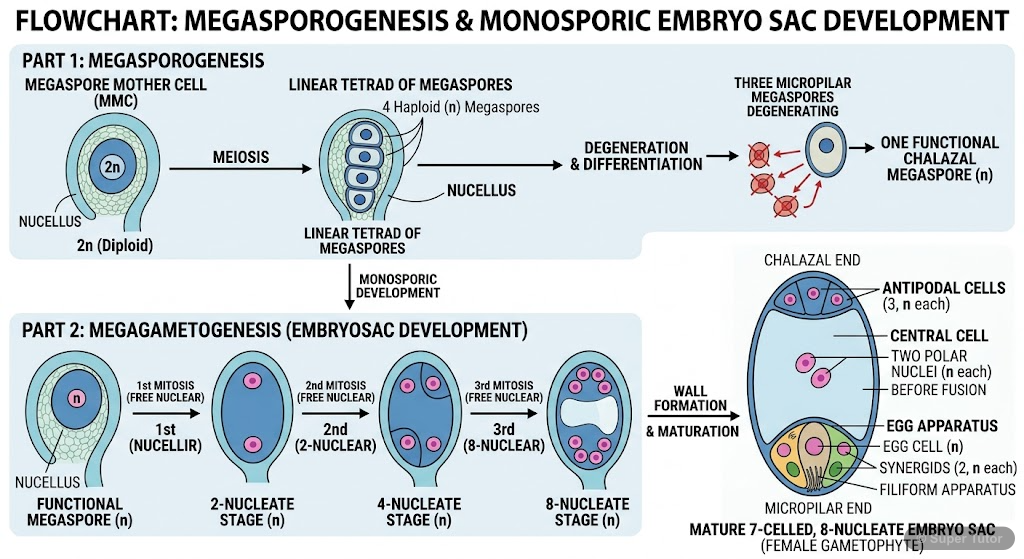
Super Tutor has 16+ illustrations like this for Sexual Reproduction in Flowering Plants alone — flashcards, concept maps, and step-by-step visuals.
See them allStudy Plan
Learn the Theory
Read the textbook chapter carefully. Note down definitions, formulas, and key concepts.
Practice Problems
Solve textbook exercises and additional practice questions. There are 34 questions available for this chapter.
Revise & Test
Revise key formulas and concepts without looking at notes. Take a practice quiz to test your understanding. Mark weak areas for re-revision.
Spaced Revision
Revisit Sexual Reproduction in Flowering Plants after a week. Use flashcards for quick recall. Solve previous year questions from this chapter.
What to Focus On
- Androecium is the male reproductive whorl.
- Gynoecium is the female reproductive whorl.
- Flowers are the sites of sexual reproduction in angiosperms.
- Stamen consists of filament and anther.
- Anther is bilobed, dithecous, and tetragonal.
- Microsporangium has four wall layers: epidermis, endothecium, middle layers, tapetum.
- Pollen viability depends on temperature and humidity.
- Rice and wheat pollen lose viability within 30 minutes.
- Rosaceae, Leguminosae, and Solanaceae pollen may remain viable for months.
Common Mistakes to Avoid
Double fertilisation means only one fusion event happens in the embryo sac.
The zygote starts dividing immediately after fertilisation, before endosperm formation.
Autogamy, geitonogamy, and xenogamy are just three names for self-pollination.
Memory Tips
Stamen parts and function
Anther features
Microsporangium wall layers
Tapetum role
Want a personalised study plan?
Super Tutor creates a day-by-day plan for CBSE Class 12 Biology that adapts to your exam date and pace.
Create My Study Plan — FreeFrequently Asked Questions
What are the important topics in Sexual Reproduction in Flowering Plants for CBSE Class 12 Biology?
How to score full marks in Sexual Reproduction in Flowering Plants — CBSE Class 12 Biology?
Sources & Official References
- NCERT Official — ncert.nic.in
- CBSE Academic — cbseacademic.nic.in
- CBSE Official — cbse.gov.in
- National Education Policy 2020 — education.gov.in
Content is aligned to the official syllabus. Refer to the board website for the latest curriculum.
More resources for Sexual Reproduction in Flowering Plants
Practice Quiz
Test yourself with a quick quiz
Important Questions
Practice with board exam-style questions
Revision Notes
Key points for last-minute revision
Formula Sheet
All formulas in one place
Chapter Summary
Understand the chapter at a glance
Concept Maps
See how topics connect visually
Flashcards
Quick-fire cards for active recall
Syllabus
What topics to cover
NCERT Solutions
Every textbook question solved step by step
For serious students
Get the full Sexual Reproduction in Flowering Plants chapter — for free.
Quizzes, flashcards, AI doubt-solver and a step-by-step study plan for CBSE Class 12 Biology.