Alcohols, Phenols and Ethers
CBSE · Class 12 · Chemistry
Summary of Alcohols, Phenols and Ethers for CBSE Class 12 Chemistry. Key concepts, important points, and chapter overview.
Interactive on Super Tutor
Studying Alcohols, Phenols and Ethers? Get the full interactive chapter.
Quizzes, flashcards, AI doubt-solver and a step-by-step study plan — built for chapter summary and more.
1,000+ Class 12 students started this chapter today
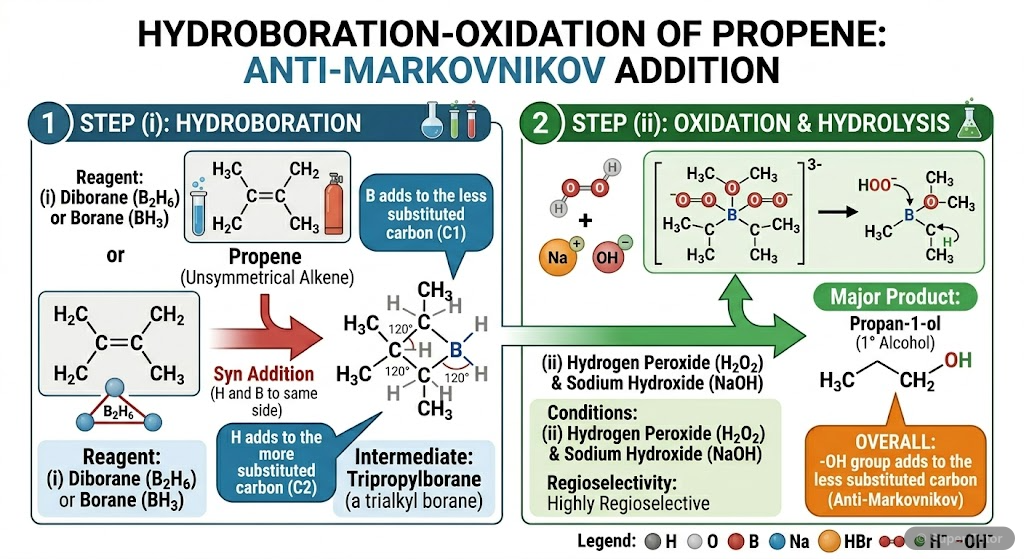
Super Tutor has 32+ illustrations like this for Alcohols, Phenols and Ethers alone — flashcards, concept maps, and step-by-step visuals.
See them allOverview
Alcohols, phenols and ethers are important classes of oxygen-containing organic compounds. Alcohols contain one or more hydroxyl groups attached to aliphatic carbon, phenols contain hydroxyl group attached directly to an aromatic ring, and ethers contain an oxygen atom bonded to two alkyl or aryl gr
Key Concepts
Alcohols are classified as mono
Alcohols are classified as mono-, di-, tri- or polyhydric depending on the number of hydroxyl groups. Monohydric alcohols are further classified as pr
Phenols are hydroxy derivatives of benzene
Phenols are hydroxy derivatives of benzene. They may be monohydric, dihydric or trihydric. Common examples include phenol, cresols, catechol, resorcin
Ethers are simple or symmetrical when
Ethers are simple or symmetrical when both groups attached to oxygen are the same, and mixed or unsymmetrical when the groups are different. Diethyl e
Alcohols and phenols have high boiling
Alcohols and phenols have high boiling points because of intermolecular hydrogen bonding. Boiling point increases with molecular mass, but branching l
Alcohols are prepared by acid
Alcohols are prepared by acid-catalysed hydration of alkenes, hydroboration-oxidation, reduction of aldehydes and ketones, reduction of carboxylic aci
Learning Objectives
- Classify alcohols, phenols and ethers on the basis of structure and functional group
- Name alcohols, phenols and ethers using IUPAC and common systems
- Explain methods of preparation of alcohols, phenols and ethers
- Relate physical properties such as boiling point and solubility to molecular structure
- Compare the acidity of alcohols and phenols
Frequently Asked Questions
What are the important topics in Alcohols, Phenols and Ethers for CBSE Class 12 Chemistry?
How to score full marks in Alcohols, Phenols and Ethers — CBSE Class 12 Chemistry?
Sources & Official References
- NCERT Official — ncert.nic.in
- CBSE Academic — cbseacademic.nic.in
- CBSE Official — cbse.gov.in
- National Education Policy 2020 — education.gov.in
Content is aligned to the official syllabus. Refer to the board website for the latest curriculum.
More resources for Alcohols, Phenols and Ethers
Practice Quiz
Test yourself with a quick quiz
Important Questions
Practice with board exam-style questions
Revision Notes
Key points for last-minute revision
Formula Sheet
All formulas in one place
Concept Maps
See how topics connect visually
Study Plan
Step-by-step plan to ace this chapter
Flashcards
Quick-fire cards for active recall
Syllabus
What topics to cover
NCERT Solutions
Every textbook question solved step by step
For serious students
Get the full Alcohols, Phenols and Ethers chapter — for free.
Quizzes, flashcards, AI doubt-solver and a step-by-step study plan for CBSE Class 12 Chemistry.