The Rattrap (Selma Lagerlof)
CBSE · Class 12 · English
Flashcards for The Rattrap (Selma Lagerlof) — CBSE Class 12 English. Quick Q&A cards covering key concepts, definitions, and formulas.
Interactive on Super Tutor
Studying The Rattrap (Selma Lagerlof)? Get the full interactive chapter.
Quizzes, flashcards, AI doubt-solver and a step-by-step study plan — built for flashcards and more.
1,000+ Class 12 students started this chapter today
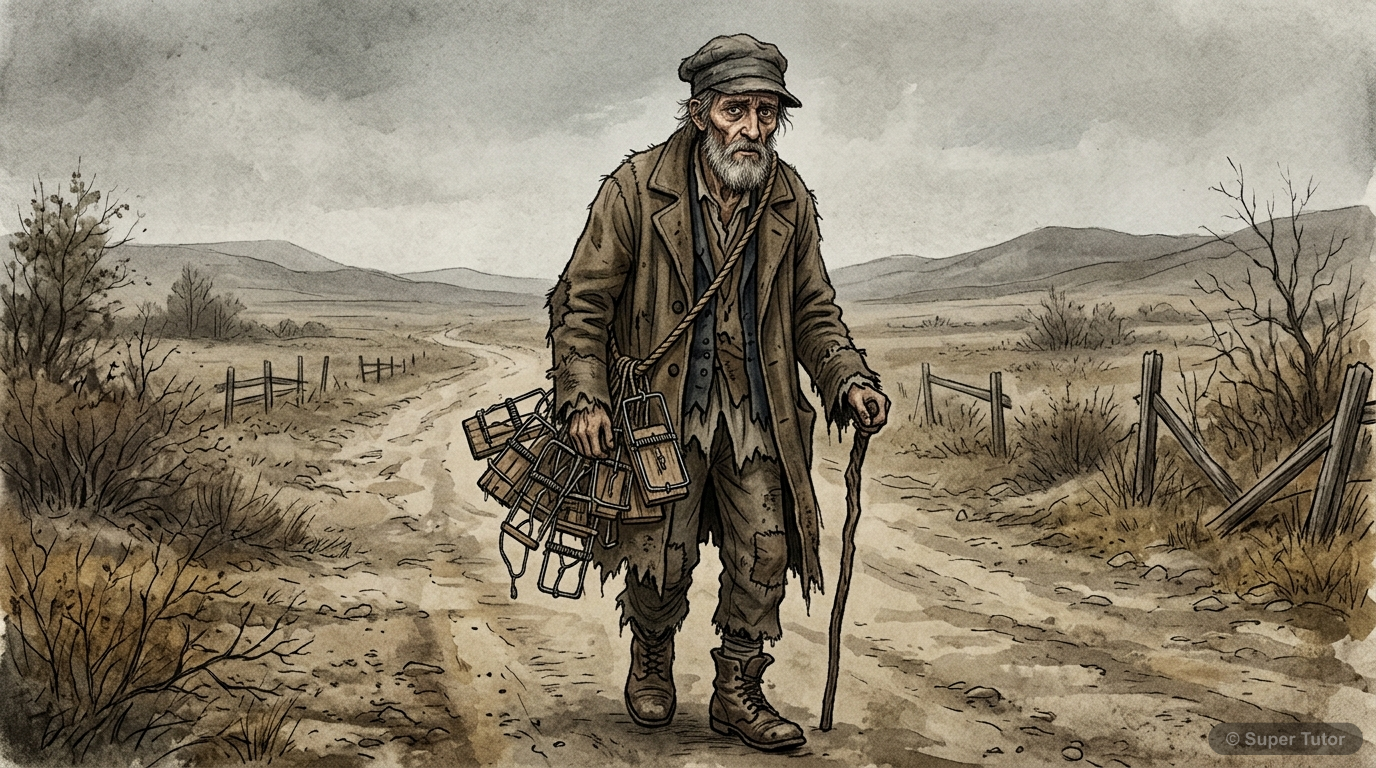
Learn better with visuals Super Tutor has hundreds of illustrations like this across every chapter — all free to try.
Get startedWhat is the central metaphor in The Rattrap?
Answer
The central metaphor is the idea that the whole world is a big rattrap. Tempting things like shelter, food, money, and comfort are compared to bait that catches people when they give in to greed or we…
Why does the peddler think of the world as a rattrap?
Answer
He feels that life offers tempting baits such as riches and comfort, only to trap people in trouble. This view comes from his own bitter experience of poverty, struggle, and repeated disappointment.
Who is the peddler in the story?
Answer
The peddler is an unnamed vagabond who sells wire rattraps made by himself. He survives by begging and petty thievery, and his life is marked by poverty and loneliness.
Why is the peddler called a trap maker in more than one sense?
Answer
He makes wire rattraps as a trade, but he is also trapped by poverty, hunger, and fear. Later, the story shows that he can even trap himself by giving in to temptation.
How does the crofter behave toward the peddler?
Answer
The crofter treats the peddler kindly. He offers porridge, tobacco, and cards, and talks to him warmly because he is lonely and lives without wife or child.
Why does the crofter show his thirty kronor to the peddler?
Answer
He wants to prove that his cow gives him enough money to live on. He is proud of the thirty kronor he received from the creamery for the cow's milk.
What does the peddler do after leaving the crofter's cottage?
Answer
Half an hour later, he returns, smashes a window pane, takes the pouch with thirty kronor, and carefully puts the pouch back before leaving.
Why does the peddler choose to steal the crofter's money?
Answer
He is tempted by easy gain and sees a chance to get money quickly. His poverty and weak character make him give in to the bait he had been thinking about in his rattrap idea.
+22 more flashcards available
Practice AllFrequently Asked Questions
What are the important topics in The Rattrap (Selma Lagerlof) for CBSE Class 12 English?
How to score full marks in The Rattrap (Selma Lagerlof) — CBSE Class 12 English?
How many flashcards are available for The Rattrap (Selma Lagerlof)?
Sources & Official References
- NCERT Official — ncert.nic.in
- CBSE Academic — cbseacademic.nic.in
- CBSE Official — cbse.gov.in
- National Education Policy 2020 — education.gov.in
Content is aligned to the official syllabus. Refer to the board website for the latest curriculum.
More resources for The Rattrap (Selma Lagerlof)
Practice Quiz
Test yourself with a quick quiz
Important Questions
Practice with board exam-style questions
Revision Notes
Key points for last-minute revision
Formula Sheet
All formulas in one place
Chapter Summary
Understand the chapter at a glance
Concept Maps
See how topics connect visually
Study Plan
Step-by-step plan to ace this chapter
Syllabus
What topics to cover
NCERT Solutions
Every textbook question solved step by step
For serious students
Get the full The Rattrap (Selma Lagerlof) chapter — for free.
Quizzes, flashcards, AI doubt-solver and a step-by-step study plan for CBSE Class 12 English.