Acids, Bases and Salt — Chapter Summary
Gujarat Board · Class 7 · Science
Summary of Acids, Bases and Salt for Gujarat Board Class 7 Science. Part of the Gujarat Board Class 7 Science syllabus.
Interactive on Super Tutor
Studying Acids, Bases and Salt? Get the full interactive chapter.
Quizzes, flashcards, AI doubt-solver and a step-by-step study plan — built for chapter summary and more.
Free trial, no card needed.
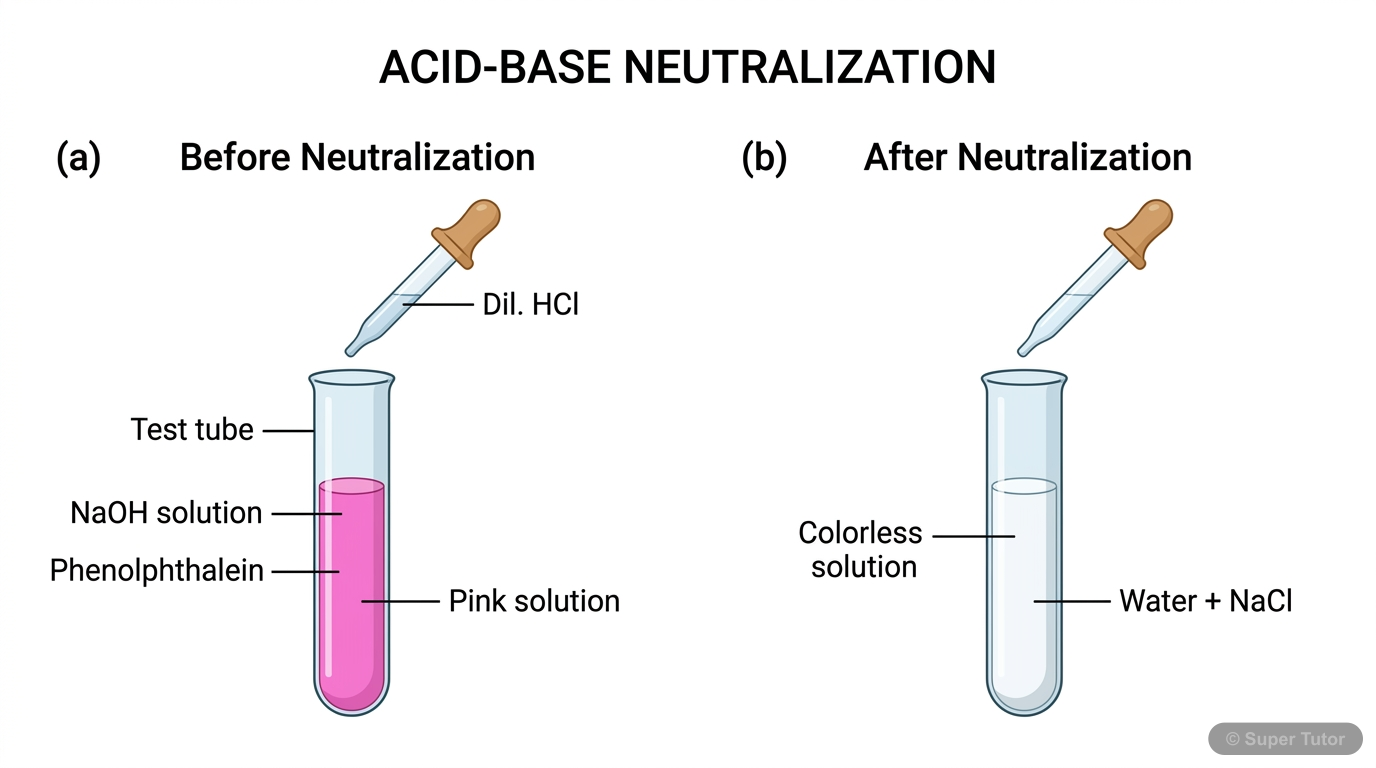
Learn better with visuals Super Tutor pairs illustrations like this with notes and quizzes for Acids, Bases and Salt.
Overview
In our daily life, we use many substances that have different tastes and properties. Some things like lemon juice and vinegar taste sour, while others like baking soda taste bitter or soapy. This chapter explores the nature of these substances by dividing them into three main categories: acids, base
Key Concepts
Acids are substances that taste sour
Acids are substances that taste sour and contain acidic chemical compounds. Common examples include lemon juice (contains citric acid), vinegar (conta
Bases are substances that generally taste
Bases are substances that generally taste bitter and feel soapy when touched. They are also called alkaline substances. Common examples include baking
Neutral substances are neither acidic nor
Neutral substances are neither acidic nor basic. They do not change the color of either red or blue litmus paper. Common examples include distilled wa
Indicators are special substances that change
Indicators are special substances that change color in the presence of acids, bases, or neutral solutions. The most common indicators are: (1) Litmus
Neutralisation is a chemical reaction
Neutralisation is a chemical reaction that occurs when an acid and a base are mixed in the right proportions. During this reaction, the acidic propert
Learning Objectives
- Understand the properties of acids and bases through taste, touch, and color change tests
- Learn to use natural indicators like litmus, turmeric, and China rose to identify acidic, basic, and neutral solutions
- Understand the process of neutralisation and the formation of salts
- Apply knowledge of acids and bases to solve real-world problems like treating indigestion, ant bites, and soil acidity
- Recognize the importance of pH and neutralisation in everyday life and industrial processes
Frequently Asked Questions
What are the important topics in Acids, Bases and Salt for Gujarat Board Class 7 Science?
How should I revise Acids, Bases and Salt for Class 7 exams?
Sources & Official References
Content is aligned to the official syllabus. Refer to the board website for the latest curriculum.
More resources for Acids, Bases and Salt
For serious students
Get the full Acids, Bases and Salt chapter — start free.
Quizzes, flashcards, an AI doubt solver and a study plan for Gujarat Board Class 7 Science. Free to start, no card needed.