The United Nations Organization — Study Plan
ICSE · Class 12 · History
A step-by-step study plan for The United Nations Organization, ICSE Class 12 History: what to learn first, what to practise and when to revise.
Interactive on Super Tutor
Studying The United Nations Organization? Get the full interactive chapter.
Quizzes, flashcards, AI doubt-solver and a step-by-step study plan — built for study plan and more.
Free trial, no card needed.
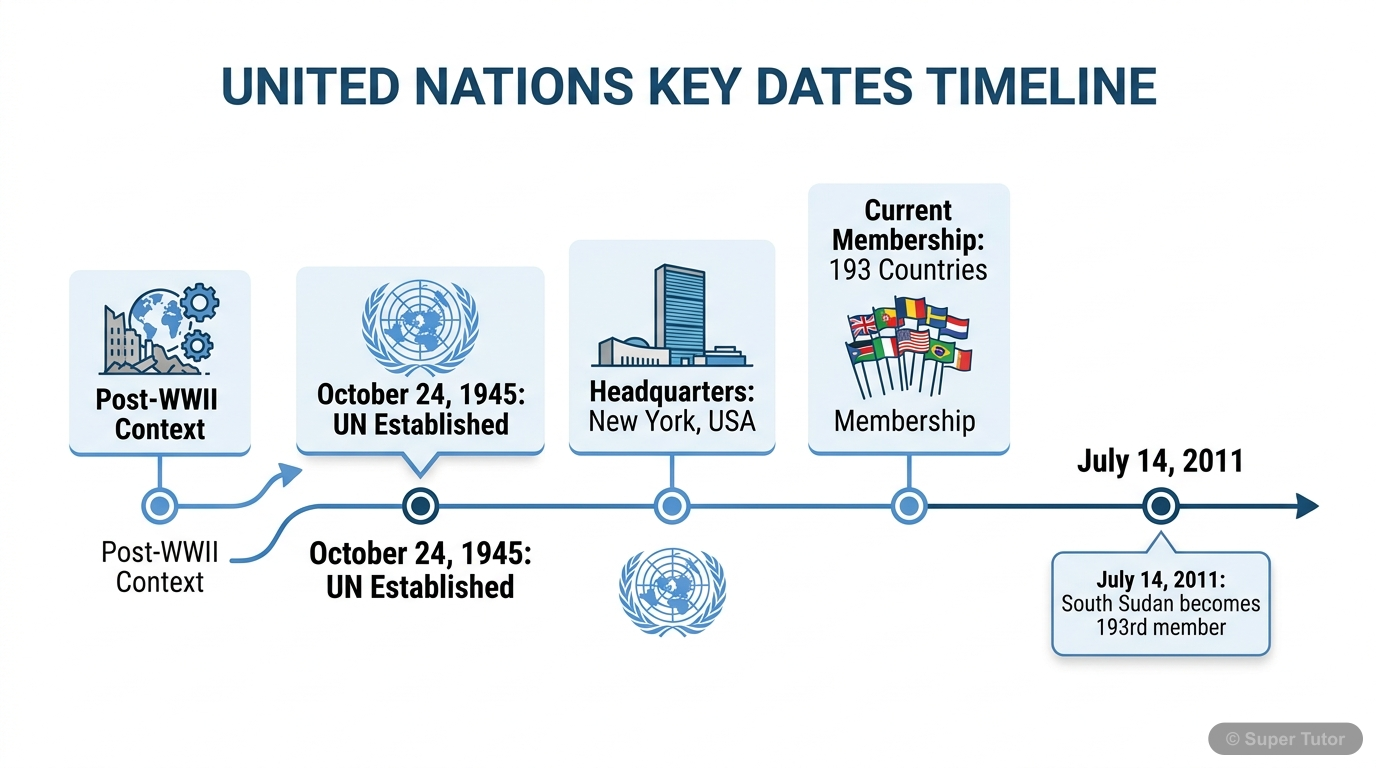
Learn better with visuals Super Tutor pairs illustrations like this with notes and quizzes for The United Nations Organization.
Study Plan
Learn the Theory
Read the textbook chapter carefully. Note down definitions, formulas and key ideas. Focus on: Origin, Aims, and Basic Idea, Structure of the United Nations, Decision-Making in the UN.
Practise
Solve the textbook exercises and extra practice questions. There are 44 questions available for this chapter.
Revise & Test
Revise key points without looking at your notes. Take a practice quiz and mark weak areas for another pass.
Spaced Revision
Come back to The United Nations Organization after a week. Use flashcards for quick recall and try past exam questions on this chapter.
What to Focus On
- UNO came into existence in October 1945.
- It was formed after the failure of the League of Nations.
- The UN Charter was drawn up in San Francisco in 1945.
- The UN has seven main organs.
- The General Assembly is the deliberative body of all member states.
- Important issues in the General Assembly need a two-thirds majority.
- UN membership grew sharply after the 1960s.
- Africa and Asia contributed many new members.
- The veto is held by permanent Security Council members.
Common Mistakes to Avoid
The United Nations was created by the League of Nations.
The General Assembly can make binding decisions on all issues by a simple majority.
The Security Council has no special power because it is just another UN committee.
Memory Tips
Official birth of the UNO and its purpose
Aims of the United Nations
Seven main organs of the UN
General Assembly functions and voting rules
Want a personalised study plan?
Super Tutor builds a day-by-day plan for ICSE Class 12 History that fits your exam date and pace.
Create My Study PlanFrequently Asked Questions
What are the important topics in The United Nations Organization for ICSE Class 12 History?
How should I revise The United Nations Organization for the ICSE Class 12 board exam?
Sources & Official References
Content is aligned to the official syllabus. Refer to the board website for the latest curriculum.
More resources for The United Nations Organization
Practice Quiz
Test yourself with a quick quiz
Important Questions
Exam-style questions with answers
Revision Notes
Key points for last-minute revision
Chapter Summary
Understand the chapter at a glance
Concept Maps
See how topics connect
Flashcards
Quick-fire cards for active recall
Syllabus
What topics to cover
For serious students
Get the full The United Nations Organization chapter — start free.
Quizzes, flashcards, an AI doubt solver and a study plan for ICSE Class 12 History. Free to start, no card needed.