Psychological Disorders and Psychotherapy — Concept Maps
ICSE · Class 12 · Psychology
4 concept maps of Psychological Disorders and Psychotherapy for ICSE Class 12 Psychology, each also written out as a text outline.
Interactive on Super Tutor
Studying Psychological Disorders and Psychotherapy? Get the full interactive chapter.
Quizzes, flashcards, AI doubt-solver and a step-by-step study plan — built for concept maps and more.
Free trial, no card needed.
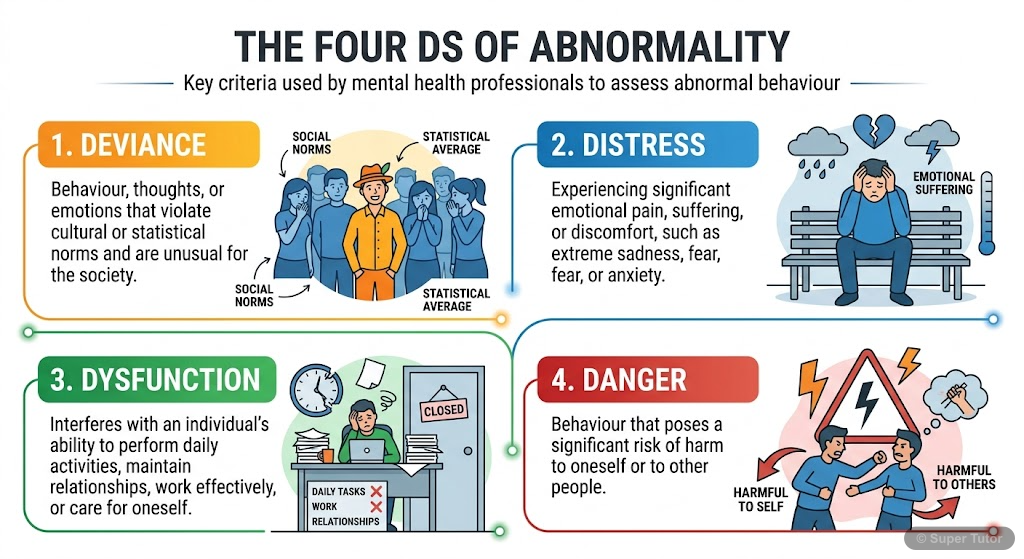
One of 7 illustrations for Psychological Disorders and Psychotherapy in Super Tutor — alongside flashcards, concept maps and practice questions.
Psychological Disorders and Psychotherapy - Concept Overview
The map in words
- Psychological Disorders and Psychotherapy
- Abnormality Concept
- Four Ds Framework
- Deviant
- Dysfunctional
- Distressing
- Dangerous
- Perspectives
- Biological
- Brain dysfunction
- Neurotransmitters
- Psychological
- Psychodynamic
- Behavioral
- Humanistic
- Cognitive
- Socio-cultural
- Family dynamics
- Environmental factors
- Biological
- Four Ds Framework
- Mental Disorders
- Anxiety Disorders
- GAD
- Phobic Disorder
- OCD
- Mood Disorders
- Depression
- Bipolar Disorder
- Personality Disorders
- Antisocial
- Histrionic
- Avoidant
- Dependent
- Developmental
- ADHD
- Conduct Disorder
- Autism
- Psychotic
- Schizophrenia
- Paranoid
- Disorganized
- Catatonic
- Schizophrenia
- Anxiety Disorders
- Classification
- DSM-IV
- Axis I Clinical
- Axis II Personality
- Axis III Medical
- Axis IV Psychosocial
- Axis V Functioning
- DSM-IV
- Psychotherapy
- Psychodynamic
- Free Association
- Transference
- Dream Analysis
- Behavioral
- Classical Conditioning
- Desensitization
- Flooding
- Operant Conditioning
- Token Economy
- Classical Conditioning
- Client-Centered
- Rogers Approach
- Unconditional Regard
- Empathy
- Cognitive
- CBT
- Thought Restructuring
- Psychodynamic
- Rehabilitation
- Skill Training
- Psychoeducation
- Vocational Training
- Family Support
- Abnormality Concept
Psychological Disorders Classification Overview
The map in words
- Psychological Disorders
- Anxiety Disorders
- GAD
- Specific Phobias
- Social Phobia
- OCD
- Panic Disorder
- Mood Disorders
- Major Depression
- Symptoms
- Causes
- Bipolar Disorder
- Manic Episodes
- Depressive Episodes
- Major Depression
- Personality Disorders
- Cluster A
- Paranoid
- Cluster B
- Antisocial
- Histrionic
- Cluster C
- Avoidant
- Dependent
- Cluster A
- Developmental Disorders
- ADHD
- Conduct Disorder
- Autism Spectrum
- Separation Anxiety
- Schizophrenia
- Paranoid Type
- Disorganized Type
- Catatonic Type
- Positive Symptoms
- Negative Symptoms
- Anxiety Disorders
Psychological Disorders and Psychotherapy — Chapter Overview
The map in words
- Psychological Disorders and Psychotherapy
- Abnormality
- Four Ds
- Deviant
- Dysfunctional
- Distressing
- Dangerous
- Perspectives
- Biological
- Psychological
- Socio-cultural
- Four Ds
- Classification
- ICD-10 by WHO
- DSM-IV by APA
- Axis I Clinical Disorders
- Axis II Personality and MR
- Axis III Medical Conditions
- Axis IV Psychosocial Problems
- Axis V Global Assessment GAF
- Anxiety Disorders
- GAD more than 6 months
- Phobic Disorder
- Specific Phobia
- Agoraphobia
- Social Phobia
- OCD Obsessions and Compulsions
- Mood Disorders
- Major Depressive Disorder
- SAD Seasonal
- Postpartum Depression
- Becks Negative Triad
- Bipolar Disorder
- Mania High Pole
- Depression Low Pole
- Major Depressive Disorder
- Personality Disorders
- Anti-social
- Histrionic
- Avoidant
- Dependent
- Passive-Aggressive
- Behavioural and Developmental
- ADHD
- Conduct Disorder
- Autism Spectrum
- Separation Anxiety
- Schizophrenia
- Positive Symptoms Added
- Negative Symptoms Lost
- Paranoid Most Common
- Disorganised Hebephrenia
- Catatonic Motor
- Psychotherapy
- Psychodynamic Freud
- Free Association
- Dream Analysis
- Transference
- Resistance
- Client-Centered Rogers
- Unconditional Positive Regard
- Genuineness
- Empathy
- Behaviour Therapy
- Classical Conditioning
- Operant Conditioning
- CBT Ellis and Beck
- Psychodynamic Freud
- Rehabilitation
- Reintegration into Society
- Psychoeducation
- Vocational Training
- Abnormality
Psychological disorders are abnormal thoughts, behaviours, and feelings that cause distress or impairment, and psychotherapy helps in understanding, changing, and managing them.
The map in words
- Psychological disorders are abnormal thoughts, behaviours, and feelings that cause distress or impairment, and psychotherapy helps in understanding, changing, and managing them.
- Abnormality
- Modern perspectives of abnormal behaviour
- Classification of mental disorders
- Anxiety disorders
- Mood disorders
- Personality disorders
- Behavioural and developmental disorders
- Schizophrenia
Explore these maps interactively
Explore DiagramsFrequently Asked Questions
What are the important topics in Psychological Disorders and Psychotherapy for ICSE Class 12 Psychology?
What do the concept maps for Psychological Disorders and Psychotherapy show?
How should I revise Psychological Disorders and Psychotherapy for the ICSE Class 12 board exam?
Sources & Official References
Content is aligned to the official syllabus. Refer to the board website for the latest curriculum.
More resources for Psychological Disorders and Psychotherapy
Practice Quiz
Test yourself with a quick quiz
Important Questions
Exam-style questions with answers
Revision Notes
Key points for last-minute revision
Chapter Summary
Understand the chapter at a glance
Study Plan
Step-by-step plan for this chapter
Flashcards
Quick-fire cards for active recall
Syllabus
What topics to cover
For serious students
Get the full Psychological Disorders and Psychotherapy chapter — start free.
Quizzes, flashcards, an AI doubt solver and a study plan for ICSE Class 12 Psychology. Free to start, no card needed.