Impact of Agricultural and Industrial Practices on the Ecosystem — Practice Quiz
ICSE · Class 9 · Economic Applications
Try a 4-question quiz on Impact of Agricultural and Industrial Practices on the Ecosystem for ICSE Class 9 Economic Applications: tap an answer to check.
Interactive on Super Tutor
Studying Impact of Agricultural and Industrial Practices on the Ecosystem? Get the full interactive chapter.
Quizzes, flashcards, AI doubt-solver and a step-by-step study plan — built for practice quiz and more.
Free trial, no card needed.
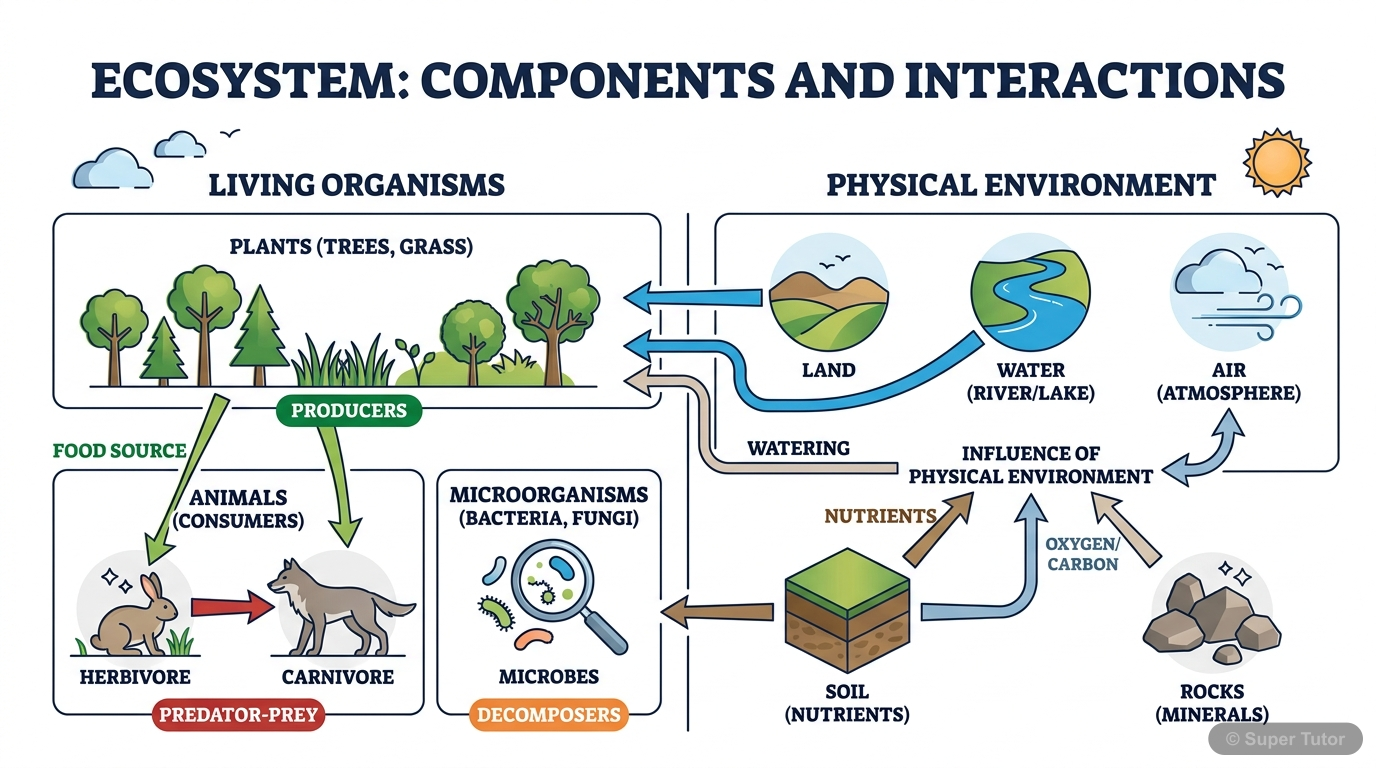
Learn better with visuals Super Tutor pairs illustrations like this with notes and quizzes for Impact of Agricultural and Industrial Practices on the Ecosystem.
Quick Quiz: Impact of Agricultural and Industrial Practices on the Ecosystem
0/4Tap an answer to check it instantly. No sign-up needed for these 4.
What is an ecosystem?
Which of the following is a major impact of deforestation on the ecosystem?
What is desertification?
Which of the following best describes bio-fertilizers?
Sample Questions
What are the main types of pollution mentioned in the chapter?
Show answer
Air, water, soil, and noise pollution
The chapter identifies four main types of pollution: (1) Air pollution - harmful substances in the atmosphere from burning fuels and industrial activities, (2) Water pollution - contamination of water bodies making them unfit for use, (3) Soil pollution - degradation of soil quality due to chemicals and waste, and (4) Noise pollution - unwanted sounds causing disturbance. Each type affects different parts of our environment and has serious impacts on human health and ecosystem balance.
Which method is used for safe disposal of wet household waste?
Show answer
Composting
Composting is the correct method for disposing wet household waste like food scraps, vegetable peels, and fruit waste. In composting, wet waste is dumped into a pit or bin where it decomposes naturally to form rich organic manure. This manure can then be used for plants and gardens. Burning waste causes air pollution, throwing in rivers causes water pollution, and random burying can contaminate groundwater. Composting is eco-friendly and converts waste into useful organic fertilizer.
What is crop rotation?
Show answer
Planting different crops in different years by rotation to maintain soil fertility
Crop rotation involves planting different types of crops in the same field in different seasons or years in a systematic sequence. This practice helps maintain soil fertility naturally because different crops use and add different nutrients to the soil. For example, after growing wheat, farmers might plant legumes which add nitrogen to soil. This method reduces soil erosion, maintains organic matter, decreases dependence on chemical fertilizers, and keeps the soil healthy and productive for long periods.
Which gas is primarily responsible for global warming according to the chapter?
Show answer
Carbon dioxide
Carbon dioxide (CO2) is identified as the primary greenhouse gas responsible for global warming. When forests are cut down, there are fewer trees to absorb CO2 from the atmosphere. Additionally, industrial activities, burning of fossil fuels, and cement manufacturing release large amounts of CO2. This increased concentration of CO2 in the atmosphere traps heat from the sun, leading to global warming and climate change. Trees normally act as 'lungs of the Earth' by absorbing CO2 and releasing oxygen.
+39 more questions on Impact of Agricultural and Industrial Practices on the Ecosystem (ICSE Class 9 Economic Applications)
Practise AllFrequently Asked Questions
What are the important topics in Impact of Agricultural and Industrial Practices on the Ecosystem for ICSE Class 9 Economic Applications?
How many practice questions are there for Impact of Agricultural and Industrial Practices on the Ecosystem?
Sources & Official References
Content is aligned to the official syllabus. Refer to the board website for the latest curriculum.
More resources for Impact of Agricultural and Industrial Practices on the Ecosystem
Important Questions
Exam-style questions with answers
Revision Notes
Key points for last-minute revision
Chapter Summary
Understand the chapter at a glance
Concept Maps
See how topics connect
Study Plan
Step-by-step plan for this chapter
Flashcards
Quick-fire cards for active recall
Syllabus
What topics to cover
For serious students
Get the full Impact of Agricultural and Industrial Practices on the Ecosystem chapter — start free.
Quizzes, flashcards, an AI doubt solver and a study plan for ICSE Class 9 Economic Applications. Free to start, no card needed.