Chapter 3 of 7
NCERT Solutions

Meeting Life Challenges

Meghalaya Board · Class 12 · Psychology

NCERT Solutions for Meeting Life Challenges — Meghalaya Board Class 12 Psychology.

39 questions20 flashcards5 concepts

Interactive on Super Tutor

Studying Meeting Life Challenges? Get the full interactive chapter.

Quizzes, flashcards, AI doubt-solver and a step-by-step study plan — built for ncert solutions and more.

1,000+ Class 12 students started this chapter today

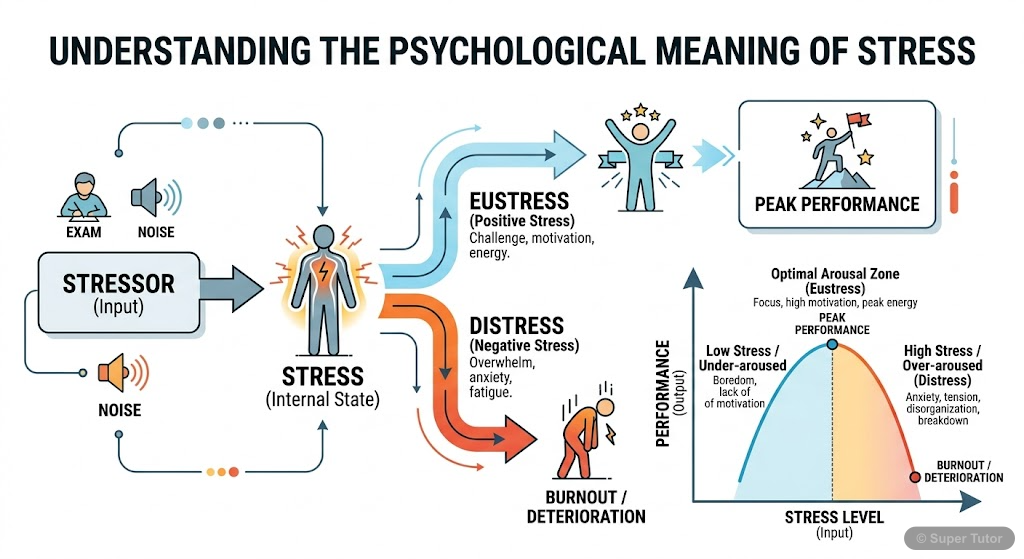
An infographic illustrating the psychological meaning of stress, showing stressors leading to stress, which then leads to strain. It should differentiate between Eustress (positive stress) and Distres
Super Tutor

Super Tutor has 12+ illustrations like this for Meeting Life Challenges alone — flashcards, concept maps, and step-by-step visuals.

See them all
12 Questions Solved · 1 Section

Review Questions — Chapter 3: Meeting Life Challenges

1Explain the concept of stress. Give examples from daily life.Show solution
Given/Concept: Stress is a central concept in health psychology. It is neither purely a stimulus nor purely a response but an ongoing transactional process.

Definition: Stress is a dynamic, ongoing transactional process between an individual and the environment, in which the individual perceives environmental demands as taxing or exceeding his/her resources and endangering his/her well-being.

Key points:
- Stress arises when there is a mismatch between the demands placed on a person and the resources available to meet those demands.
- The individual's *appraisal* (cognitive evaluation) of the situation determines whether it is experienced as stressful.
- Stress involves emotional, physiological, cognitive, and behavioural responses.

Examples from daily life:
1. Examination stress: A student who has not prepared well perceives the upcoming board exam as threatening, leading to anxiety, sleeplessness, and inability to concentrate.
2. Work overload: An employee given multiple deadlines simultaneously feels overwhelmed, experiences headaches and irritability.
3. Traffic jam: Being stuck in heavy traffic when already late for an important meeting causes frustration and physiological arousal (increased heart rate).
4. Family conflict: Frequent arguments at home create chronic psychological stress affecting both mental and physical health.

Conclusion: Stress is an unavoidable part of life; what matters is how an individual appraises and copes with the stressful situation.
2State the symptoms and sources of stress.Show solution
Symptoms of Stress:

Stress manifests across four dimensions:

| Dimension | Symptoms |
|---|---|
| Emotional | Anxiety, depression, irritability, mood swings, feeling of helplessness |
| Physiological | Increased heart rate, elevated blood pressure, sweating, headaches, fatigue, weakened immune system |
| Cognitive | Poor concentration, forgetfulness, negative thinking, difficulty in decision-making |
| Behavioural | Aggression, withdrawal, changes in eating/sleeping patterns, increased use of alcohol or drugs |

Sources (Stressors) of Stress:

1. Life Events: Major changes in life such as death of a loved one, divorce, marriage, job loss, or moving to a new city. Holmes and Rahe's Social Readjustment Rating Scale (SRRS) identified such events as significant stressors.

2. Everyday Hassles: Minor day-to-day irritants such as traffic jams, misplacing keys, arguments with colleagues, financial worries, and household chores. Though small individually, their cumulative effect is significant.

3. Traumatic Events: Extreme, overwhelming events such as natural disasters (floods, earthquakes), accidents, war, or assault that exceed normal coping capacity.

4. Physical and Environmental Stressors: Noise, pollution, extreme temperatures, overcrowding, and natural calamities.

5. Psychological Stressors: Frustration, conflict (approach-approach, avoidance-avoidance, approach-avoidance), internal pressures, and perceived threats.

6. Social Stressors: Interpersonal conflicts, social isolation, discrimination, and peer pressure.

Conclusion: Stressors vary widely in nature and intensity; their impact depends on the individual's appraisal and available coping resources.
3Describe the GAS model and illustrate the relevance of this model with the help of an example.Show solution
General Adaptation Syndrome (GAS) — Hans Selye (1936)

Definition: GAS is a three-stage physiological model proposed by Hans Selye that describes the body's non-specific response to any stressor. It explains how prolonged stress can lead to physical illness.

Three Stages of GAS:

Stage 1 — Alarm Reaction:
- The body recognises the stressor and prepares to deal with it.
- The hypothalamus activates the sympathetic nervous system and the adrenal glands release stress hormones (adrenaline, cortisol).
- Physiological changes: increased heart rate, blood pressure, and respiration; pupils dilate; digestion slows — the classic *'fight-or-flight'* response.
- Resistance to the stressor is initially below normal but quickly rises.

Stage 2 — Stage of Resistance:
- The body attempts to adapt to the continuing stressor.
- Physiological arousal remains higher than normal but the person appears to cope.
- Internal resources are being consumed; the person may seem outwardly calm but is under strain.
- If the stressor is removed, the body returns to homeostasis.

Stage 3 — Stage of Exhaustion:
- If the stressor persists, the body's resources are depleted.
- The adaptive energy is exhausted; resistance collapses.
- The individual becomes vulnerable to stress-related diseases (ulcers, hypertension, cardiovascular disease) and in extreme cases, death.

Illustration with an Example:

*Suppose a student is preparing for competitive entrance examinations over several months.*
- Alarm stage: On learning the exam date, the student feels anxious, heart races, sleep is disturbed — the body mobilises energy.
- Resistance stage: Over weeks, the student adapts — follows a study schedule, manages anxiety, appears to cope, but is constantly fatigued and irritable.
- Exhaustion stage: If the pressure continues without relief, the student may fall ill (frequent colds due to lowered immunity), suffer burnout, or develop psychosomatic symptoms like migraines.

Relevance: GAS explains why chronic stress leads to physical illness and underscores the importance of timely coping and relaxation to prevent reaching the exhaustion stage.
4Enumerate the different ways of coping with stress.Show solution
Definition of Coping: Coping refers to the cognitive and behavioural efforts made by an individual to manage specific external or internal demands that are appraised as taxing or exceeding one's resources.

Types of Coping Strategies:

A. Based on Orientation:

1. Task-Oriented Coping:
- Focuses directly on solving the problem causing stress.
- Involves gathering information, making a plan, and taking action.
- *Example:* A student who is stressed about poor grades makes a study timetable and seeks help from teachers.

2. Emotion-Oriented Coping:
- Focuses on managing the emotional distress caused by the stressor rather than the stressor itself.
- Involves venting feelings, seeking emotional support, or reappraising the situation.
- *Example:* Talking to a friend about exam anxiety to feel better.

3. Avoidance-Oriented Coping:
- Involves avoiding the stressful situation or denying its existence.
- May be adaptive in the short term but maladaptive if used chronically.
- *Example:* Watching TV instead of dealing with a pending conflict.

B. Based on Focus (Lazarus & Folkman):

4. Problem-Focused Coping:
- Aims to alter or eliminate the source of stress.
- Strategies: problem-solving, time management, seeking information, assertiveness.
- Most effective when the stressor is controllable.

5. Emotion-Focused Coping:
- Aims to regulate the emotional response to the stressor.
- Strategies: relaxation, meditation, positive reappraisal, seeking social support.
- More useful when the stressor is uncontrollable (e.g., death of a loved one).

C. Other Effective Coping Strategies:

6. Life Skills: Assertiveness, time management, rational thinking, improving relationships, self-care.
7. Social Support: Seeking help from family, friends, or professionals.
8. Healthy Lifestyle: Regular exercise, balanced diet, adequate sleep, yoga, and meditation.
9. Positive Thinking and Optimism: Reframing negative thoughts; focusing on strengths.
10. Avoiding Unhealthy Escapes: Refraining from alcohol, smoking, or drug use as coping mechanisms.

Conclusion: Effective coping is dynamic and situation-specific; a combination of problem-focused and emotion-focused strategies, supported by a healthy lifestyle and social support, is most beneficial.
5Explain the effect of stress on psychological functioning.Show solution
Introduction: Stress has profound effects on psychological (mental) functioning. These effects can be understood across emotional, cognitive, and behavioural dimensions.

1. Emotional Effects:
- Anxiety and Fear: Persistent worry, nervousness, and a sense of impending doom.
- Depression: Prolonged stress can lead to feelings of hopelessness, sadness, and loss of interest in activities.
- Irritability and Anger: Low frustration tolerance; minor irritants provoke strong emotional reactions.
- Mood Swings: Emotional instability and unpredictability.
- Helplessness: A feeling that one cannot control or change the situation (learned helplessness).

2. Cognitive Effects:
- Impaired Concentration: Difficulty focusing on tasks; mind wanders.
- Memory Problems: Stress hormones (especially cortisol) interfere with memory consolidation and retrieval.
- Negative Thinking: Tendency to catastrophise, overgeneralise, and engage in self-blame.
- Poor Decision-Making: Reduced ability to think clearly and weigh options rationally.
- Reduced Creativity: Narrowing of attention and thinking under stress limits creative problem-solving.

3. Behavioural Effects:
- Social Withdrawal: Avoiding friends, family, and social activities.
- Aggression: Increased hostility towards others.
- Changes in Eating Habits: Stress eating (overeating) or loss of appetite.
- Sleep Disturbances: Insomnia or excessive sleeping.
- Reduced Productivity: Difficulty completing tasks at work or school.
- Unhealthy Coping Behaviours: Increased use of alcohol, tobacco, or drugs.

4. Effect on Psychological Well-being:
- Chronic stress is strongly linked to the development of psychological disorders such as anxiety disorders, depression, and post-traumatic stress disorder (PTSD).
- It reduces overall life satisfaction and sense of well-being.

Conclusion: Stress significantly impairs psychological functioning across emotional, cognitive, and behavioural domains. Early recognition and effective coping are essential to prevent long-term psychological harm.
6Describe how life skills can help meet life's challenges.Show solution
Definition of Life Skills: Life skills are abilities and competencies that help individuals deal effectively with the demands and challenges of everyday life. The WHO identifies ten core life skills including self-awareness, empathy, critical thinking, creative thinking, decision-making, problem-solving, effective communication, interpersonal relationships, coping with emotions, and coping with stress.

How Life Skills Help Meet Life's Challenges:

1. Assertiveness:
- The ability to express one's thoughts, feelings, and needs clearly and respectfully without being aggressive or passive.
- Helps in setting healthy boundaries, saying 'no' when necessary, and reducing interpersonal conflict — all of which lower stress.

2. Time Management:
- Organising and prioritising tasks effectively to avoid last-minute pressure.
- Reduces the stress of deadlines and work overload.
- Techniques: making to-do lists, setting priorities, avoiding procrastination.

3. Rational Thinking:
- Identifying and challenging irrational beliefs and cognitive distortions (e.g., catastrophising, overgeneralising).
- Replacing negative self-talk with realistic, balanced thinking reduces emotional distress.

4. Improving Relationships:
- Developing empathy, active listening, and effective communication skills strengthens social bonds.
- Strong relationships provide social support, which is a powerful buffer against stress.

5. Self-Care:
- Taking care of one's physical and mental health through adequate sleep, nutrition, exercise, and relaxation.
- Builds resilience and the capacity to handle stressors.

6. Overcoming Unhelpful Habits:
- Identifying and replacing maladaptive behaviours (e.g., procrastination, substance use) with healthy alternatives.
- Reduces the long-term negative consequences of stress.

7. Problem-Solving and Decision-Making:
- Systematic approach to identifying problems, generating solutions, evaluating options, and implementing the best course of action.
- Increases sense of control and self-efficacy.

Conclusion: Life skills equip individuals with the tools to appraise situations realistically, manage emotions effectively, and take constructive action. They are essential for maintaining mental health and meeting life's challenges successfully.
7Discuss the factors that lead to positive health and well-being.Show solution
Definition: Positive health goes beyond the mere absence of disease; it refers to a state of complete physical, mental, and social well-being. It involves the presence of positive qualities such as vitality, resilience, and life satisfaction.

Factors Leading to Positive Health and Well-being:

1. Balanced Diet:
- Adequate nutrition provides the body and brain with the energy and nutrients needed for optimal functioning.
- A diet rich in fruits, vegetables, whole grains, and proteins supports both physical health and mood regulation.

2. Regular Physical Exercise:
- Exercise releases endorphins (natural mood elevators) and reduces stress hormones (cortisol, adrenaline).
- It improves cardiovascular health, strengthens the immune system, enhances sleep quality, and reduces symptoms of anxiety and depression.

3. Positive Attitude and Optimism:
- Optimistic individuals tend to appraise stressors as manageable and temporary.
- Positive thinking is associated with better immune functioning, faster recovery from illness, and greater life satisfaction.
- Hardiness (commitment, control, challenge) is a personality trait linked to resilience under stress.

4. Social Support:
- Having a network of caring relationships (family, friends, community) provides emotional, informational, and tangible support.
- Social support buffers the negative effects of stress and is positively related to psychological well-being.
- Both giving and receiving support benefit mental health.

5. Adequate Sleep and Rest:
- Sleep is essential for physical repair, memory consolidation, and emotional regulation.
- Chronic sleep deprivation increases vulnerability to stress and illness.

6. Stress Management and Coping Skills:
- Effective coping strategies (problem-solving, relaxation, meditation, yoga) prevent stress from becoming chronic.
- Life skills such as time management and assertiveness contribute to well-being.

7. Avoiding Unhealthy Behaviours:
- Refraining from smoking, excessive alcohol consumption, and drug use protects physical and mental health.
- These substances provide only temporary relief and create long-term harm.

8. Harmonious Social Conditions:
- A peaceful, equitable, and supportive social environment (free from discrimination, violence, and poverty) is essential for collective well-being.

9. Psychoneuroimmunology (PNI):
- The field of PNI demonstrates that positive psychological states (happiness, optimism) strengthen immune functioning, while chronic stress weakens it.

Conclusion: Positive health and well-being result from a holistic combination of physical, psychological, and social factors. A proactive, balanced lifestyle is the foundation of lasting well-being.
8How does stress affect the immune system?Show solution
Introduction: The relationship between stress and the immune system is studied in the field of Psychoneuroimmunology (PNI) — the study of the interaction between psychological processes, the nervous system, and the immune system.

The Immune System: The immune system is the body's defence mechanism against pathogens (bacteria, viruses) and abnormal cells (cancer). It includes white blood cells (lymphocytes — T-cells and B-cells), antibodies, and other components.

How Stress Affects the Immune System:

1. Release of Stress Hormones:
- During stress, the hypothalamus-pituitary-adrenal (HPA) axis is activated, releasing cortisol and other glucocorticoids.
- These hormones suppress the production and activity of lymphocytes (immune cells), reducing the body's ability to fight infection.

2. Reduced Immune Response:
- Chronic stress leads to a significant decrease in the number and effectiveness of natural killer (NK) cells, which destroy virus-infected and cancerous cells.
- The production of antibodies is also reduced, making the individual more susceptible to infections.

3. Increased Vulnerability to Illness:
- Research shows that stressed individuals are more likely to develop colds, flu, and other infections.
- Chronic stress is associated with slower wound healing and poorer response to vaccines.

4. Link to Serious Diseases:
- Prolonged immunosuppression due to chronic stress increases the risk of:
- Cancer: Reduced NK cell activity means abnormal cells are less effectively eliminated.
- Cardiovascular disease: Stress-induced inflammation damages blood vessels.
- Autoimmune disorders: Dysregulation of the immune system can cause it to attack the body's own tissues.

5. Positive Psychological States and Immunity:
- Conversely, positive emotions, optimism, social support, and relaxation techniques have been shown to *enhance* immune functioning.
- Studies on meditation and yoga demonstrate measurable improvements in immune markers.

Conclusion: Stress, particularly when chronic, significantly weakens the immune system through hormonal and neurological pathways, increasing susceptibility to a wide range of physical illnesses. This underscores the importance of effective stress management for maintaining physical health.
9Give an example of a life event which is likely to be stressful. Suggest reasons why it is likely to cause different degrees of stress to the person experiencing it.Show solution
Example of a Stressful Life Event: Loss of Employment (Job Loss)

Job loss is a major life event identified as highly stressful on Holmes and Rahe's Social Readjustment Rating Scale (SRRS).

Why it is stressful: It involves sudden loss of income, disruption of daily routine, threat to self-esteem, and uncertainty about the future.

Reasons Why It Causes Different Degrees of Stress in Different People:

1. Primary Appraisal (Perception of Threat):
- One person may appraise job loss as a catastrophe ('I will never find work again'), while another may see it as an opportunity ('I can now pursue a better career').
- The degree of stress depends heavily on how the individual *evaluates* the event.

2. Secondary Appraisal (Available Resources):
- A person with substantial savings, marketable skills, and a strong social network will feel less threatened than someone with no savings and few skills.
- Perceived coping resources directly influence stress levels.

3. Financial Situation:
- A person who is the sole breadwinner of a family will experience far greater stress than someone with a working spouse or financial savings.

4. Social Support:
- An individual with a supportive family and friends who provide emotional and practical help will cope better and experience less distress.

5. Personality Factors:
- Hardy individuals (high commitment, sense of control, viewing change as a challenge) will experience less stress.
- Optimistic individuals are more likely to take constructive action.
- Neurotic or pessimistic individuals may experience greater distress.

6. Previous Experience:
- Someone who has successfully dealt with job loss before has greater confidence in their ability to cope (higher self-efficacy).

7. Age and Life Stage:
- A young person early in their career may recover more easily than an older person close to retirement with fewer re-employment prospects.

8. Cultural and Social Factors:
- In societies where employment is central to identity and social status, job loss may carry greater stigma and thus cause more stress.

Conclusion: The same life event can produce vastly different stress responses depending on individual appraisal, available resources, personality, social support, and contextual factors. This illustrates the transactional nature of stress.
10Given what you know about coping strategies, what suggestions would you give to your friends to avoid stress in their everyday lives.Show solution
Introduction: Based on our understanding of stress and coping, the following practical suggestions can help friends manage and reduce everyday stress:

1. Develop Problem-Solving Skills:
- When faced with a stressor, identify the problem clearly, generate possible solutions, evaluate each option, and take action.
- Tackling problems directly prevents them from accumulating.

2. Practise Time Management:
- Make daily to-do lists and prioritise tasks.
- Break large tasks into smaller, manageable steps.
- Avoid procrastination — it increases stress in the long run.

3. Maintain a Healthy Lifestyle:
- Exercise regularly: Even 30 minutes of walking or yoga daily releases endorphins and reduces stress hormones.
- Eat a balanced diet: Avoid excessive caffeine, sugar, and junk food, which can worsen anxiety.
- Sleep adequately: 7–8 hours of sleep restores the body and mind.

4. Build and Use Social Support:
- Talk to trusted friends, family members, or a counsellor when feeling overwhelmed.
- Sharing problems reduces emotional burden and provides new perspectives.

5. Practise Relaxation Techniques:
- Deep breathing, meditation, progressive muscle relaxation, and mindfulness can calm the nervous system and reduce physiological arousal.

6. Think Positively and Rationally:
- Challenge negative, catastrophic thoughts ('I will definitely fail') with realistic ones ('I have prepared well; I will do my best').
- Cultivate an optimistic outlook — view challenges as opportunities for growth.

7. Be Assertive:
- Learn to say 'no' when overloaded.
- Express feelings and needs clearly and respectfully to avoid interpersonal conflict.

8. Pursue Hobbies and Leisure Activities:
- Engaging in enjoyable activities (music, art, sports, reading) provides a healthy outlet for stress and restores energy.

9. Avoid Unhealthy Coping:
- Resist the temptation to use alcohol, tobacco, or excessive screen time as escapes — these worsen stress in the long term.

10. Seek Professional Help When Needed:
- If stress becomes overwhelming or persistent, consult a school counsellor or psychologist without hesitation.

Conclusion: Effective stress management is a combination of proactive problem-solving, healthy habits, positive thinking, and strong social connections. Small, consistent changes in daily behaviour can significantly improve resilience and well-being.
11Reflect on the environmental factors that have (a) a positive impact on the being, and (b) a negative effect.Show solution
Introduction: The environment — both physical and social — profoundly influences an individual's physical and psychological well-being.

(a) Environmental Factors with a POSITIVE Impact:

1. Natural Environment:
- Exposure to green spaces (parks, forests, gardens) reduces stress, lowers blood pressure, and improves mood.
- Clean air and water support physical health and cognitive functioning.
- Natural light regulates circadian rhythms, improving sleep and mood.

2. Supportive Social Environment:
- Living in a community with strong social bonds, mutual trust, and cooperation fosters a sense of belonging and security.
- Supportive family and peer relationships provide emotional resources to cope with stress.

3. Safe and Peaceful Surroundings:
- Living in a safe neighbourhood free from crime and violence reduces chronic anxiety and promotes well-being.

4. Access to Education and Healthcare:
- Availability of quality education and healthcare empowers individuals, reduces uncertainty, and improves life outcomes.

5. Cultural and Spiritual Environment:
- A culture that values well-being, mindfulness, and community support promotes positive mental health.
- Spiritual practices and community rituals provide meaning, purpose, and social connection.

6. Positive School/Work Environment:
- A supportive, respectful, and stimulating school or workplace enhances motivation, self-esteem, and productivity.

(b) Environmental Factors with a NEGATIVE Effect:

1. Noise Pollution:
- Chronic exposure to loud noise (traffic, construction, industrial noise) causes stress, sleep disturbance, irritability, and cardiovascular problems.

2. Air and Water Pollution:
- Exposure to pollutants affects physical health (respiratory diseases, neurological damage) and is linked to increased rates of depression and anxiety.

3. Overcrowding:
- Living in densely populated, cramped conditions increases interpersonal conflict, reduces privacy, and elevates stress levels.

4. Unsafe Neighbourhoods:
- Exposure to crime, violence, and social disorder creates chronic fear and anxiety, particularly in children.

5. Social Inequality and Discrimination:
- Experiencing poverty, discrimination, or social exclusion is a major chronic stressor with severe mental health consequences.

6. Natural Disasters and Traumatic Events:
- Floods, earthquakes, and other disasters cause acute and post-traumatic stress, displacement, and loss.

7. Toxic Social Environments:
- Bullying, abusive relationships, and dysfunctional family environments cause lasting psychological harm.

Conclusion: The environment shapes our stress levels and well-being in fundamental ways. Creating and seeking out positive environments — and working to reduce negative ones — is essential for individual and collective health.
12We know that certain lifestyle factors can cause stress and may lead to diseases like cancer and coronary heart disease, yet we are unable to change our behaviour. Explain why?Show solution
Introduction: This is a well-recognised paradox in health psychology — people often continue harmful behaviours (smoking, unhealthy eating, sedentary lifestyle, excessive alcohol use) even when they are aware of the risks. Several psychological, social, and biological factors explain this gap between knowledge and behaviour.

Reasons Why We Are Unable to Change Behaviour Despite Knowing the Risks:

1. Addiction and Physiological Dependence:
- Substances like nicotine and alcohol create physiological dependence. The body develops tolerance and experiences withdrawal symptoms when the substance is removed.
- The discomfort of withdrawal makes it extremely difficult to stop, even with full knowledge of the harm.

2. Psychological Dependence and Habit Formation:
- Behaviours like smoking or overeating become deeply ingrained habits reinforced over years.
- They are associated with pleasure, relaxation, or social bonding, making them psychologically rewarding.
- Habits operate largely automatically, bypassing conscious decision-making.

3. Stress Relief (Short-term Benefit vs. Long-term Harm):
- Many harmful behaviours provide *immediate* relief from stress and anxiety (e.g., smoking calms nerves, alcohol reduces inhibitions).
- The immediate reward is psychologically more powerful than the distant, abstract threat of future disease.
- This is the principle of temporal discounting — we value immediate rewards more than future consequences.

4. Denial and Optimistic Bias:
- People tend to believe 'it won't happen to me' — an optimistic bias that underestimates personal risk.
- Denial is a psychological defence mechanism that protects the individual from the anxiety of confronting harmful behaviour.

5. Social and Peer Pressure:
- Smoking, drinking, and unhealthy eating are often socially reinforced — they are part of social rituals and peer group norms.
- Changing behaviour may mean social exclusion or conflict with one's peer group.

6. Low Self-Efficacy:
- Many individuals do not believe they are capable of changing ('I've tried to quit before and failed').
- Low self-efficacy — the belief in one's ability to succeed — is a major barrier to behaviour change.

7. Lack of Coping Skills:
- If a person lacks effective stress management skills, harmful behaviours serve as the primary coping mechanism.
- Without alternative coping strategies, giving up the behaviour feels impossible.

8. Environmental Cues and Triggers:
- Certain environments, people, or emotions act as powerful triggers for the behaviour (e.g., smoking after meals, drinking at parties).
- These conditioned associations are difficult to break.

9. Complexity of Behaviour Change:
- Changing deeply established lifestyle patterns requires sustained motivation, planning, social support, and often professional help.
- The process is gradual (as described in the Transtheoretical Model: pre-contemplation → contemplation → preparation → action → maintenance) and relapse is common.

Conclusion: The inability to change harmful behaviour despite awareness reflects the complex interplay of biological addiction, psychological reinforcement, social influences, cognitive biases, and lack of coping resources. Effective behaviour change requires not just information but also skill-building, social support, and addressing the underlying reasons for the behaviour.

Stuck on a step?

Ask Super Tutor AI to explain any solution on this page in a simpler way — free, 24x7.

Ask a Doubt Free

Frequently Asked Questions

What are the important topics in Meeting Life Challenges for Meghalaya Board Class 12 Psychology?
Key topics in Meeting Life Challenges include Correct vs Incorrect Understanding of Stress: Key Misconceptions Compared, Chapter Overview: Meeting Life Challenges, Meeting Life Challenges — Complete Chapter Mind Map. These are the concepts Meghalaya Board Class 12 examiners draw on most — study them first, then practise related questions.
How to score full marks in Meeting Life Challenges — Meghalaya Board Class 12 Psychology?
Understand the core concepts first, then work through the 39 practice questions available for this chapter. Revise formulas and definitions regularly, and use flashcards for quick recall before the exam.
Where can I get free NCERT Solutions for Meeting Life Challenges Class 12 Psychology?
This page has free step-by-step NCERT Solutions for every exercise question in Meeting Life Challenges (Meghalaya Board Class 12 Psychology) — written the way examiners award marks: given, formula, working, answer.

Sources & Official References

Content is aligned to the official syllabus. Refer to the board website for the latest curriculum.

For serious students

Get the full Meeting Life Challenges chapter — for free.

Quizzes, flashcards, AI doubt-solver and a step-by-step study plan for Meghalaya Board Class 12 Psychology.