Staffing and Directing — Important Questions
NIOS · Class 12 · Business Studies
44 important questions from Staffing and Directing for NIOS Class 12 Business Studies, with answers. Includes multiple choice questions.
Interactive on Super Tutor
Studying Staffing and Directing? Get the full interactive chapter.
Quizzes, flashcards, AI doubt-solver and a step-by-step study plan — built for important questions and more.
Free trial, no card needed.
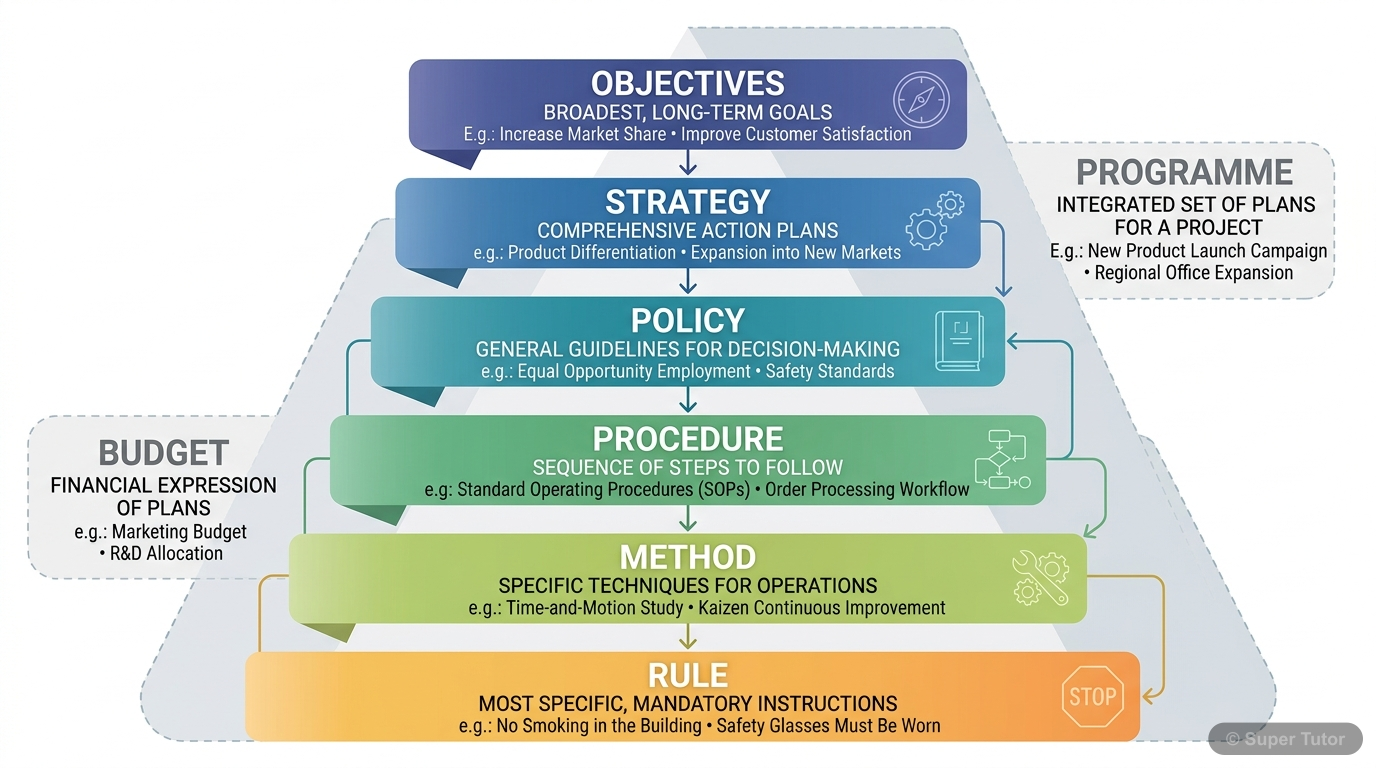
One of 3 illustrations for Staffing and Directing in Super Tutor — alongside flashcards, concept maps and practice questions.
Important Questions from Staffing and Directing
Vestibule Training is classified as an Off-the-Job training method. What is the DEFINING feature that makes it unique compared to other Off-the-Job methods like lectures or case discussions?
Show answer
It duplicates actual workplace conditions in a specially designed workshop away from the real workplace.
Step 1: Off-the-Job training means training happens AWAY from the actual workplace. Step 2: Lectures, case discussions, conferences, and video shows are standard off-the-job methods — they involve theory and discussion but not real equipment or conditions. Step 3: Vestibule Training is UNIQUE because even though it is conducted away from the real workplace, it attempts to DUPLICATE the actual conditions of the work environment in a specially designed workshop. Step 4: This means employees get realistic, hands-on practice without the pressure or risk of disrupting actual production. Step 5: Opt
According to Maslow's Hierarchy of Needs, if an employee has just secured a permanent job after being on temporary employment, which need is PRIMARILY being satisfied?
Show answer
Safety and Security Needs
Step 1: Apply Maslow's Hierarchy — needs are satisfied in order from bottom to top: Physiological → Safety & Security → Social → Esteem → Self-Actualisation. Step 2: The employee already has a job (income, food, shelter covered) — so Physiological needs are already met. Step 3: The KEY change is moving from TEMPORARY to PERMANENT employment. This addresses Economic Safety — the need for a stable, secure livelihood and protection against job loss in the future. Step 4: Safety and Security Needs include physical safety (from accidents, disease) AND economic safety (job security, stable income).
When a cost accountant directly requests sales data from a sales representative (bypassing the sales manager), this type of communication is BEST described as:
Show answer
Diagonal Communication
Step 1: To identify the type of communication, analyse TWO key factors — the department and the hierarchical level of the people communicating. Step 2: Horizontal Communication occurs between people of the SAME level in DIFFERENT departments (e.g., production manager to sales manager). Step 3: Upward Communication flows from subordinate to superior. Downward Communication flows from superior to subordinate. Step 4: Diagonal Communication occurs between people who are NEITHER in the same department NOR at the same hierarchical level. Step 5: In this case, the cost accountant (Finance department
Which barrier to communication occurs when a manager assumes that the receiver already knows certain basic background information and therefore skips explaining those prerequisites?
Show answer
Unclarified Assumptions
Step 1: Identify the specific scenario — the sender ASSUMES the receiver knows basic things and therefore communicates only the major subject, skipping prerequisites. Step 2: This is the Semantic Barrier called Unclarified Assumptions — where the sender takes background knowledge for granted, causing gaps in the receiver's understanding. Step 3: Distrust is a Psychological Barrier where lack of trust between sender and receiver distorts message interpretation — not relevant here. Step 4: Premature Evaluation is when the RECEIVER judges the message before hearing all of it — this is a receiver-
+40 more questions on Staffing and Directing (NIOS Class 12 Business Studies)
Practise AllFrequently Asked Questions
What are the important topics in Staffing and Directing for NIOS Class 12 Business Studies?
How many important questions are there in Staffing and Directing?
Sources & Official References
Content is aligned to the official syllabus. Refer to the board website for the latest curriculum.
More resources for Staffing and Directing
For serious students
Get the full Staffing and Directing chapter — start free.
Quizzes, flashcards, an AI doubt solver and a study plan for NIOS Class 12 Business Studies. Free to start, no card needed.