Metals and Non-metals — Chapter Summary
CBSE · Class 10 · Science
Summary of Metals and Non-metals for CBSE Class 10 Science. Key concepts: Metals are generally hard, Non and Most metals combine.
Interactive on Super Tutor
Studying Metals and Non-metals? Get the full interactive chapter.
Quizzes, flashcards, AI doubt-solver and a step-by-step study plan — built for chapter summary and more.
Free trial, no card needed.
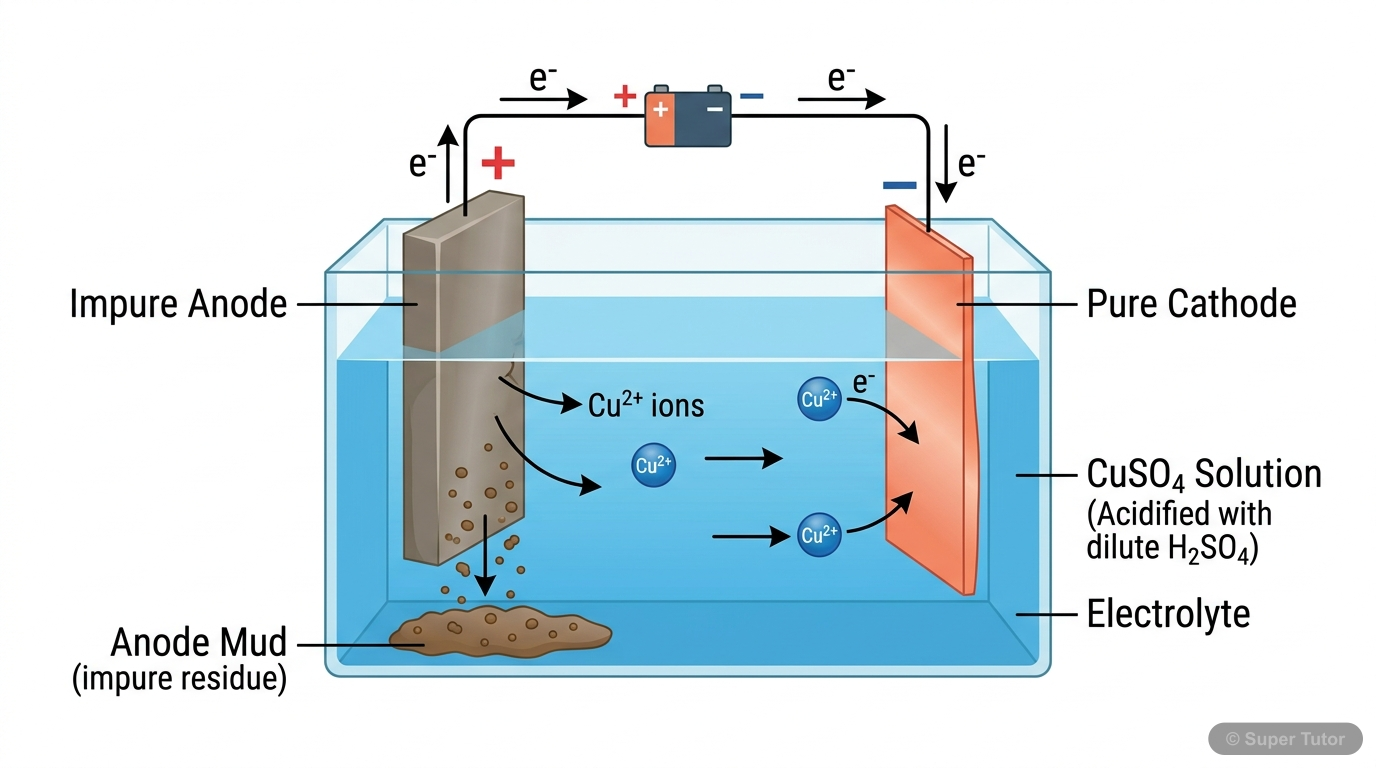
Learn better with visuals Super Tutor pairs illustrations like this with notes and quizzes for Metals and Non-metals.
Overview
Metals and non-metals are classified mainly by physical and chemical properties. Metals usually have a shining surface, are hard, malleable, ductile, sonorous, and good conductors of heat and electricity. Non-metals usually lack these properties, though there are important exceptions such as iodine
Key Concepts
Metals are generally hard
Metals are generally hard, shiny, malleable, ductile, sonorous, and good conductors of heat and electricity. Silver and copper are the best conductors
Non
Non-metals are usually dull, brittle, and poor conductors of heat and electricity. They are either solids or gases, except bromine, which is a liquid.
Most metals combine with oxygen
Most metals combine with oxygen to form metal oxides. Metal oxides are generally basic, while aluminium oxide and zinc oxide are amphoteric and react
Potassium and sodium react violently
Potassium and sodium react violently with cold water, calcium reacts less violently, magnesium reacts with hot water, and aluminium, zinc, and iron re
Metals generally react with dilute acids
Metals generally react with dilute acids to form salt and hydrogen. Copper does not react with dilute hydrochloric acid. Nitric acid usually does not
Learning Objectives
- Identify the general physical properties of metals and non-metals
- Explain important exceptions to the usual properties of metals and non-metals
- Describe the reactions of metals with oxygen, water, acids, and other salt solutions
- Use the reactivity series to compare the activity of metals
- Explain ionic bonding using electron transfer
Frequently Asked Questions
What are the important topics in Metals and Non-metals for CBSE Class 10 Science?
How should I revise Metals and Non-metals for the CBSE Class 10 board exam?
Sources & Official References
- NCERT Official — ncert.nic.in
- CBSE Academic — cbseacademic.nic.in
- CBSE Official — cbse.gov.in
- National Education Policy 2020 — education.gov.in
Content is aligned to the official syllabus. Refer to the board website for the latest curriculum.
More resources for Metals and Non-metals
Practice Quiz
Test yourself with a quick quiz
Important Questions
Exam-style questions with answers
Revision Notes
Key points for last-minute revision
Formula Sheet
The chapter's formulas in one place
Concept Maps
See how topics connect
Study Plan
Step-by-step plan for this chapter
Flashcards
Quick-fire cards for active recall
Syllabus
What topics to cover
NCERT Solutions
Every textbook question solved step by step
For serious students
Get the full Metals and Non-metals chapter — start free.
Quizzes, flashcards, an AI doubt solver and a study plan for CBSE Class 10 Science. Free to start, no card needed.