Sound Waves Characteristics and Applications — Study Plan
CBSE · Class 9 · Science
A step-by-step study plan for Sound Waves Characteristics and Applications, CBSE Class 9 Science: what to learn first, what to practise and when to revise.
Interactive on Super Tutor
Studying Sound Waves Characteristics and Applications? Get the full interactive chapter.
Quizzes, flashcards, AI doubt-solver and a step-by-step study plan — built for study plan and more.
Free trial, no card needed.
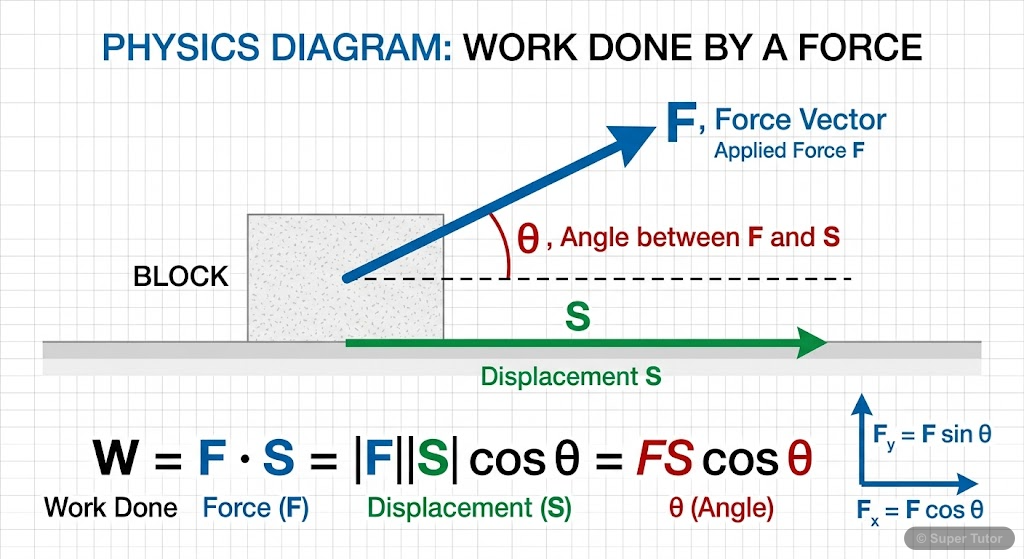
One of 5 illustrations for Sound Waves Characteristics and Applications in Super Tutor — alongside flashcards, concept maps and practice questions.
Study Plan
Learn the Theory
Read the textbook chapter carefully. Note down definitions, formulas and key ideas. Focus on: 1. Production and Propagation of Sound, 2. Wave Nature, Energy, and Graphical Terms, 3. Speed of Sound and Its Dependence on Medium.
Practise
Solve the textbook exercises and extra practice questions. There are 77 questions available for this chapter.
Revise & Test
Revise key points without looking at your notes. Take a practice quiz and mark weak areas for another pass.
Spaced Revision
Come back to Sound Waves Characteristics and Applications after a week. Use flashcards for quick recall and try past exam questions on this chapter.
What to Focus On
- Sound is produced by vibrations of objects.
- A vibration is a periodic to and fro motion.
- Sound can be produced by strings, membranes, air columns, and many other vibrating objects.
- Sound can propagate through solids, liquids, and gases.
- Sound cannot propagate in vacuum.
- The vacuum bell jar experiment proves that sound needs a medium.
- Sound wave is a longitudinal mechanical wave.
- Particles vibrate parallel to the direction of propagation in a longitudinal wave.
- Compression means higher density region.
Common Mistakes to Avoid
Sound particles travel from the source to the ear as a moving stream of air.
Sound can travel in vacuum because waves always travel through space.
Sound is a transverse wave because it travels away from the source in all directions.
Memory Tips
Sound is produced by vibrations
Tuning fork structure and use
Vocal cords produce sound in humans
Sound travels through solids, liquids, and gases but not vacuum
Want a personalised study plan?
Super Tutor builds a day-by-day plan for CBSE Class 9 Science that fits your exam date and pace.
Create My Study PlanFrequently Asked Questions
What are the important topics in Sound Waves Characteristics and Applications for CBSE Class 9 Science?
How should I revise Sound Waves Characteristics and Applications for Class 9 exams?
Sources & Official References
- NCERT Official — ncert.nic.in
- CBSE Academic — cbseacademic.nic.in
- CBSE Official — cbse.gov.in
- National Education Policy 2020 — education.gov.in
Content is aligned to the official syllabus. Refer to the board website for the latest curriculum.
More resources for Sound Waves Characteristics and Applications
Practice Quiz
Test yourself with a quick quiz
Important Questions
Exam-style questions with answers
Revision Notes
Key points for last-minute revision
Formula Sheet
The chapter's formulas in one place
Chapter Summary
Understand the chapter at a glance
Concept Maps
See how topics connect
Flashcards
Quick-fire cards for active recall
Syllabus
What topics to cover
NCERT Solutions
Every textbook question solved step by step
For serious students
Get the full Sound Waves Characteristics and Applications chapter — start free.
Quizzes, flashcards, an AI doubt solver and a study plan for CBSE Class 9 Science. Free to start, no card needed.