Sound Waves Characteristics and Applications — Syllabus
CBSE · Class 9 · Science
What Sound Waves Characteristics and Applications covers in CBSE Class 9 Science: 4 topics, for the 2026-27 session.
Interactive on Super Tutor
Studying Sound Waves Characteristics and Applications? Get the full interactive chapter.
Quizzes, flashcards, AI doubt-solver and a step-by-step study plan — built for syllabus and more.
Free trial, no card needed.
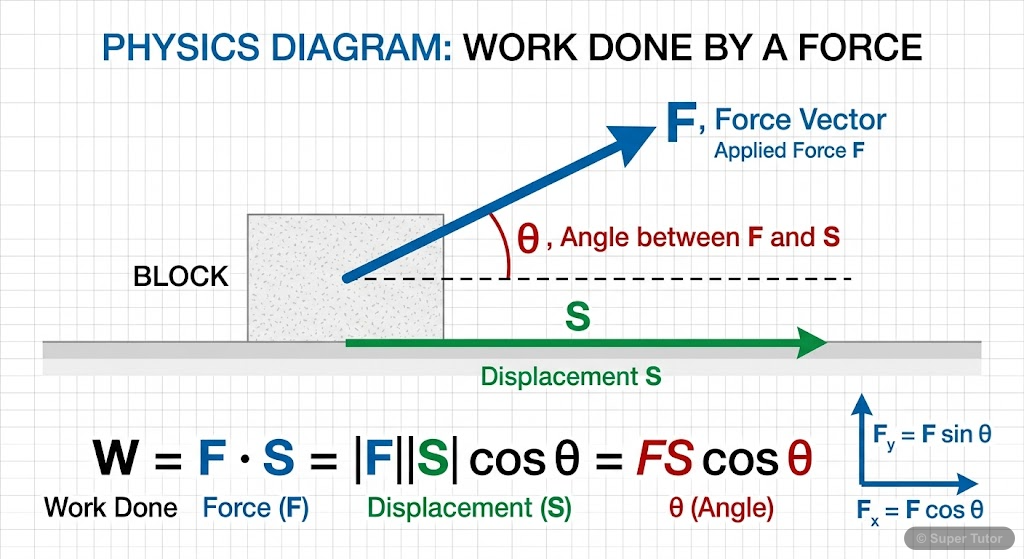
One of 5 illustrations for Sound Waves Characteristics and Applications in Super Tutor — alongside flashcards, concept maps and practice questions.
Topics in Sound Waves Characteristics and Applications
1. Production and Propagation of Sound
- Sound is produced by vibrations of objects.
- A vibrating object is the source of sound.
- Sound can travel through solids, liquids, and gases.
2. Wave Nature, Energy, and Graphical Terms
- Sound waves consist of alternating compressions and rarefactions.
- In a graphical representation, high-density regions are crests and low-density regions are troughs.
- The distance between two consecutive crests or two consecutive troughs is the wavelength.
3. Speed of Sound and Its Dependence on Medium
- Speed of sound is the distance a point on a wave travels in unit time.
- Speed of sound is given by wavelength multiplied by frequency.
- Sound travels fastest in solids, slower in liquids, and slowest in gases.
4. Human Hearing, Pitch, Loudness, and Voice
- The human audible range is from 20 Hz to 20,000 Hz.
- Sound with frequency below 20 Hz is called infrasonic.
- Sound with frequency above 20 kHz is called ultrasonic.
Key Concepts
Central concept: Sound waves and their characteristics
Work through every topic in Sound Waves Characteristics and Applications with notes and quizzes
Start This ChapterFrequently Asked Questions
What are the important topics in Sound Waves Characteristics and Applications for CBSE Class 9 Science?
How should I revise Sound Waves Characteristics and Applications for Class 9 exams?
Sources & Official References
- NCERT Official — ncert.nic.in
- CBSE Academic — cbseacademic.nic.in
- CBSE Official — cbse.gov.in
- National Education Policy 2020 — education.gov.in
Content is aligned to the official syllabus. Refer to the board website for the latest curriculum.
More resources for Sound Waves Characteristics and Applications
Practice Quiz
Test yourself with a quick quiz
Important Questions
Exam-style questions with answers
Revision Notes
Key points for last-minute revision
Formula Sheet
The chapter's formulas in one place
Chapter Summary
Understand the chapter at a glance
Concept Maps
See how topics connect
Study Plan
Step-by-step plan for this chapter
Flashcards
Quick-fire cards for active recall
NCERT Solutions
Every textbook question solved step by step
For serious students
Get the full Sound Waves Characteristics and Applications chapter — start free.
Quizzes, flashcards, an AI doubt solver and a study plan for CBSE Class 9 Science. Free to start, no card needed.