In search of Peace: Buddha and Mahavir — Chapter Summary
Gujarat Board · Class 6 · Social Science
Summary of In search of Peace: Buddha and Mahavir for Gujarat Board Class 6 Social Science. Part of the Gujarat Board Class 6 Social Science syllabus.
Interactive on Super Tutor
Studying In search of Peace: Buddha and Mahavir? Get the full interactive chapter.
Quizzes, flashcards, AI doubt-solver and a step-by-step study plan — built for chapter summary and more.
Free trial, no card needed.
Learn better with visuals Super Tutor pairs illustrations like this with notes and quizzes for In search of Peace: Buddha and Mahavir.
Overview
In the 6th century BC, India experienced a period of great spiritual and social awakening. Two remarkable leaders emerged during this time: Gautam Buddha and Mahavir Swami. Both were princes who gave up their royal lives to search for truth and peace. They became great reformers who challenged the e
Key Concepts
Siddhartha was born in 566 BC
Siddhartha was born in 566 BC in Kapilvastu kingdom (in present-day Nepal) as the son of King Shuddhodhana and Queen Mayadevi. His mother died shortly
Buddha's primary teaching consists of Four
Buddha's primary teaching consists of Four Noble Truths that explain the problem of human suffering and the solution. (1) Dukkha (Suffering): The worl
The Eightfold Path
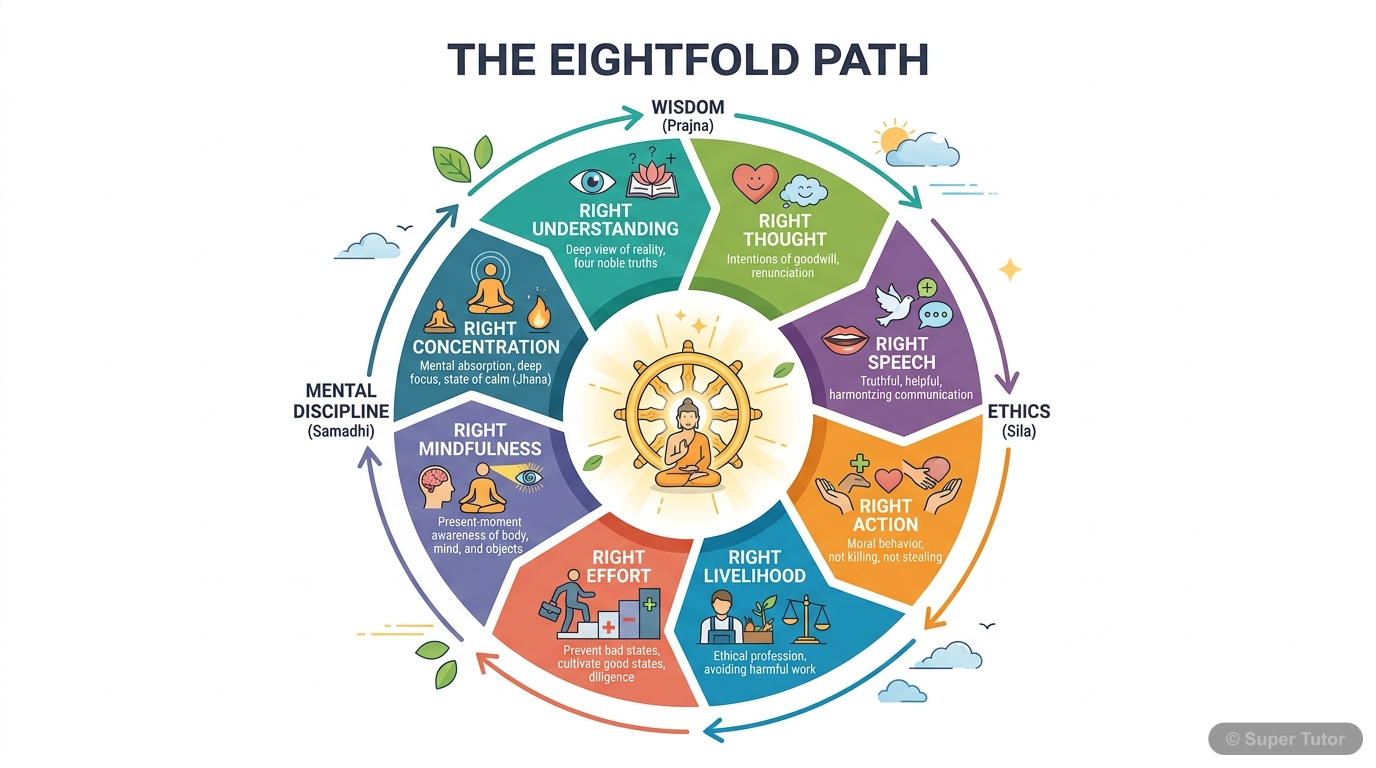
The Eightfold Path, also known as Astang Marg, is Buddha's prescription for living a virtuous and peaceful life. The eight components are: (1) Samyak
Buddha was not just a spiritual
Buddha was not just a spiritual leader but also a great social reformer who challenged many harmful practices of his time. His major reforms included:
Mahavir Swami was born as Vardhman
Mahavir Swami was born as Vardhman in 599 BC in the republic of Kundgram in the Vajji Union (present-day Vaishali, Bihar). His father King Siddhartha
Learning Objectives
- Understand the life and journey of Gautam Buddha from prince to enlightened teacher
- Learn about Buddha's Four Noble Truths and the Eightfold Path as solutions to human suffering
- Recognize Buddha's major reforms in religion and society, including opposition to caste system and rituals
- Understand the life and teachings of Mahavir Swami and his Five Great Vows
- Compare the similarities and differences between Buddhism and Jainism
Frequently Asked Questions
What are the important topics in In search of Peace: Buddha and Mahavir for Gujarat Board Class 6 Social Science?
How should I revise In search of Peace: Buddha and Mahavir for Class 6 exams?
Sources & Official References
Content is aligned to the official syllabus. Refer to the board website for the latest curriculum.
More resources for In search of Peace: Buddha and Mahavir
For serious students
Get the full In search of Peace: Buddha and Mahavir chapter — start free.
Quizzes, flashcards, an AI doubt solver and a study plan for Gujarat Board Class 6 Social Science. Free to start, no card needed.